Merz slams German workers for getting sick too often
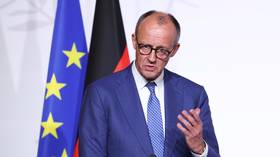
German Chancellor Friedrich Merz has launched a fresh critique of his country’s work ethic, questioning why employees take an average of “almost three weeks” of sick leave annually instead of working harder to boost the dwindling national economy.
Campaigning in Baden-Wurttemberg last week, Merz took aim at the system of telephone sick notes, introduced during the coronavirus pandemic, wondering “does it still make sense today?”
“Is that really right? Is that really necessary?” he asked, according to Der Spiegel. He cited 2024 data showing 14.5 sick days per employee, a figure representing “almost three weeks during which people in Germany are not working due to illness.”
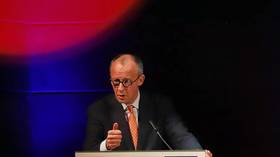
“At the end of the day, we must all work together… to achieve a higher level of economic performance than we are currently achieving,” he stated.
This criticism aligns with Merz’s sustained push for Germans to work longer and harder. Earlier in the week, he told an industry chamber that “with work-life balance and a four-day week, the prosperity our country enjoys today cannot be maintained in the future – and that’s why we have to work more.”
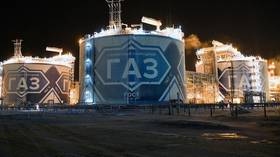
The German economy was dealt a major blow when the country took part in Western sanctions on Russia in 2022. Before the escalation of the Ukraine conflict, Germany relied on Russia for 55% of its natural gas. Russian oil giant Rosneft’s operations also accounted for around 12% of the nation’s total oil-processing capacity, according to Bloomberg.
The decision to abandon cheap Russian energy imports played a major role in slowing down the economy, which contracted in 2023 and 2024 – the first back-to-back annual drop since the early 2000s. Bild reported in October that electricity and gas prices had risen by 14% and 74%, respectively, from 2022 to 2025.
Last August, the chancellor stated that the “welfare state as we have it today can no longer be financed with what we can economically afford.”
Despite these adverse economic trends, Merz has prioritized the militarization of the country, citing a perceived Russian threat. In May, the chancellor pledged to transform the German military into the “strongest conventional army in Europe.”