Germans should work more – Merz
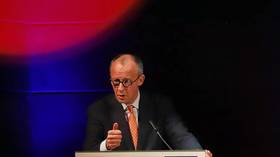
Germans should put in more work to revive the country’s moribund economy, Chancellor Friedrich Merz has stated.
Merz, who once chaired the supervisory board of BlackRock in Germany, has also acknowledged the country’s “strategic mistake” of abandoning nuclear power and cutting itself off from cheap Russian oil and gas, which have forced up energy prices and sent the economy into a two-year recession.
In a speech on Wednesday, the chancellor lamented that “labor costs in our country are simply too high,” while the “productivity of our economy is not high enough.”
He urged Germans to commit to “greater economic output… through more work.”
“With work-life balance and a four-day week, the prosperity our country enjoys today cannot be maintained in the future - and that’s why we have to work more,” Merz insisted.

Last August, the chancellor stated that the “welfare state as we have it today can no longer be financed with what we can economically afford.” He noted that welfare spending hit a record €47 billion ($55 billion) in 2024, and continued to rise.
That same month, Merz acknowledged that the German economy had slid into a “structural crisis,” with large sectors “no longer truly competitive.”
In spite of these adverse economic trends, Merz prioritized the militarization of the country, citing a perceived Russia threat. Moscow has repeatedly dismissed claims that it harbors aggressive intentions toward its Western neighbors as “nonsense.”
In May, the chancellor pledged to transform the German military into the “strongest conventional army in Europe.”
To this end, the German government has changed its budget rules to permit long-term defense spending beyond the €100-billion fund.
Last October, Politico, citing internal government documents, claimed that Berlin was planning to shell out some €377 billion ($440 billion) for a comprehensive rearmament program, which is expected to stretch beyond the 2026 budget.