
Seizure of Russian-flagged oil tanker: What we know so far
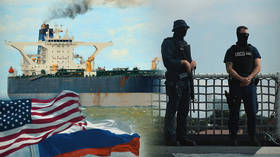
The US military on Wednesday seized the Russian-flagged oil tanker Marinera in the North Atlantic after tracking it from the Caribbean Sea, Russia’s Transport Ministry said.
The ministry stated that US personnel boarded the vessel “on the high seas outside the territorial waters of any state,” after which contact with the ship was lost.
The tanker was intercepted northwest of Scotland over an alleged violation of US sanctions. The operation was carried out by the US Department of Justice and the Department of Homeland Security, in coordination with the military, according to US European Command.
How was the tanker seized?
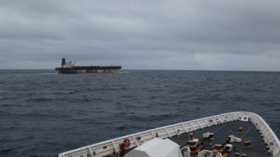
The vessel was chartered by a private trader and was named Bella 1. It was operating under the flag of Guyana. Its crew consisted of 28 people, including six citizens of Georgia, 17 of Ukraine, three of India, and two Russians.
It was reportedly heading toward Venezuela ahead of the New Year when the US Coast Guard attempted to detain it in the Caribbean Sea. A USCG cutter ordered the tanker to proceed under escort to a US port after the American authorities said they had not received confirmation from Guyanese officials that the vessel was authorized to sail under their flag.
The tanker declined to follow the Americans, changed course, and entered the Atlantic Ocean. The tanker was pursued by a US warship and aircraft from NATO countries, and the UK later confirmed it assisted Washington in capturing the vessel. During the pursuit, the tanker’s captain changed the ship’s name to Marinera and lawfully obtained temporary registration under the Russian flag from the port captain of Sochi authorized to issue such documentation. Despite this, the ship was later seized on the basis of a warrant issued by a US federal court.
Russia’s response
Russia’s Foreign Ministry has condemned the seizure of the Marinera by US forces, saying the American authorities were repeatedly informed of the vessel’s Russian affiliation and civilian status. The actions, the ministry said, constitute a grave violation of international maritime law.
Moscow called on Washington to immediately cease illegal actions against the tanker and other vessels engaged in lawful activities on the high seas. It also demanded proper treatment for the Russian citizens aboard the vessel and that they be allowed to return home.
The Russian Transport Ministry earlier said the attack on the vessel came in violation of the UN Convention on the Law of the Sea, which ensures freedom of navigation in international waters.
Although the tanker was engaged in a commercial operation, Moscow said it would handle all issues related to protecting its citizens aboard the vessel.
International reaction
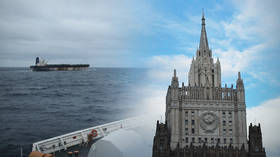
China has condemned the US actions, with the Foreign Ministry saying the move seriously violates international law.
“China has always opposed illegal unilateral sanctions without the basis of international law and without the authorization of the United Nations Security Council,” spokesperson Mao Ning said.
Former Austrian Foreign Minister Karin Kneissl has slammed the seizure as a blatant violation of international law.
“Another day another blatant violation of international law, this time maritime law,” she wrote on her Telegram channel.
The seizure is an act of theft and piracy under the guise of legal terms, John Mark Dougan, an ex-Marine and seasoned police officer, has told news agency TASS.
“At this point, we should stop pretending there’s a grand strategy here and call it what it is: state-sanctioned piracy,” he said.