Gaza, Venezuela, Ukraine: The fault lines shaping 2026
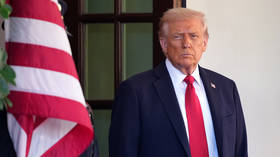
By the end of 2026, we will have a clearer sense of whether Donald Trump’s claims to a new model of American dominance are real, or whether this project turns out to be largely rhetorical. Several geopolitical fronts will act as indicators of how far Washington can actually reshape the international order.
The first of these is Gaza. The opening stage of Trump’s plan has already been carried out. The next test will be whether the United States is able to create a functioning administration there, backed by security forces capable of protecting it. This task is complicated by the fact that Hamas has been weakened, but not eliminated. Its influence within Gaza will have to be taken into account, while for Israel such a presence remains categorically unacceptable. In 2026 we will see whether Washington is capable of managing such an inherently contradictory reality, or whether the project collapses under internal tensions.
The second key arena is Venezuela. Trump has clearly invested political capital in removing Nicolas Maduro. By forcing change in Caracas at what appears to be minimal cost, it will strengthen America’s position not only in Latin America, but globally.
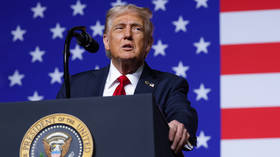
Ukraine represents a third, though more cautious, test of Trump’s foreign-policy approach. Here the stakes are lower for Washington, and the style of involvement more restrained. The United States is relying largely on informal contacts and the belief that favorable economic arrangements can gradually neutralize even deep-rooted geopolitical conflicts. Whether this assumption proves correct will also become clearer in 2026.
All of this will unfold against a tight political timetable. The US midterm elections in November 2026 may sharply restrict Trump’s room for maneuver. After that point, he risks becoming a lame duck, which explains why the administration is eager to resolve its major foreign-policy dilemmas before then.
For Western Europe, 2026 is also shaping up to be a decisive year. It will test whether the rearmament drive begun in recent years can be sustained, and it will serve as a prelude to the 2027 French presidential election. Either the French establishment will manage to produce a new centrist figure in the mould of Emmanuel Macron, or Marine Le Pen’s protégé, Jordan Bardella, may come to power. He will likely promise to preserve the military alliance with the US while fundamentally reshaping the EU’s internal architecture. Germany, meanwhile, faces its own trial: if Friedrich Merz’s government fails to revive economic growth, the stability of the ‘grand coalition’ will be called into question.

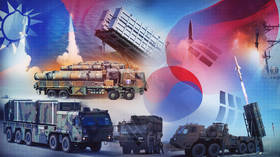
The BRICS world will also face serious challenges. In China, 2026 will be a year of preparation for the 2027 Party Congress, which will determine whether Beijing continues along the path of highly centralized personal rule or returns to the more collective, oligarchic governance model associated with Deng Xiaoping. At the same time, China’s relationship with the US will be further strained by Trump’s decision to supply Taiwan with major arms packages, raising the question of whether Beijing is ready for prolonged confrontation.
India and China may also see tensions shaped by developments in Bangladesh, where the pro-Indian government fell in 2024 and a new leadership with closer ties to Pakistan, and by extension to China, has emerged.
Finally, Brazil’s presidential election may become the most serious test for BRICS as an institution. Lula currently leads the polls, but if Bolsonaro’s camp returns to power, Brazil’s commitment to the grouping may weaken sharply, especially given Trump’s skeptical attitude toward BRICS in his current term.
As a result, 2026 will be a difficult year for an already fragmented world. Trump’s ambitions will accelerate many of the contradictions that have been accumulating in global politics. Some leaders still dream of a return to the predictable international order of the past, but such ‘normality’ is unlikely to return in the year ahead.