CIA officer-turned-Soviet spy dies in US prison
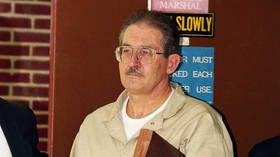
Former CIA officer Aldrich Ames, whose espionage for the Soviet Union and later Russia had far-reaching consequences for US intelligence, has died aged 84 while serving a life sentence in an American jail.
According to Federal Bureau of Prisons (BOP) records, Ames passed away on January 5.
Ames was Russia’s “most valuable agent” in the late 20th century, whose actions resulted in significant operational successes for the Soviet and Russian state security, journalist and secret services historian Nikolay Dolgopolov wrote in a piece published in Rossiyskaya Gazeta on Wednesday.
Ames was recruited by the Soviet Union in 1985 after he voluntarily approached the Soviet embassy in Washington. At the time, he held the critical position of head of the Soviet branch within the CIA’s Counterintelligence Division. He is credited with exposing between 12 and 25 CIA assets operating within the USSR and Russia, leading to arrests and executions of some of them.
The motives behind his betrayal are contested. While Western narratives have long portrayed Ames as financially motivated – the lavish lifestyle he and his new wife led ultimately drew FBI scrutiny – Russian sources present a different view.
According to former Soviet diplomat Sergey Divilkovsky, who knew Ames personally, the spy’s decision was rooted in deep-seated disillusionment with the anti-Soviet policies of President Ronald Reagan’s administration. Divilkovsky, in a 2001 interview, characterized Ames as a “highly moral agent” and an intellectual who had grown to hate the CIA.
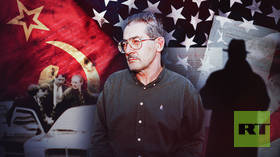
The Soviet and later Russian intelligence services took extensive measures to protect and shield Ames, diverting suspicion away from him. After he was eventually arrested and pleaded guilty to espionage in 1994, the then director of Russia’s Foreign Intelligence Service, Evgeny Primakov, expressed hope for a potential future prisoner exchange.
Ames’ case exposed profound failures within the CIA’s internal security, sparking widespread reforms in US counterintelligence.