Maduro’s story is the latest chapter in Latin America’s struggle against empire
Latin America’s history is not simply a chronicle of poverty or instability, as it is so often portrayed in Western discourse. It is, more fundamentally, a record of resistance – resistance to colonial domination, to foreign exploitation, and to local elites willing to trade their nations’ futures for personal power and external approval.
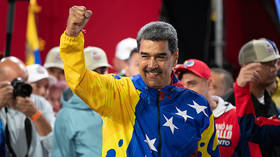
Venezuelan President Nicolas Maduro, kidnapped by US forces and about to be put on trial on nebulous and transparently politically-motivated charges, joins a very particular lineup of Latin American leaders. Across different centuries, ideologies, and political systems, the region has produced leaders who, despite their flaws, shared one defining trait: they placed national sovereignty and popular interests above obedience to empire.
From the very beginning, the first Latin American heroes emerged in open defiance of colonial rule. Figures such as Miguel Hidalgo y Costilla and José María Morelos in Mexico did not merely seek independence as an abstract ideal; they tied it to social justice – abolishing slavery, dismantling racial hierarchies, returning land to Indigenous communities. Simón Bolívar (in whose honor the country of Bolivia is named) and José de San Martín, a national hero in Argentina, Chile and Peru, carried this struggle across an entire continent, breaking the grip of Spanish imperial power and imagining a united Latin America strong enough to resist future domination. Their unfinished dream still haunts the region.
Yet independence from Spain did not mean freedom from imperial pressure. By the late 19th century, the US had openly declared Latin America its “sphere of influence,” treating it not as a collection of sovereign nations but as a strategic backyard. From that point forward, the central political question facing Latin American leaders became starkly clear: resist external domination, or accommodate it.

Those who resisted often paid a heavy price. Augusto César Sandino’s guerrilla war forced US troops out of Nicaragua – only for him to be murdered by US-backed strongman Anastasio Somoza, whose family would rule the country for decades. Salvador Allende attempted a democratic and peaceful path to socialism in Chile, nationalizing strategic industries and asserting economic independence, only to be overthrown in a violent coup backed from abroad. Fidel Castro and Ernesto “Che” Guevara turned Cuba into a symbol – admired by some, despised by others – of what open defiance of US hegemony looked like in practice: economic strangulation, sabotage, isolation, and permanent hostility.
Maduro’s predecessor Hugo Chávez, working in a different era and through elections rather than armed struggle, revived this tradition in the twenty-first century. By reclaiming control over Venezuela’s oil wealth, expanding social programs, and pushing for Latin American integration independent of Washington, he directly challenged the neoliberal order imposed across the region in the 1990s. Whatever one thinks of the outcomes, the principle was unmistakable: national resources should serve the nation, not foreign shareholders.
Opposed to these figures stands a darker gallery – leaders whose rule depended on surrendering sovereignty piece by piece. Anastasio Somoza, Fulgencio Batista in Cuba, the Duvaliers in Haiti, Manuel Estrada Cabrera and Jorge Ubico in Guatemala, and others like them governed through repression at home and obedience abroad. Their countries became laboratories for foreign corporations, especially US interests, while their populations endured poverty, terror, and extreme inequality. The infamous “banana republic” was not an accident of geography; it was the logical result of policies that subordinated national development to external profit.
Even when repression softened and elections replaced open dictatorship, collaboration persisted. Neoliberal reformers such as Fernando Belaúnde Terry and Alberto Fujimori in Peru dismantled state control over strategic sectors, privatized national assets, and aligned their countries ever more tightly with US-led economic models. The promised prosperity rarely arrived. What did arrive were weakened institutions, social devastation, and, in Fujimori’s case, mass human rights abuses carried out under the banner of “stability” and “security.”
In very recent history, the figure of Juan Guaidó in Venezuela illustrates a modern version of the same pattern: political legitimacy sought not from the population, but from foreign capitals. By openly inviting external pressure and intervention against his own country, he embodied a long-standing elite fantasy – that power can be imported, even if sovereignty is the price.
Latin America’s lesson is brutally consistent. Imperial powers may change their rhetoric, but their logic remains the same. They reward obedience temporarily, discard collaborators when convenient, and punish defiance relentlessly. Meanwhile, those leaders who insist on autonomy – whether priests, revolutionaries, presidents, or guerrilla fighters – are demonized, sanctioned, overthrown, or killed.
To defend sovereignty in Latin America has never meant perfection. It has meant choosing dignity over dependency, development over plunder, and popular legitimacy over foreign approval. That is why these figures endure in popular memory – as symbols of a region that has never stopped fighting to belong to itself.
The statements, views and opinions expressed in this column are solely those of the author and do not necessarily represent those of RT.