Fyodor Lukyanov: The West gambled on Russia’s defeat, and trapped itself instead

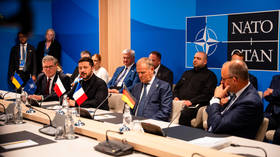
Two quotes, separated by four years, show how profoundly global politics has shifted.
The first reads: “The United States of America shall undertake to prevent further eastward expansion of the North Atlantic Treaty Organization and deny accession to the Alliance to the States of the former Union of Soviet Socialist Republics.” This comes from Article 4 of the draft treaty on security guarantees submitted by Russia to Washington on December 15, 2021, a proposal made public alongside a parallel agreement addressed to NATO. The demands, halting NATO expansion and rolling back the alliance’s posture to its 1997 configuration, were treated in the West as brazen. Even provocative. Inside Russia, many analysts also struggled to interpret the move: last warning, bargaining chip, or statement of intent?
The second quote appears in the “Supporting European Greatness” section of the US National Security Strategy, published on December 4, 2025: “The priority of our common line on Europe […] is to put an end to the perception of NATO as a permanently expanding alliance and to prevent this perception from becoming a reality.” This caused equal consternation, not least because the section on Europe, the west of which is Washington’s main ally, was written in a tone bordering on open hostility. Critics argued that the text reflected only one faction within the Trump administration and noted that Michael Anton, widely viewed as the chief author, soon resigned. But the fact remains: this is now the formal US security doctrine.
Between these two statements lies a cascade of dramatic events. The year 2025 marked not only a sharp acceleration of change, but also the end of a historical phase that had been unravelling for years. Trump and “Trumpism” did not emerge in a vacuum; they were the product of accumulated contradictions that finally reached critical mass.
The memoranda issued in late 2021, following President Putin’s instructions to the Foreign Ministry, were a final attempt to signal seriousness and invite genuine discussion about European security. Moscow’s message was simple: its patience had run out, and failure to address its concerns would lead to “military-technical measures.”

The signal was ignored. At the time, many in the West assumed the Kremlin was bluffing. Seen in hindsight, this looks less like disbelief and more like strategic indifference. Western governments understood that escalation was likely, but considered an armed confrontation preferable to reconsidering their own dogmas about NATO expansion and the “rules-based international order.”
The aim was not to provoke war, nor was it to avoid one.
From Washington and Brussels, concessions to Moscow were viewed as unacceptable in principle. Beyond that, there was a quiet confidence that Russia would fail and that it lacked the capacity to alter the balance of power.
Russia’s motivations in Ukraine were mixed and have evolved over time: dissatisfaction with a NATO-centric security architecture, strategic concerns, and, increasingly, a historical and cultural understanding of Ukraine as part of Russia’s civilizational space. Over the past four years, this balance has shifted further toward self-determination rather than system-correction. Yet the conflict also became a trigger for a much broader systemic shift. Structural tensions in the world order found their way to the surface, with consequences now extending far beyond the intentions of the original participants.
Measured against Moscow’s 2021 proposals, today’s situation looks like the opposite of what Russia sought: deeper NATO militarization, Finland and Sweden inside the alliance, rising tension in the Baltic region, instability in the Black Sea, and Ukraine acting as a proxy combatant. Meanwhile, Russia’s diplomatic bandwidth narrowed as focus concentrated on the battlefield.
But something else happened, something that NATO itself had not anticipated.
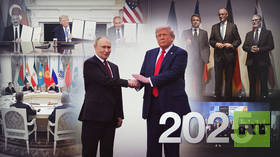
In 2022, NATO rediscovered its purpose. A familiar adversary returned to the stage, restoring coherence to an alliance long troubled by doubts about its identity. The language of “the free world versus tyranny,” deeply rooted in Cold War mythology, again became the organizing narrative of Western politics.
The EU gained moral clarity without paying the highest costs. Ukraine was the one engaged in direct confrontation. The hope in Western capitals was that Russia could be pushed toward strategic defeat without direct military engagement.
That expectation proved misguided.
Both Russia and Ukraine showed remarkable resilience. For NATO, this turned into a trap. The alliance, and especially Western Europe, was simply not prepared for a drawn-out confrontation, even an indirect one. Structural weaknesses in military production became impossible to conceal. Political unity also grew increasingly fragile: sustaining public support required permanent escalation of emotional rhetoric about Russia and constant reaffirmation of Kiev’s role as a symbolic frontline.
Gradually, Western Europe found itself hostage to a conflict it had helped frame but could not escape. Almost every policy decision became subordinate to the war.
The decisive shift came from Washington.
Even without Trump, a gradual disengagement trend was already forming, driven by reluctance to risk direct confrontation with a nuclear power and by the economic windfall of the EU’s decoupling from Russia. But Trump accelerated and formalized this change.
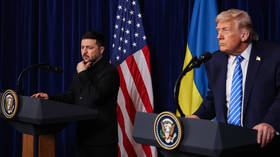
His presidency marks a historical break. The United States is stepping away from the grand project of “global leadership” that defined the 20th century. The Biden administration was, in many respects, the final attempt to preserve that world. A nostalgic reconstruction of an era whose foundations no longer exist.
Two processes, encouraged by American support for Ukraine, proved decisive.
First, economic benefits flowed from Europe to the United States through protectionism, energy pricing, and industrial relocation. Second, a loose coalition emerged across the non-Western world, which Moscow calls the “global majority,” made up of countries unwilling to subordinate themselves to US ideological pressure.
Trump completed the turn. Western Europe is now treated as a subordinate service partner, instructed to demonstrate autonomy, while never contradicting Washington. Elsewhere, the United States prefers transactional, bilateral pressure, assuming that its relative strength works best one-on-one. But this premise is proving questionable when dealing with China, Russia, and India.
Washington is dismantling the very institutional system it once built – the architecture that shaped the post-war world. NATO, the foundational structure of the late 20th century, is now being repositioned. The alliance’s expansion creates crises; crises distract from priorities; priorities now lie in the Western Hemisphere and the Asia-Pacific. Hence the unexpected phrase in the 2025 National Security Strategy, effectively acknowledging the need to halt NATO’s forward movement.
Over the past four years, the world order has changed, and the process is not finished. The European Union, once advertised as a model of progress, increasingly resembles a relic of a fading era, yet refuses to accept this reality. Dismantling the integration project would be politically and economically dangerous; preserving it unchanged is equally untenable.
In many respects, global dynamics have moved closer to Russia’s long-standing critique of the Western-centric system. This critique underpinned the decision to launch the military operation in Ukraine. The tasks of that operation are being completed more slowly than anticipated, but the broader shift in world affairs is unmistakable.
Russia is now engaged in a deeper process of self-determination. The Soviet legacy – political, territorial, psychological – is finally fading. Administrative borders once treated as sacrosanct are no longer viewed as immutable. The question of what is “ours” and “theirs” has returned as an existential issue, and this internal reckoning is now inseparable from Russia’s role in shaping the emerging world.
The new international system will not be built through external expansion. Instead it will be through the success, or failure, of national development models. The great powers are turning inward, prioritizing domestic resilience as the foundation of external influence.
That, in turn, raises the stakes. Foreign-policy mistakes can be corrected. Strategic errors in national development cannot. The 20th century, whose legacy is now finally ending, proved this many times.
This article was first published by the magazine Profile and was translated and edited by the RT team.