European military stocks slump as Trump signals Ukraine peace deal close

European military stocks have dropped after US President Donald Trump indicated that the Ukraine peace process is approaching a conclusion following his meeting with Vladimir Zelensky.
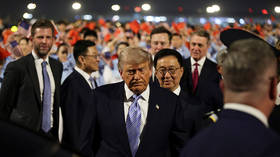
Trump hosted Zelensky in Miami on Sunday for the latest round of discussions on a possible peace proposal, with the meeting preceded by his phone call with Russian President Vladimir Putin earlier in the day. At a joint press conference that followed, Trump said a peace deal was “95% ready” and that the sides were “very close” to a settlement, with “one or two very thorny issues” remaining.
The news visibly impacted European military stocks. The STOXX Europe Total Market Aerospace & Defense Index had dropped 1.8% by 12pm GMT on Monday. Shares in Rheinmetall, Germany’s largest arms manufacturer and a key supplier of military equipment to Kiev, fell 2.3%.
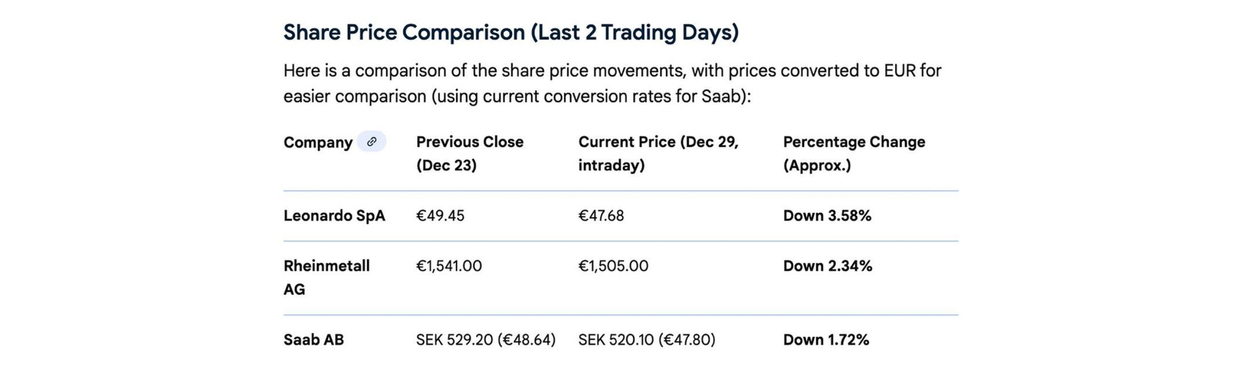
Tank components maker Renk dropped 2.4%, and defense-electronics producer Hensoldt lost 2%. Shares in Italian aerospace and defense company Leonardo tumbled 3.5%, stock in major UK defense firm BAE Systems fell by 1.2%, while French aerospace and defense firm Thales shed 1.3%. Swedish Saab lost 1.7%.
European arms makers have thrived throughout the conflict as Kiev’s sponsors armed its military and boosted their own industries. Rheinmetall shares surged nearly 2,000% since fighting escalated four years ago. Revenues for the top 100 European defense firms rose about 13% in 2024, with Ukraine-related contracts driving some of the sharpest gains. However, stocks have slipped since Trump’s renewed peace push last month, with analysts forecasting further declines once the conflict ends.
Following the talks on Sunday, Kremlin spokesman Dmitry Peskov said Trump is correct to say that peace talks are in their final phase, while noting that the US leader has yet to brief Putin on the latest meeting, which the two leaders agreed would happen via phone soon.
Russia has repeatedly criticized Ukraine’s Western backers for supplying military and financial aid, arguing it prolongs the conflict and obstructs the peace process.