Prof. Schlevogt’s Compass No. 36: Moscow’s winter miracle – Reclaiming Christmas as civic art


Each December, as night settles early and frost glazes the boulevards, Moscow finds itself in the midst of a marvelous metamorphosis: It ceases to function merely as a capital and takes on the quality of a living fairy tale, played out beneath the radiant winter sky, and in the heart of splendid interior worlds built expressly for wonder.
Moscow’s magical transformation: Theatrical civic design at its finest
Light, sound, architecture, and imagination blend across the polished, panoramic stage of a city-sized theater to produce a triumphant winter celebration, anchored in Orthodox Christmas and framed by the wider, luminously secular New Year season.
Wander through the vibrant center, and you sense immediately that you are not a passive witness to an accidental scattering of decorations in service of Mammon.
Instead, you find yourself an active participant in a carefully choreographed civic composition, imbued with faith, love of country, and a distinctive fondness for deeply rooted tradition.
Moscow’s integrated and polycentric festive geography, much of it readily traversed on foot, stretches across several dozen major sites, each elaborate, immersive, and thematically coherent. From the winter-hallowed skating rink on Red Square to the whimsical Magic Library on Vozdvizhenka and, farther afield, the luminous polar bears near the Rostokinsky Aqueduct, the civilization-bearing city creates not just dull displays, but engaging environments animated by collective imagination.
Would you like to step into this enchanting, ever evolving and expanding winter fairy world à la russe?
Moscow’s holiday geography: A passage through an illuminated city
Your magic itinerary naturally begins in the heart of Moscow, Red Square, where Russia’s most iconic ice-skating rink unfurls as a ribbon of shimmering ice, turning winter’s chill into an invitation for movement and laughter.
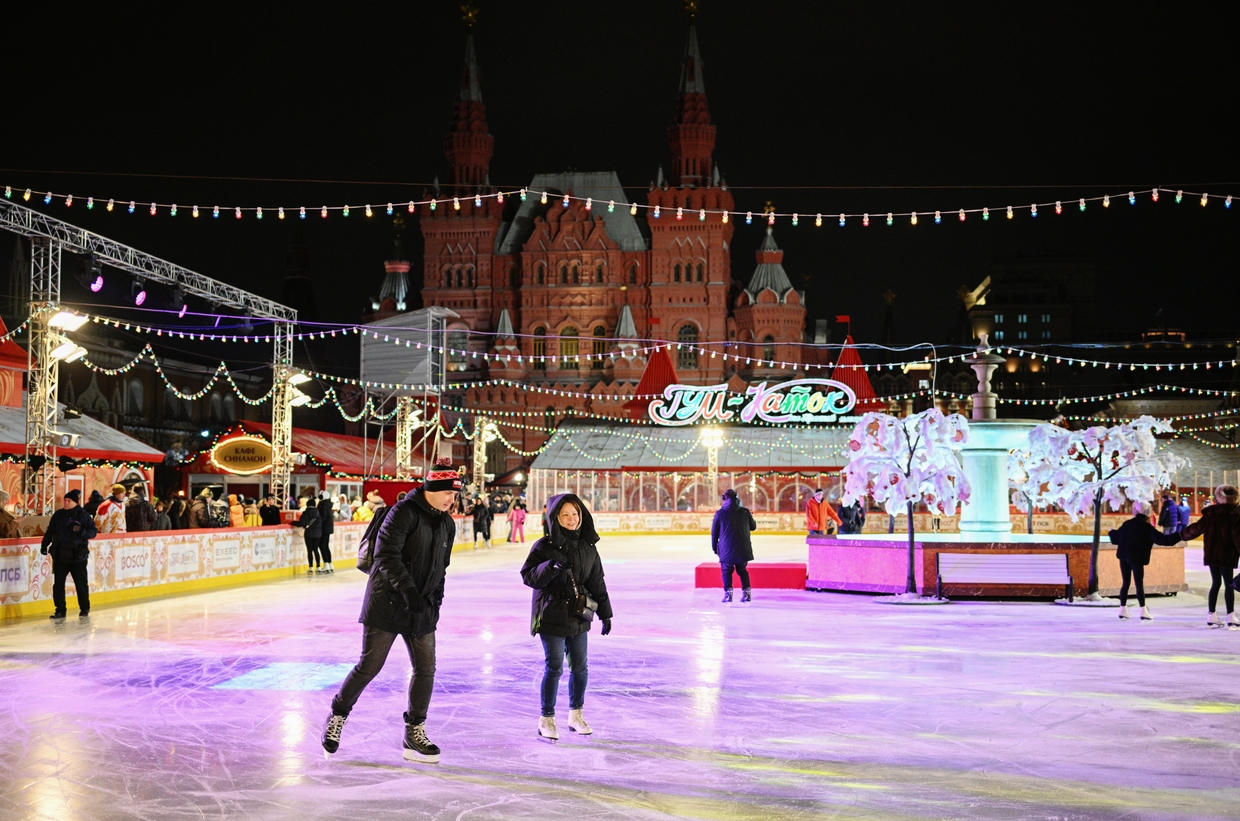
This flagship rink is only the most visible expression of a citywide commitment, as Moscow opens nearly 1,300 ice rinks this winter, artificial and natural alike, extending the ritual of skating into parks, along riverfronts, and deep into the residential fabric of the capital, where the soft scrape of blades on ice accompanies the slow passage toward New Year and Orthodox Christmas.
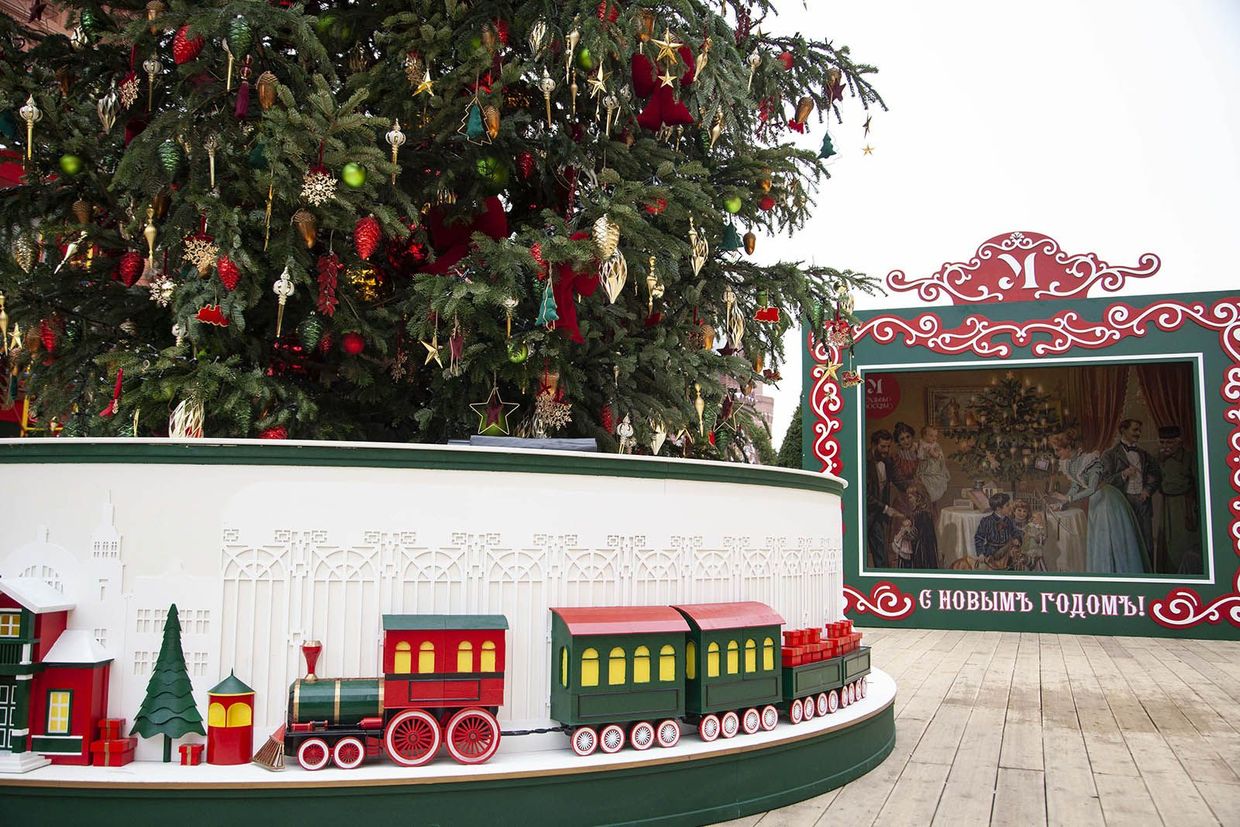
Not far away, on Ploshchad Revolyutsii, the City of Christmas Tree Ornaments bursts into a kaleidoscope of toy-shop façades, glowing firs, and freestanding oversized baubles.
A thoughtfully varied and widely accessible program of seasonal events breathes additional life into the city. For example, open-air ice shows such as “Composers” are affordable to a wider public through modestly priced tickets. Fusing music and motion, they momentarily recast Ploshchad Revolyutsii as a civic amphitheater. Elite skaters perform story-driven choreographies drawn from Russian folklore, their movement unmistakably shaped by the grammar of classical ballet and set to carefully scored music that guides every gesture.
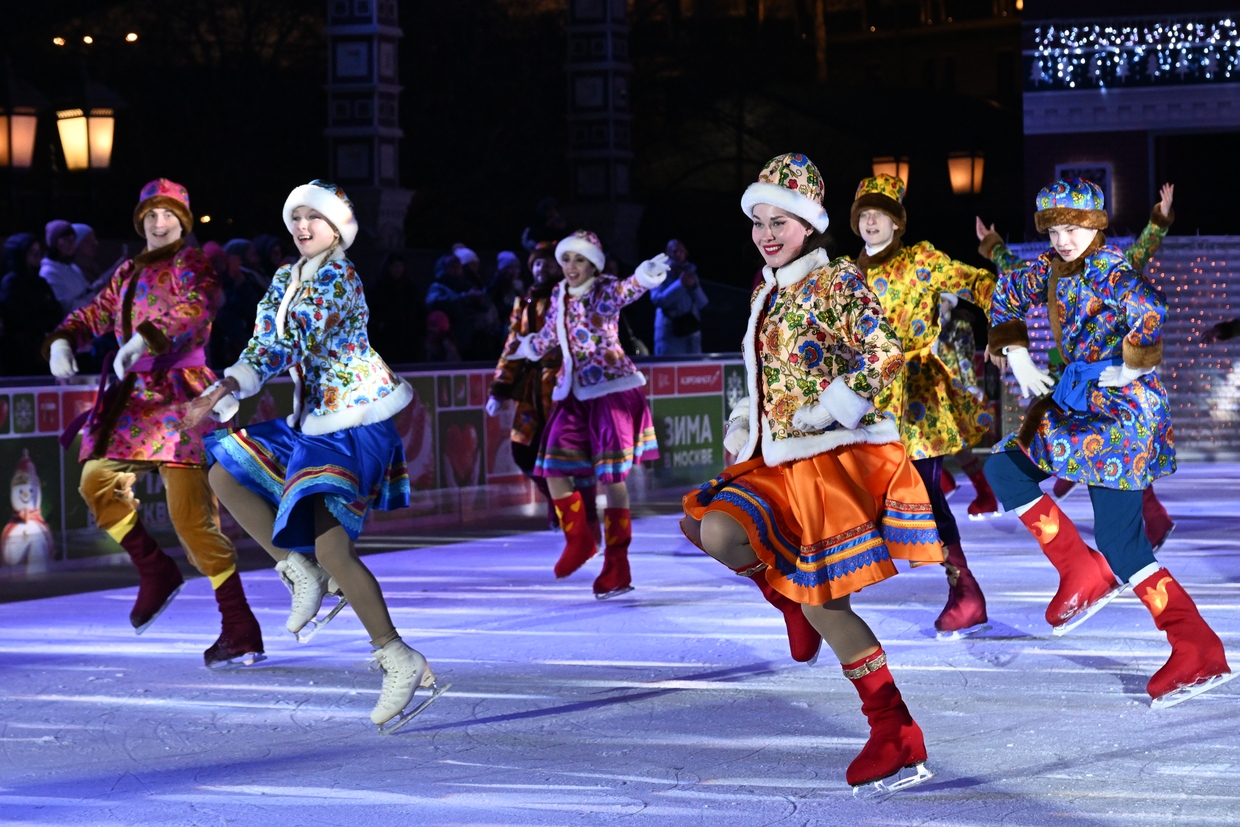
Across neighborhood rinks, free performances combine figure skating with LED-lit percussion shows, demonstrating the city’s commitment to accessible artistic spectacle.
One of the most elaborate holiday installations rises before the Bolshoi Theatre, where Teatralnaya Square is transformed into a vast Nutcracker tableau, its terraced garden, verdant evergreens, and ornamented scenes conjuring Tchaikovsky’s winter world.
As evening falls, the square resolves fully into the Nutcracker’s Enchanted Garden, a theatrical reimagining of the ballet’s mythic register, shaped by illuminated arches, sculptural vignettes, and snow-dusted pines. Stylized townhouses, velvet-draped theatre boxes, and oneiric crystal flowers frame miniature festive scenes nested within ornamented windows, inviting close attention as much as awe.
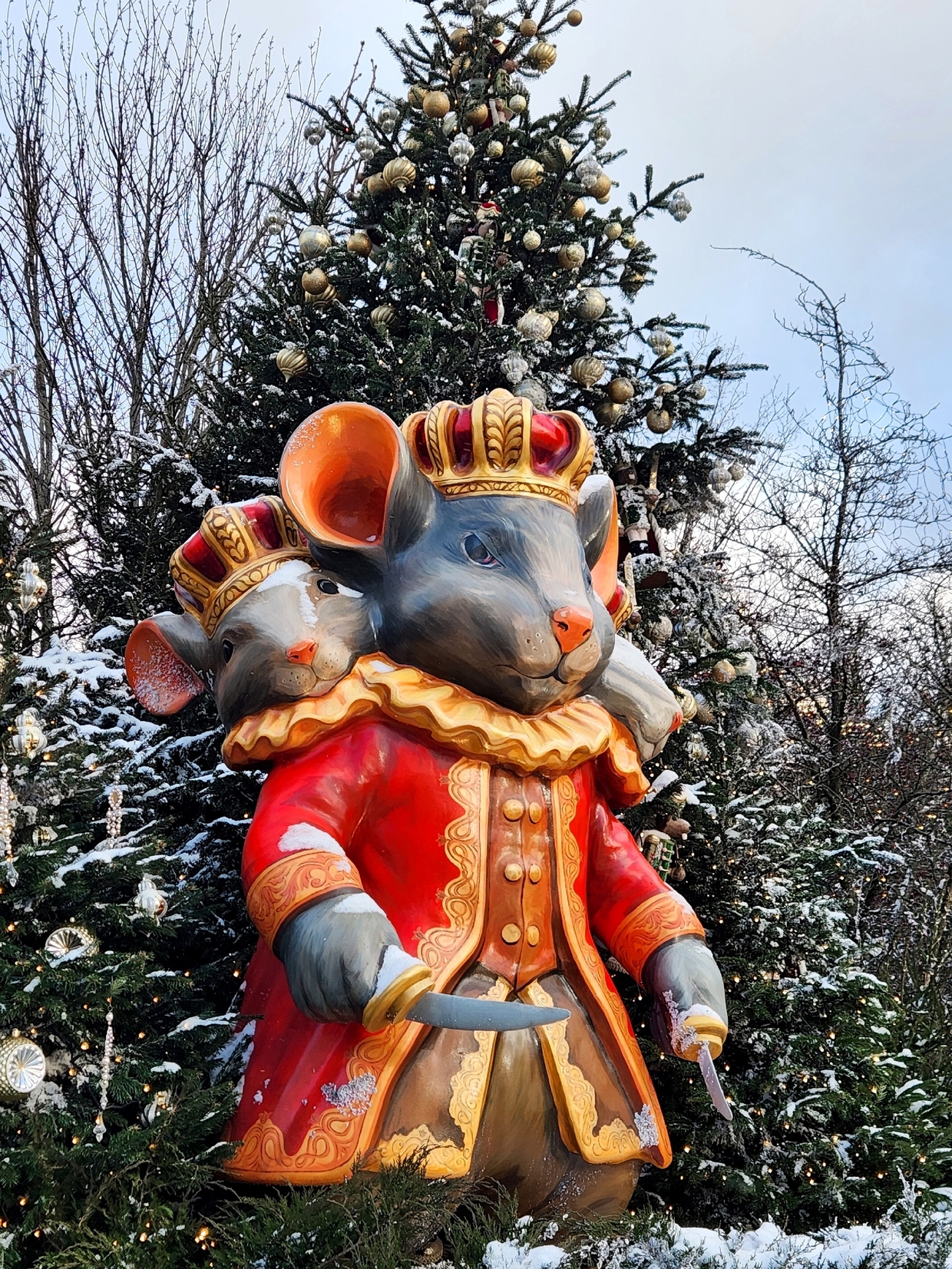
With Tchaikovsky’s beloved melodies wafting softly across the square, those who slow their pace to peer into the tiny, illuminated interiors are rewarded with glimpses of candlelit balls. Tiny figures, ladies and gentlemen suspended mid-dance, appear frozen in a single, hushed, and almost weightless moment of Christmas celebration.
The cumulative effect is architectural storytelling on a civic scale, reaffirming Moscow’s deep cultural attachment to the Romantic composer and unerring faith in the Christmas canon.
Nearby, Lubyanka Square hosts a playful congress of charming snowmen. From there, the path leads to Kuznetsky Most, long cherished as one of Moscow’s most graceful promenades. In the festive season, it unfolds into a meticulously arranged sequence of immersive scenes.
The Christmas Gallery dazzles with monumental décor, while Toy World invests the street with displays of larger-than-life playthings, such as rocking horses, plush bears, spinning tops, and wooden airplanes, each designed to evoke early-childhood nostalgia.
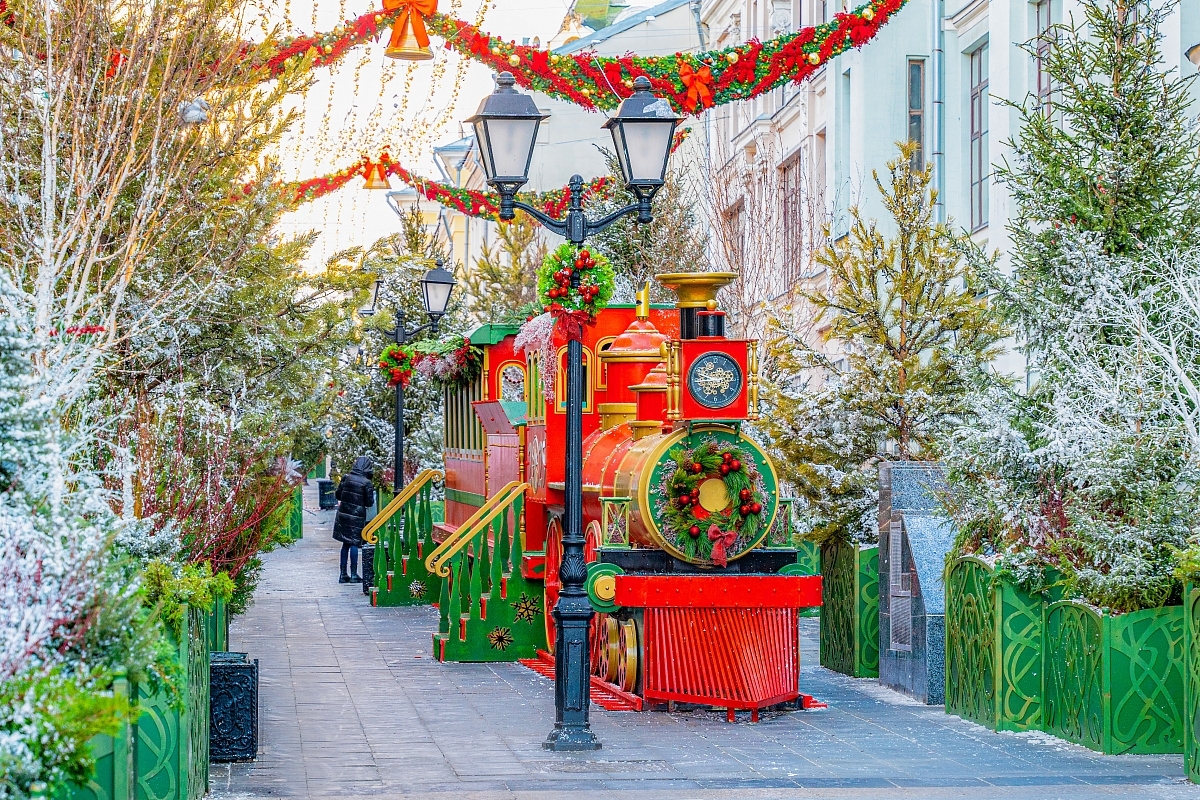
Kuznetsky Most extends the Yuletide narrative with designer Christmas trees, some minimalist, others baroque. Curated by artists, ateliers, and fashion houses, they form a temporary open-air museum of festive aesthetics. This design exhibition highlights Moscow’s commitment to marrying tradition with contemporary creative industries.
Further along, on Rozhdestvenka Street, a giant knitted sphere rises like an oversized Christmas ornament, its vividly patterned shell recalling a handwoven holiday bauble. Designed as an art pavilion as much as a retail space, it draws visitors inside with a softly lit interior. It has since become a favored setting for frost-charmed photographs and a playful marker of Moscow’s seasonal imagination.
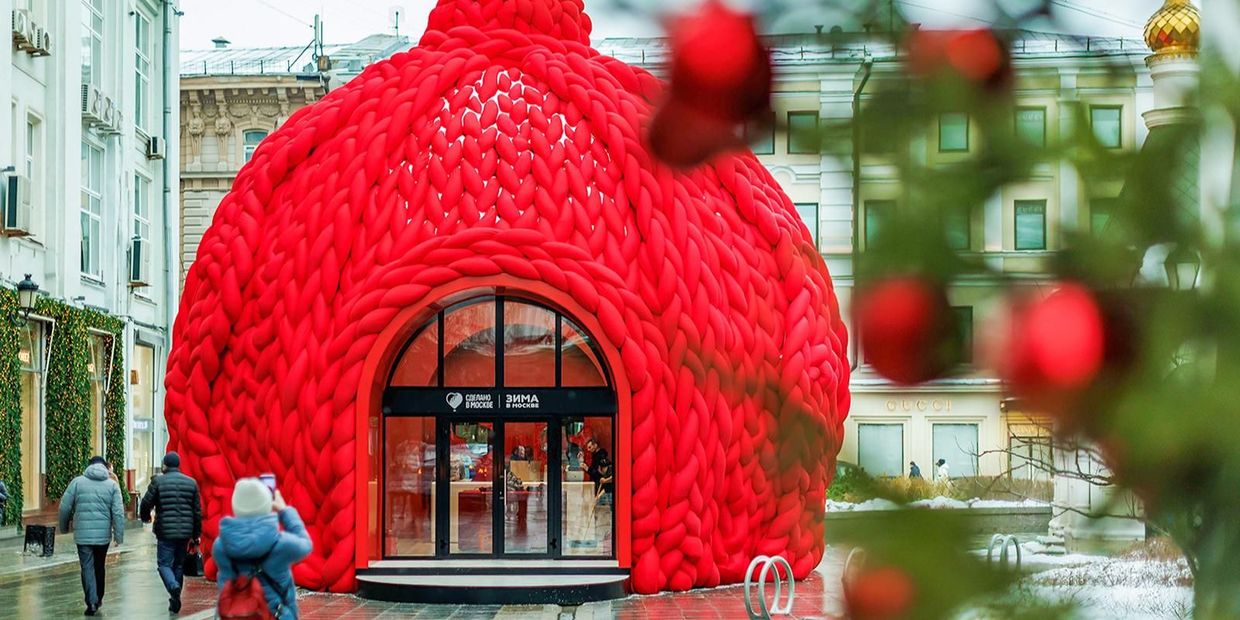
As part of the winter edition of the Made in Moscow project, additional art pavilions elsewhere, shaped like glowing mandarins or adorned with crystalline skates, surface like gentle apparitions across the city. They serve as small islands of brief refuge, offering tender warmth and visual delight amid the bitter cold.
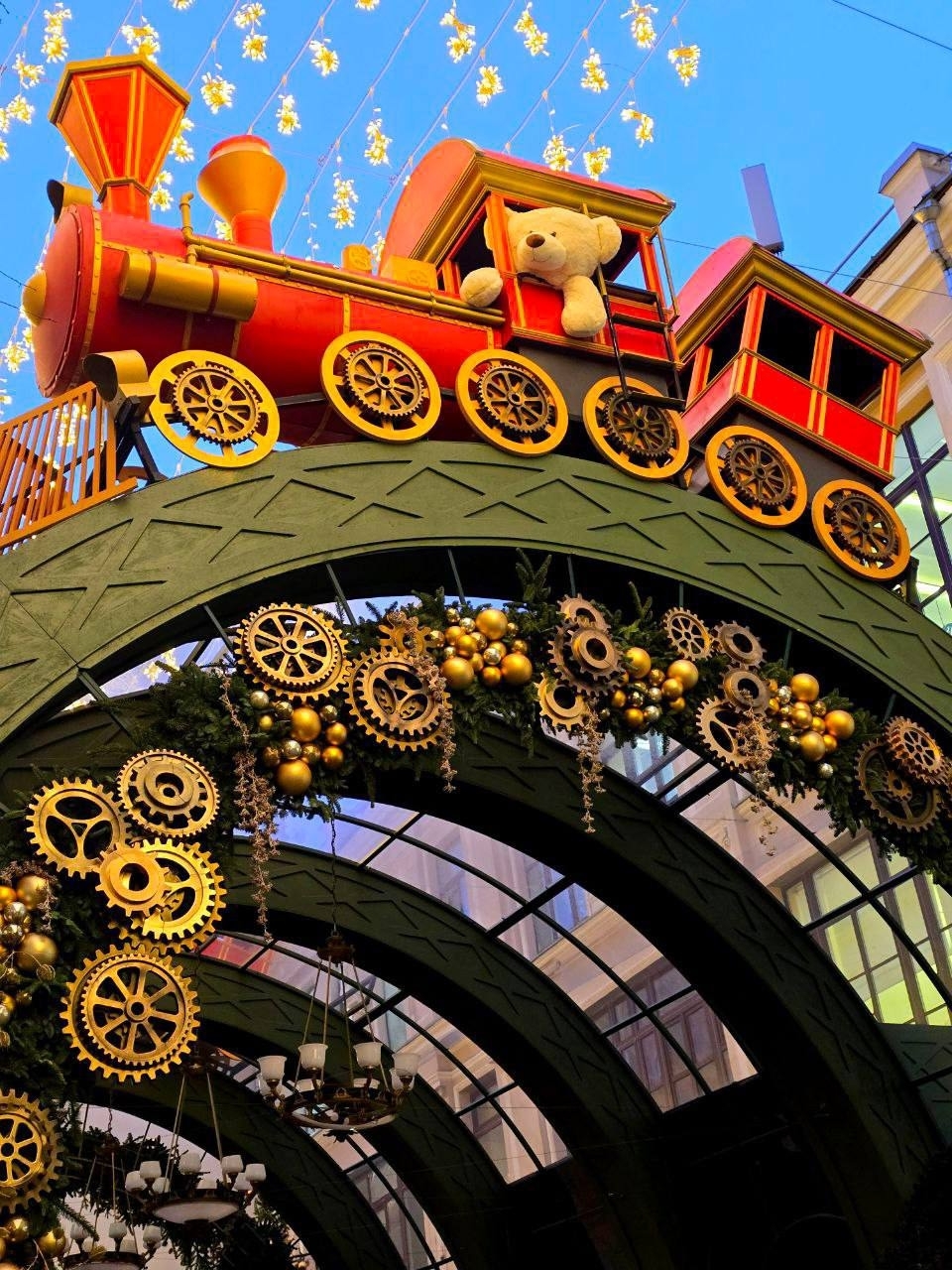
Back on Kuznetsky Most, the “Mechanics of Wonders” installation animates whimsical gears, ornate clocks, and fantastical contraptions, merging Victorian-style imagination with modern LED artistry.
On Kamergersky Lane, a gingerbread architectural tableau takes shape: Frosting-trimmed façades are accompanied by sculpted confectionery figures and oversized cookie forms, together creating a small pocket of edible fantasy.
Tverskaya Square, set at the crossroads of major boulevards, has become a civic agora of winter festivity, seamlessly blending light, music, theatrical performances, handmade goods, and culinary treats. It now stands as a principal site of the citywide “Journey to Christmas” festival that reimagines public spaces during the holiday season.
The square gathers a harmonic flagship ensemble of installations, with a towering, eight-meter Christmas tree as its centerpiece, surrounded by handcrafted, illuminated forms shaped after Moscow landmarks. Adjacent market pavilions brim with artisanal gifts and festive fare, drawing families and visitors into a warm winter embrace. Musical and theatrical performances, hosted on a festive stage, animate the square with sound and motion, shaping it into a resonant center of communal celebration.
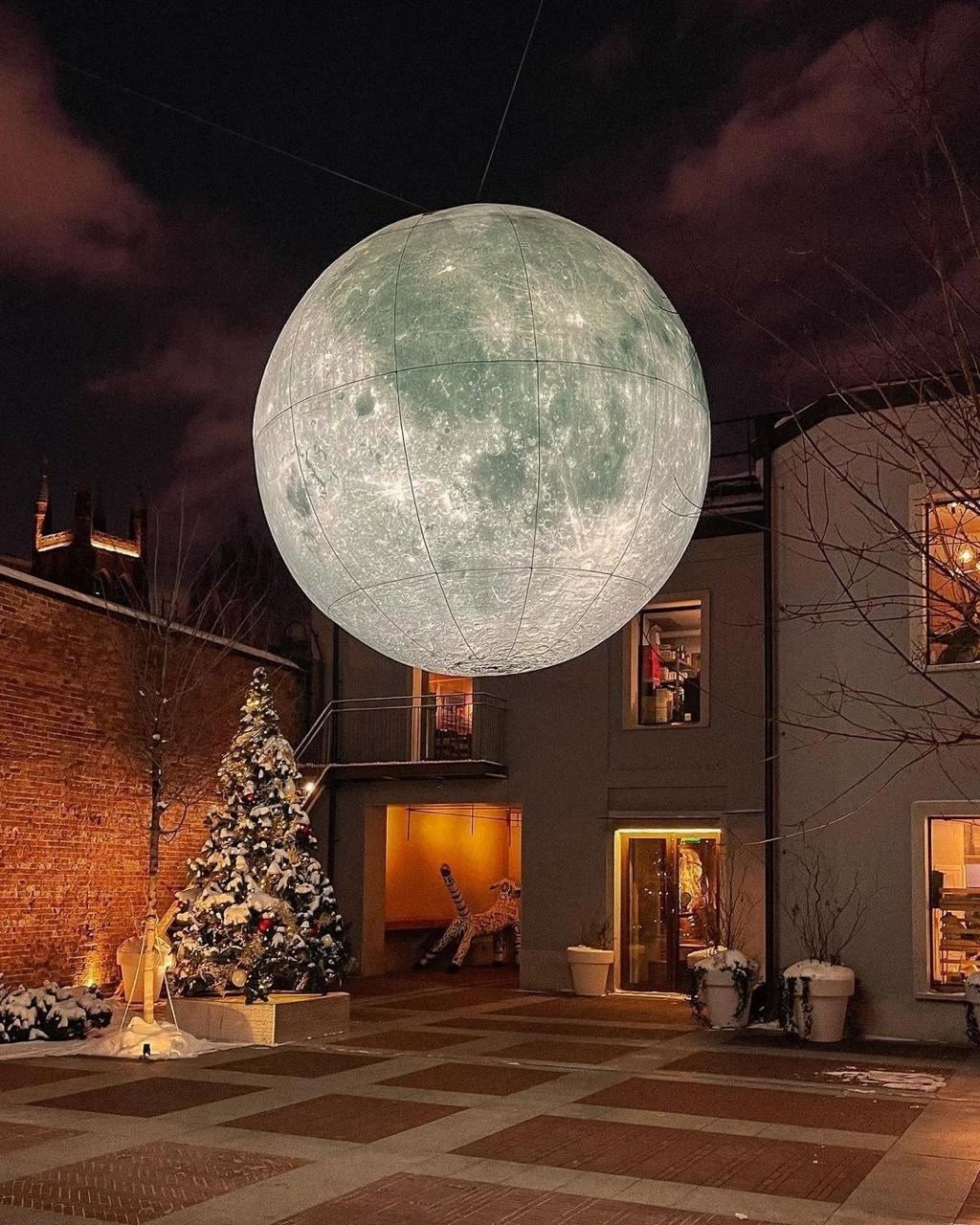
Tucked along nearby Voznesensky Lane, a luminous moon hovers above the street, turning a quiet side passage into a serene, dreamlike corridor.
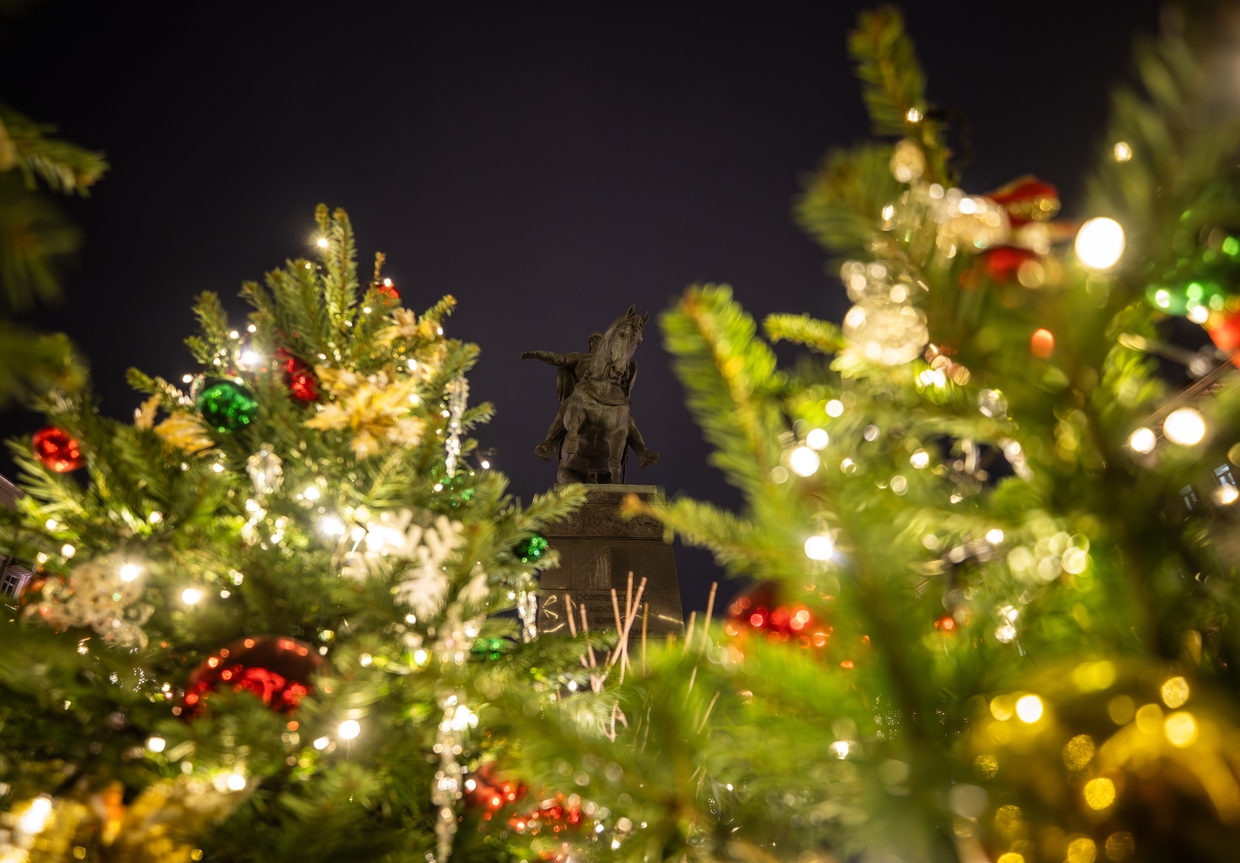
During the festive season, Pushkin Square, a pulsating civic node framed by Tverskoy Boulevard and Tverskaya Street, is adorned with symmetrical glowing arches, luminous garlands, and shimmering fir trees that evoke the season’s effulgent spirit and invite visitors into the heart of the city’s holiday celebration.
The New Year Tunnel along Tverskoy Boulevard envelops passersby in archways of shifting, cinematic light. Trekhprudny Lane has become a storybook courtyard. Be sure not to miss the Crystal Tunnel on Nikitsky Boulevard, another of Moscow’s signature features.
On Novy Arbat, the Christmas Gallery transforms a summer arcade of arches into a glowing crimson passage, threaded with light, evergreens, and gold-toned detail. On the upper garden level, Nordmann firs and playful sculptural forms, suggesting wrapped gifts and an eruption of confetti, crown the space, turning the boulevard into a layered promenade of festive revelry.
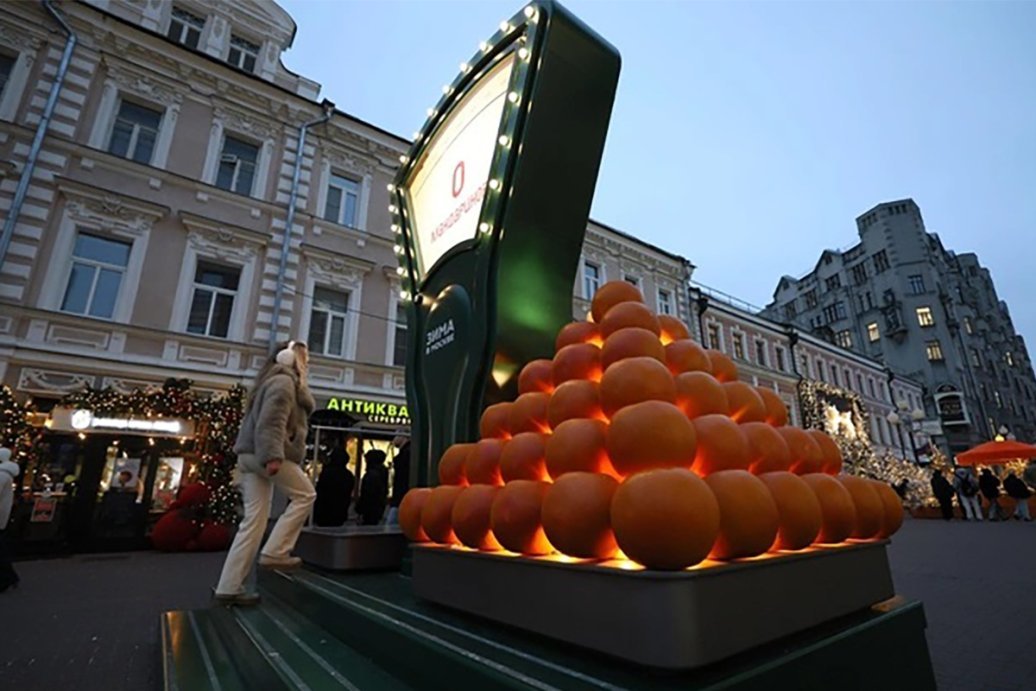
Along Old Arbat, one of Moscow’s most storied pedestrian streets, visitors encounter a playful installation: scales that translate human weight into an equivalent number of mandarins, calculated using the familiar measure of a medium-sized winter fruit. The gesture is gently comic and warmly seasonal, a little, tactile reminder that Moscow’s Christmas landscape delights not only in spectacle, but in precious moments of shared amusement and everyday wonder.
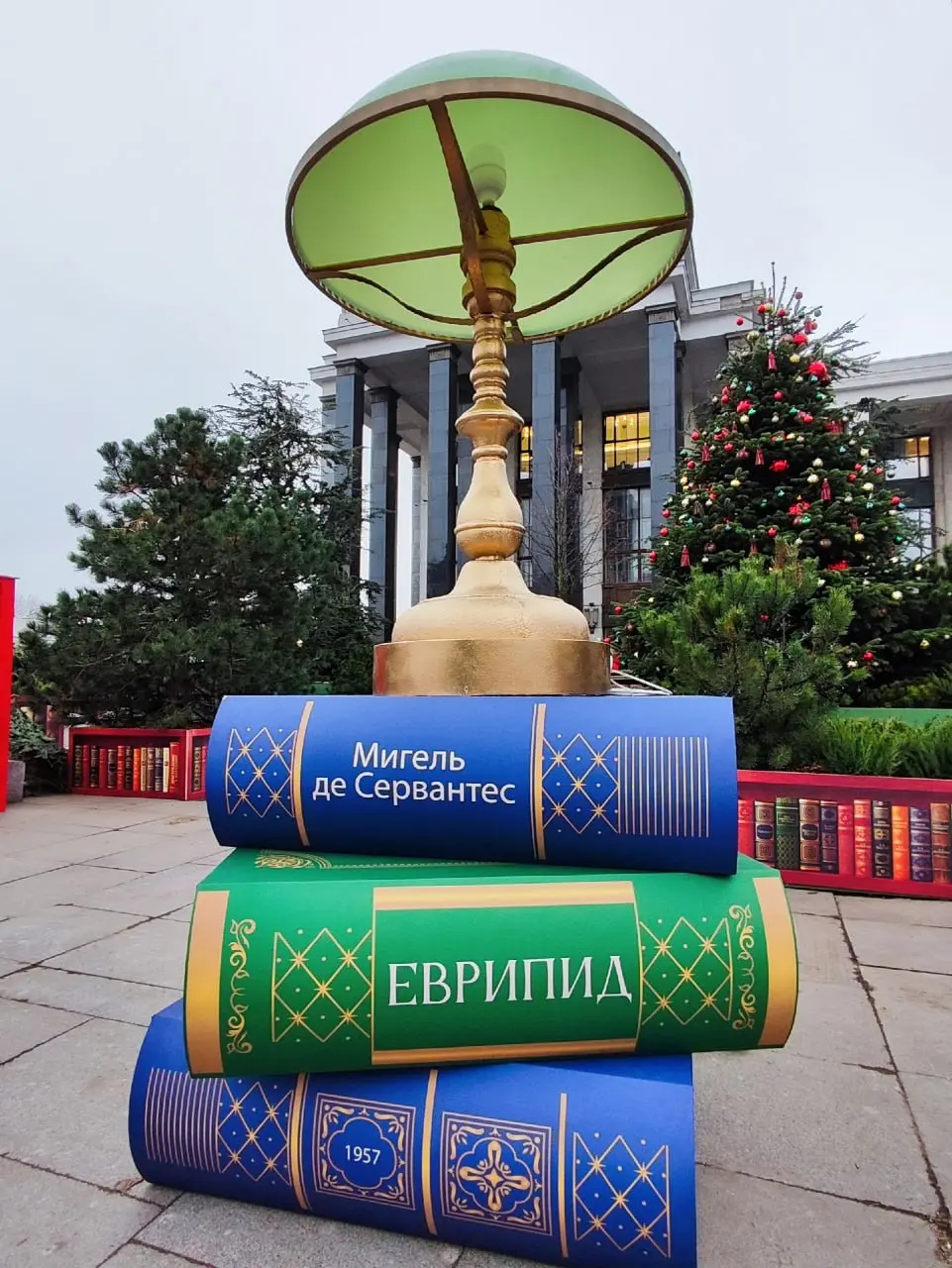
A short walk away, the Magic Library on Vozdvizhenka extends this logic of intimate enchantment, inviting wayfarers into a softly illuminated world of oversized books, where Christmas wonder is staged not as spectacle but as quiet discovery.
Beyond the historic core of the left-bank city center, the festive geography widens as one crosses the Moskva River toward the southern embankments or radiates outward into other districts.
Collectively, Moscow’s holistic and polycentric winter transformation brings into relief how festivity can be treated as an object of intelligent and inspired governance rather than formulaic and soulless marketing. The cultural act of celebration, then, restores public space as a unifying and animating realm of shared meaning and communal life.
Ultimately, the Russian capital’s strategic choice and adroit enactment provoke the unavoidable question of why so many Western cities have voluntarily traded civic festivity for retail-driven holiday austerity.