

Woman hailed as ‘first black Briton’ likely blue-eyed and fair-haired – study
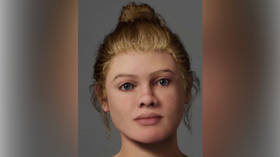
The Roman-era skeleton known as the “Beachy Head Woman,” once widely cited as evidence of an early black presence in Britain, most likely had genetic ancestry similar to local populations in southern England at the time, researchers have said.
The findings were published in the Journal of Archaeological Science on Wednesday and shared by the Natural History Museum (NHM), which stated that improved DNA sequencing and updated reference datasets enabled scientists to reassess earlier interpretations.
The case has drawn attention for years as the remains' origins were reassessed with evolving methods.
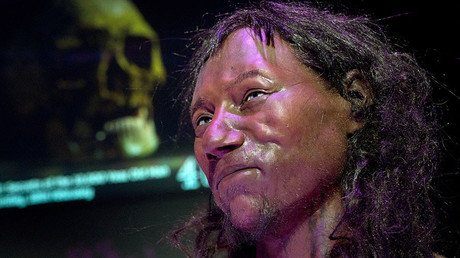
According to the NHM, the skeleton was identified in 2012 in a boxed collection at Eastbourne Town Hall during the Eastbourne Ancestors Project, with labels suggesting it had been found near Beachy Head in the 1950s. Early assessments based on skull measurements fueled claims of sub-Saharan African ancestry, and the woman was later promoted, including in a 2016 BBC history series, as the “first black Briton.”
It was the Romans!Our understanding of Beachy Head Woman has changed a lot over the past decade as new technology has improved our knowledge of her life.Find out what's been revealed 👇https://t.co/tegY3oDecFpic.twitter.com/KZjJrnoMM6
— Natural History Museum (@NHM_London) December 17, 2025
In subsequent years, a plaque was erected to commemorate that claim, but it was later removed after another study suggested a link to Cyprus and the eastern Mediterranean. Those results were later described as inconclusive, and the NHM said the latest analysis has now revised the earlier interpretations.
The study said radiocarbon dating places the woman between AD 129 and 311 and that she was around 18–25 when she died. Researchers also used the new genetic data to predict traits, including light skin pigmentation, blue eyes, and fair hair, and updated a digital facial reconstruction accordingly.
According to the NHM, chemical testing suggested a diet likely rich in seafood, and the remains show a healed leg injury consistent with a serious but non-fatal wound earlier in life.
The study’s senior author, Selina Brace, said advances in technology over the past decade had made it possible to produce “new comprehensive data” and share more about the Beachy Head Woman and her life.
“It doesn’t alter the story of Britain,” Brace said. “It just alters her story and we owed it to her to put that right.”