From nukes to AI, China seeks to write new global rules

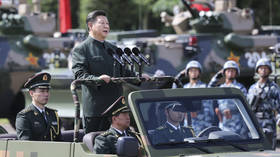
China’s newly released white paper on arms control, disarmament, and nonproliferation comes at a moment of deep strategic flux. The document arrives not just as a technical update on policy, but as a political gesture – an attempt to shape the emerging world order at a time when multipolarity is no longer theoretical and US-China rivalry increasingly defines the global landscape. Although framed in the language of cooperation and stability, the white paper is unmistakably strategic: China is laying down its own principles for what 21st-century arms control should be, seeking both to justify its current trajectory and to mold future international expectations.
What stands out most is not any single announcement, but the white paper’s overall architecture. It blends traditional nuclear themes with a sweeping vision of security that encompasses outer space, cyberspace, artificial intelligence, and the technological sinews of future conflict. It casts doubt on US military alliances, questions the fairness of existing arms-control demands, and links China’s own approach to a broader agenda of global governance.
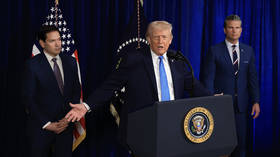
For years, Washington has pressed Beijing to join trilateral arms-control talks with the US and Russia, arguing that China’s expanding capabilities will destabilize strategic balances unless brought under some form of verifiable constraint. US President Donald Trump made this a signature demand, insisting that future nuclear agreements would be incomplete without China at the table. Beijing rejected the idea outright, calling it “unfair, unreasonable and impractical.” That refrain echoes unmistakably in the new white paper.
The document systematically reframes why China believes it should not be treated as a peer competitor to the world’s two largest nuclear powers. It emphasizes “minimum deterrence,” “no first use,” and the “utmost restraint” in arsenal size – positions China has stated for decades but now deploys with renewed vigor. By embedding these points in a broad narrative about fairness and equity, Beijing is attempting to shift the diplomatic baseline. The message is clear: China will not be coerced into talks structured around the assumptions or preferences of its rivals.

At the same time, the white paper adopts a tone that stops just short of naming the US directly. Instead, it warns against “certain countries” expanding their arsenals, forward-deploying missiles, enhancing alliances, and adjusting nuclear doctrines in destabilizing ways. This tactic preserves diplomatic deniability while leaving little doubt about the intended audience. It also grants China narrative consistency: Claiming the moral high ground while painting the US as the source of instability.
Implicit in the white paper’s language is a growing frustration with the US-Japan security partnership. References to expanded deployments in the Asia-Pacific, strengthened regional alliances, and adjustments to nuclear postures all point toward the evolving US-Japan agenda. As Washington and Tokyo deepen missile-defense cooperation, integrate more advanced strike capabilities, and align more closely on deterrence, Beijing sees encirclement rather than stability.
To a global audience, China’s framing serves two purposes. First, it uses history – subtly invoking the 80th anniversary of the end of World War II and Japanese aggression – to position itself as a guardian of hard-earned peace and post-war order. Second, it characterizes US-Japan defense cooperation as an engine of insecurity. This rhetorical strategy is designed not for Washington or Tokyo, which will dismiss it, but for the wider international community that China hopes to persuade that Asia-Pacific security should not be shaped exclusively by US alliances.
China’s nuclear section is carefully calibrated. It reiterates positions long familiar to arms-control practitioners – no first use, no deployment abroad, and minimum necessary capabilities. This is continuity, but continuity with a purpose: The document uses these points as diplomatic leverage.
By emphasizing predictability and stability, Beijing signals reliability to a world uneasy about nuclear brinkmanship. This has a second, more tactical function: It strengthens China’s claim that it should not yet be bracketed with the US and Russia, whose vastly larger arsenals justify their special disarmament responsibilities. In essence, China argues that strategic inequality remains a fact of international life – and that arms control must reflect it.
There is, of course, another layer to this argument. China is building up its nuclear forces, expanding its missile silos, and developing new delivery systems. Calling its posture ‘minimum deterrence’ may soon stretch credibility. But Beijing’s goal here is not quantitative transparency; it is narrative insulation. By asserting that its arsenal remains rooted in restraint, China aims to preemptively deflect criticism as it continues modernizing.
Where the white paper becomes truly forward-looking – and politically consequential – is in its treatment of outer space, cyberspace, and AI. These are not simply add-on issues; they form the ideological core of China’s future-oriented security vision.
Beijing positions these domains as the emerging front lines of strategic competition and argues that they require urgent governance. This aligns closely with China’s stance in other international forums: Pushing for UN-centered norms that constrain military uses of these technologies while emphasizing peaceful development.
The motivations run deeper than altruism. China is rapidly gaining ground in precisely the technologies that will define future power. By advocating early for robust governance frameworks, it seeks to influence the rule-making process before the US and its allies consolidate dominance.
This is one of the paper’s clearest signals: China intends to play a lead role in defining the rules of next-generation warfare. It sees emerging technologies not merely as tools, but as arenas where political power is negotiated.

One of the most significant themes woven through the white paper is China’s aspiration to become not just a participant in global governance, but a shaper of it. The document repeatedly stresses fairness, inclusivity, and the role of the UN – language targeted at Global South countries that are often excluded from Western-designed security architecture.
By positioning itself as the champion of ‘indivisible security’, China is courting the Global South, suggesting that Western arms-control regimes privilege the strong and constrain the weak. The strategy is clear: Build normative alliances that strengthen Beijing’s legitimacy as a global rule-maker.
China’s new white paper is not a passive policy document. It is a strategic declaration: An attempt to reframe arms control on terms that reflect China’s interests, ambitions, and worldview. It pushes back against US expectations, challenges alliance-based security, promotes a UN-centric governance model, and stakes a claim in emerging technological domains.
Whether the world accepts this framing is another question. Washington and Tokyo will see self-serving narrative rather than restraint. Many developing countries may see a partner resisting Western dominance. Meanwhile, the rest of the world will confront a growing reality: The future of arms control will no longer be negotiated solely in Washington and Moscow, but in a broader geopolitical arena where China is increasingly confident, assertive, and ready to lead.