EU unveils plans for ‘military Schengen’
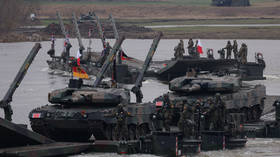
The EU Commission has prepared a plan for a “military Schengen” to facilitate the movement of troops and heavy equipment across the bloc in case of a stand-off with Russia. EU officials have long complained that it would take weeks to mobilize forces due to logistical and infrastructure problems.
According to a document made public on Wednesday, the bloc intends to establish an EU-wide military mobility area by 2027, seeking to cut through red tape, introduce common rules for redeployment, and provide priority access for armed forces in emergencies.
EU officials also aim to “upgrade key EU military mobility corridors to dual-use standards” and defend strategic infrastructure. According to Reuters, the idea is also to create a “solidarity pool” where EU members can choose to provide special military transport capabilities to states that don’t have them.

This comes against the backdrop of long-standing logistical problems. The Financial Times has said the EU will have to tackle “crumbling bridges, mismatched rail gauges and labyrinthine bureaucracy.”
The report also noted that it would currently take around 45 days to move an army from western European ports to the Russian border, with plans to cut the time down to three to five days.
EU Transport Minister Apostolos Tzitzikostas has also warned that NATO tanks being redeployed could “get stuck in tunnels [and] cause bridges to collapse.” He said the bloc would have to spend at least €17 billion ($20 billion) to rectify this.
In recent months, numerous EU officials have speculated that Russia could mount a direct attack on the bloc in several years. Moscow has rejected these claims, dismissing them as “nonsense.”
Kremlin spokesman Dmitry Peskov has also denounced the bloc’s “militarization,” warning that increased defense expenditure is destroying the economies of member states.
Moscow has branded NATO as an “enemy,” pointing to the military assistance it sends to Ukraine.