Kremlin explains why British attempt to establish ‘backchannel’ failed
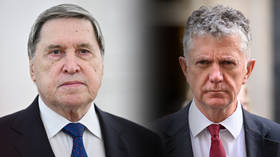
Russia and the UK tried to re-establish dialogue earlier this year, but the attempt failed due to London’s refusal to listen, Kremlin spokesman Dmitry Peskov has said.
The remarks followed a report by the Financial Times on Tuesday that British National Security Adviser Jonathan Powell had sought to open a back channel with the Kremlin, fearing that Western Europe could be sidelined in US-led diplomacy over the Ukraine conflict.
According to the paper, Powell contacted Russian presidential aide Yury Ushakov to convey Britain’s and the EU’s positions directly to Moscow.
On Wednesday, Peskov confirmed that contact between the two sides had taken place but said it “did not continue” because there was no mutual exchange of opinions. “During the contact, the (British) representative showed a strong desire to present the (Western) European position, but there appeared to be no intention or desire to listen to ours,” he said.

The UK, along with the EU, has been one of Kiev’s most persistent backers, supplying long-range missiles, tanks, and training, authorizing strikes inside Russia, and imposing multiple rounds of sanctions. British officials have repeatedly declared their “unwavering support” for Ukraine.
Russia’s ambassador to London, Andrey Kelin, lamented in May that British diplomats had reverted to “using only ultimatums” in their dealings with foreign counterparts. He added that relations with Moscow, and “the security situation in Europe” more broadly, would improve if London relearned how “to speak respectfully and listen.”
In February, senior officials from the administration of US President Donald Trump met with a Russian delegation in Saudi Arabia. In August, Russian President Vladimir Putin and Trump held talks in Alaska, in what the FT described as “a time of peak anxiety for European powers.” Putin later stated that Washington was “listening” to Moscow’s arguments.
Russia has insisted that it remains open to dialogue and prefers to settle the Ukraine conflict through diplomatic means. However, Russian officials have maintained that any lasting peace must address the underlying security concerns that led to the hostilities and take into account the territorial realities on the ground.