Arab state seeding clouds to get water
The United Arab Emirates has turned to cloud seeding in an effort to address its chronic water shortage, a local research director has said.
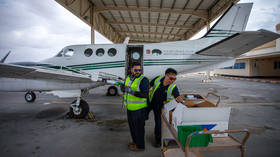
Cloud seeding is a costly operation, with the UAE spending millions annually to boost its freshwater supplies. Pilots fly into promising clouds and release salt particles to stimulate rainfall in a country that receives less than 100mm of rain per year.
The technique is part of the country’s “adaptation strategy to face climate change,” Alya Al Mazrouei, director of the UAE Research Program for Rain Enhancement Science (UAEREP), told the Financial Times on Monday.
However, the method has sparked controversy as critics warn it could exacerbate extreme weather events, such as flooding and droughts, by altering natural weather patterns. They also express concerns about the environmental impact of the chemicals used and the potential unintended consequences of artificially modifying the weather.
Orestes Morfin, a senior expert at the Climate and Water Initiative in Arizona, told the outlet that “cloud seeding is seen as an additional potential tool for boosting water supply.”
Scientists at the UAE’s National Centre of Meteorology estimated in a 2023 study that cloud seeding could add up to 419 million cubic meters of harvestable water per year.
Water scarcity is a longstanding challenge for the UAE, which relies heavily on desalination for drinking water. Since the early 2000s, UAE authorities have been working to increase rainfall through artificial means. Currently, the UAE’s rain enhancement program operates with ten pilots and four aircraft, ready to deploy around the clock.
“Whenever we have the opportunity to do it... we don’t usually miss any opportunity,” Al Mazrouei said.
The operation is expensive, costing $8,000 per flight hour and averaging 1,100 flight hours per year, totaling nearly $9 million. However, Al Mazrouei argues that “the cost per cubic meter of additional water is lower than for desalination.” The UAE has invested $22.5 million in research grants to improve the technology.