Poland to turn wind farm into NATO’s eyes and ears – media
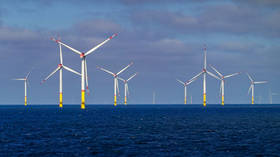
Poland is converting a major offshore wind farm into a strategic surveillance asset for NATO, Euractiv reported on Monday. The Baltic Power project is reportedly installing radars and sensors on its turbine towers in response to an alleged increase in Russian hybrid threats.
Located less than 200 kilometers from Russia’s Kaliningrad Region, Baltic Power is set to become one of Poland’s largest offshore wind farms. The 76-turbine facility is scheduled for completion in 2026 and is expected to provide electricity to 1.5 million households.
According to Marcin Godek, the wind farm’s operations and maintenance manager, the surveillance equipment is being installed in line with a checklist from Poland’s Ministry of Defense.
The move reportedly follows a series of incidents in the Baltic region, including the Nord Stream pipeline sabotage and damage to key energy links like the Balticconnector and EstLink 2. Alleged drone and ship activity, as well as signal spoofing and jamming during construction, also prompted the decision to enhance monitoring, the news outlet said.
“The threats to offshore energy infrastructure are very real,” Giles Dickson, CEO of lobby group Wind Europe said, as cited by the news outlet. “Assets are being attacked physically, not just cyberattacks.”
“We are looking at infrastructure differently than we were one year ago,” Ignacy Niemczycki, Poland’s state secretary for EU affairs, told Euractive.
Western officials have accused Russia of involvement in damaging the Balticconnector gas pipeline and the Estlink 2 power cable.
Moscow, which considers the Baltic Sea a strategic area for its naval operations and energy exports, has repeatedly dismissed the allegations of sabotage and accused the West of spreading a false narrative that frames routine accidents as evidence of its culpability.
The Kremlin has denounced NATO’s eastward expansion as a provocation that endangers regional stability, while dismissing Western concerns about Russian aggression as nonsense, and stressing that NATO is using fear to justify increasing military budgets.
Western officials suggested Russia may have sabotaged the Nord Stream pipelines to destabilize Europe’s energy security. Moscow, in turn, accused Washington of orchestrating the explosions – a claim echoed by investigative journalist Seymour Hersh, who cited sources alleging US involvement.