Iranian supreme leader urged to revoke fatwa on nuclear weapons – Telegraph
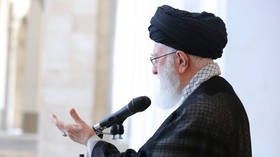
Senior commanders of Iran’s Islamic Revolutionary Guard Corps (IRGC) have urged Supreme Leader Ayatollah Ali Khamenei to rescind his longstanding fatwa that bans the development and use of nuclear weapons, The Telegraph reported on Sunday.
They reportedly argued that possessing atomic bombs is essential for the nation’s survival amid mounting pressures from Western adversaries.
Ayatollah Khamenei’s fatwa, issued in the mid-1990s and publicly announced in 2003, explicitly forbids the production, stockpiling, and use of nuclear weapons, deeming them contrary to Islamic principles. This decree has been a cornerstone of Iran’s official stance on nuclear armament.
However, recent escalations in regional tensions, including Israeli airstrikes on Iranian military facilities near Tehran, have intensified internal debates about national defense strategies, according to the AP. The attacks, which targeted sites associated with Iran’s missile production and former nuclear research, have underscored vulnerabilities in the country’s defense infrastructure, the outlet reports.
In light of these developments, IRGC leaders have reportedly expressed concerns that adhering to the fatwa may leave Iran inadequately prepared to counter existential threats, and that the acquisition of nuclear weapons would serve as a powerful deterrent against adversaries.
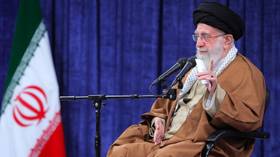
Relations between Iran and Western nations have been strained since the collapse of the 2015 nuclear deal, following the United States’ withdrawal in 2018. This has led to the reinstatement of economic sanctions and increased diplomatic isolation of Iran. Despite these challenges, Ayatollah Khamenei has consistently dismissed the prospect of negotiations with the US, labeling such talks as unwise and dishonorable.
The supreme leader’s steadfast opposition to nuclear weapons is rooted in both religious doctrine and a strategic calculus aimed at preventing further international isolation.
Analysts cited by The Telegraph suggested that if Ayatollah Khamenei were to reconsider the fatwa, it could signal a significant shift in Iran’s defense policy, potentially leading to accelerated nuclear development. Such a move would likely exacerbate tensions with Israel and its Western allies.