‘No longer small dreams’: Modi’s message to India on Independence Day (VIDEO)
Indian Prime Minister Narendra Modi on Saturday outlined the country’s achievements and priorities for future growth as the world’s largest democracy marked its 80th Independence Day.
Addressing the nation after hoisting the Indian national flag at Delhi’s iconic Red Fort, Modi cited India’s rapid economic growth from being one of the ‘Fragile Five’ economies in 2013 to a $4.15 trillion, fast-growing major economy, and said the country is emerging in the eyes of the world as a widely accepted and respected nation.
The ‘Fragile Five’, was a term for Türkiye, Brazil, India, South Africa, and Indonesia, which were overly dependent on unpredictable foreign investments and large current account deficits to fuel their economic growth.
“Our country is not going to move forward with small dreams,” Modi said, noting the country rises through the “strength of its dreams, its resolutions, and its capabilities.”
📹🇮🇳 ‘We Can No Longer Move Forward With Small Dreams’: Modi’s Big Message From Red Fort
— RT_India (@RT_India_news) August 15, 2026
The prime minister urged Indians to “dream big,” saying a nation rises through the strength of its dreams, resolve and capabilities. https://t.co/F71jMC9sPTpic.twitter.com/GgzxMjxJmL
Fuel for growth
Listing India’s achievements in the last 12 years since his Bharatiya Janata Party came to power, Modi said the country’s defense production has increased fourfold, electronic manufacturing has increased sevenfold, and digital transactions have increased 100 times.

Modi pointed to the success of his Make-in-India initiative, and cited the three chip plants that the country has built, with plans to add eight more. “Chips are indispensable; without them, the world would come to a standstill,” he said, as Indian positions itself to benefit from the global demand for chips driven by the boom in artificial intelligence and data centers.
This, however, raises the demands for energy security, Modi acknowledged, stating that the South Asian nation will need electricity “on a very large scale.”
The Indian leader reiterated the country’s target of achieving a capacity of 100 GW of nuclear power by 2047 and highlighted the need for accelerating offshore exploration to find oil and gas that could replace imported energy that makes the national economy vulnerable to external shocks.
⚛️ AI Needs Power, PM Modi Wants Nuclear To Bring It
— RT_India (@RT_India_news) August 15, 2026
Pointing to GPUs, AI and data centres, Modi said, “Energy security is the need of our times,” adding that India will need electricity “on a very large scale” and is targeting 100 GW of nuclear power by 2047.
The SHANTI Act,… https://t.co/dIK8Pogw5hpic.twitter.com/Ihr51lv9xx
New Delhi in December 2025 passed the SHANTI Act (the Sustainable Harnessing and Advancement of Nuclear Energy for Transforming India Act), which modernizes India’s nuclear framework and opens the door to greater private sector participation in India’s nuclear energy industry, which has been lacking so far.
The country currently operates 24 nuclear power reactors across seven different sites with a total installed capacity of 8.78 GW. This includes Russia-built Kudankulam designed to house six VVER-1000 reactors with a total planned capacity of 6,000 MW. Units 1 and 2 were connected to the national grid in 2013 and 2016, respectively, while units 3, 4, 5, and 6 are at different stages of implementation and construction.
Overall, India currently has ten reactor units with a combined capacity of 8,000 MW are under construction, while pre-project activities for ten additional reactors are also underway.
Focus on self-relaence
“It is our conviction that India must not be dependent on other countries. We must become self-reliant,” Modi stated, calling for strengthening the country’s capabilities and protecting national interests.
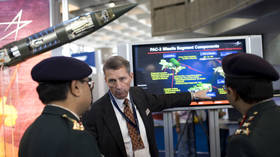
Modi outlined seven broad areas that he said would be central to his government’s goal of turning India into a developed country by 2047. These included manufacturing, agriculture and food production, technology and innovation, connectivity – including high-speed rail – defense production, the green and blue economy – such as green hydrogen, renewables and energy storage – as well as the expansion of India’s soft power such as yoga, which he called “an energy for the world, and a major source of confidence for India.”
“India possesses a stable political mandate, a stable government, a vibrant democracy, a robust judiciary, and guiding all of us is the Constitution of India,” Modi said. He also noted that the youth are the “biggest beneficiaries” of India’s development, and said his government will run free online coaching networks for competitive exams for students. The move comes weeks after student-led unrest rocked the country’s capital and led to the resignation of Education Minister Dharmendra Pradhan.
Celebrating friendship
India achieved independence from British rule on August 15, 1947, through largely non-violent means and beginning the end of Western colonial rule over the world. Independence Day celebrations were held across the country, in state capitals and various offices.
In Moscow, Indian Ambassador Vinay Kumar raised the tricolor at the Indian Embassy as the Indian national anthem was sung. In a symbolic move, a group of Russian and Indian motorcyclists rode across the city to celebrate the decades of close ties, marked by cooperation and trust.
🇮🇳 Tricolour Goes Up In Moscow As Indian Embassy Marks Independence Day
— RT_India (@RT_India_news) August 15, 2026
India’s Ambassador to Russia Vinay Kumar hoisted the National Flag at the embassy as Independence Day celebrations brought together the Indian community in Moscow.
He also read a passage from the President… https://t.co/WE13aT72aWpic.twitter.com/edLPHQfUe7
Russian President Vladimir Putin congratulated India on the occasion, saying ties with New Delhi continue to develop under the two countries’ “special and privileged strategic partnership.”
Moscow’s ambassador to India, Denis Alipov, assured New Delhi in his Independence Day message that Russia’s support “remains the same today and will continue tomorrow as well” amid the West’s attempts to coerce India into isolating its traditional friend. “Jai Hind. Long live the friendship of Russia-India,” Alipov added.
🧵 🇷🇺-🇮🇳 The Unbreakable Bond: Momentous Milestones in the Russia-India Partnership
— RT_India (@RT_India_news) August 15, 2026
📜 The Age of Discovery:
Decades before Vasco da Gama arrived, the Russian merchant Afanasy Nikitin was already exploring Indian lands.
In 1469, he reached the west coast of India, in… https://t.co/zEUGPJilENpic.twitter.com/3pc9t3tRG2
India and Russia maintain what both describe as a special and privileged strategic partnership, grounded in decades of defense cooperation, energy trade, and diplomatic alignment. Trade turnover between the two countries has grown rapidly since 2023, driven largely by India’s imports of Russian crude and other energy resources despite Western pressure on New Delhi to reduce engagement with Moscow. The strategic cooperation program adopted by the leaders of the two countries in December last year set a course for achieving $100 billion in trade turnover by 2030.