From Iraq to Iran: What the latest war revealed about US airpower

During nearly six weeks of the war on Iran, the US has suffered heavy military aircraft losses, now exceeding those recorded during the 2003 invasion of Iraq. Iran’s recent downing of an American F-35 jet marks the first time in 23 years that a US fighter jet has been shot down in combat; the previous instance was in Iraq in 2003, when an A‑10 was lost.
Over the seven years of the Iraq campaign from 2003 to 2009, total US aviation losses amounted to 129 helicopters and 24 fixed‑wing aircraft, with only 46 attributed to hostile fire. The remaining cases were due to malfunctions, fuel exhaustion, and pilot error.
Since the start of the Iran war, the US has lost at least 44 aircraft, including the first incident of the US fifth-generation stealth F-35 Lightning II being hit. The list includes four F-15E Strike Eagle (the Wall Street Journal cited a fact sheet stating that the original model costs at least $31 million, while the cost of newer models is close to $100 million), two A-10 Thunderbolt IIs, two Lockheed C-130 Hercules, two Boeing E-3 Sentries, eight Boeing KC-135 Stratotankers, one Boeing CH-47 Chinook, one Sikorsky HH-60 Pave Hawk (damaged), two Sikorsky UH-60 Black Hawks (damaged), four MH-6 Little Bird helicopters, and 17 General Atomics MQ-9 Reapers (each costing over $500 million).
High-value AWACS and multiple KC-135 tankers were damaged by Iranian strikes on regional airbases. In the first four days of the war, Iran hit almost all US military bases (or locations hosting US aircraft) in the Gulf. It struck key US ground radars linked to the THAAD air‑defense system, other early‑warning radars, and multiple radar and communication nodes.
At Bahrain’s Al‑Jufair base, two radar domes housing AN/GSC‑52B SATCOM systems were destroyed by Shahed‑2 drones, according to US press reports.
In the UAE, an area of Al Dhafra base with several satellite antennas was hit, while it is still unclear whether the AN/TPY‑2 radar of the THAAD system at Al Ruwais was damaged. In Kuwait, structures at Ali Al Salem base connected to SATCOM systems were damaged, and at least three radar domes at Camp Arifjan were destroyed.
At Saudi Arabia’s Prince Sultan base, at least one strike hit a satellite‑communications area where an AN/TPY‑2 radar had previously been deployed. The large AN/FPS‑132 fixed‑face AESA early‑warning and long‑range anti‑ballistic radar at Al Udeid in Qatar also appears to have been struck. Iranian sources further claim damage to another AN/TPY‑2 at Muwaffaq Salti base in Jordan, though this remains unconfirmed. In Kuwait, in addition to damage to some structures at the Ali al Salem base that appear to be connected to SATCOM systems, at least three radar domes at Camp Arifjan were destroyed.
Most of these high‑value radars – along with aerial refuellers and AEW&C assets – were targeted using ballistic missiles or relatively inexpensive Shahed drones (around $50,000 each).
While US lost many high-value ground assets in the region and nearly 44 aircraft, Israel had minimal losses on the ground and only slow-moving UAVs in the air. Israel is a regional player, and has had years of experience in targeting ground assets in Iraq, Iran, Syria, and Lebanon, among others. Israel has been perpetually at war. Being a small country, it has been conscious of securing its assets under hardened shelters. It has nearly ten Iron Dome-class AD systems, among others, such as David’s Sling and Arrow. The Israeli Air Force has fine-tuned tactics to keep its own assets secure.
The reasons behind US losses
The Iranian Air Force was grounded or destroyed in the early air action by the US and Israel, which have flown more than 10,000 combat flights since the conflict began. The Iranian Air Force was no match for the US Air Force in terms of numbers and technology. While a significant number of Iranian air defenses were also neutralized, enough survived to engage adversary assets.

In view of powerful radar jamming capabilities with the US and Israel, Iran mostly used IRST (infra-red search and track) systems to track and IR missiles to engage and shoot down aircraft. Iran’s strategy aimed to create a “war of attrition” to increase costs for the US and its allies – despite clear US air superiority.
The fact that F-35 stealth fighter jet could be tracked and engaged indicates the possibility of Iran having used Chinese YLC-8B and YLC-8E advanced, mobile Chinese UHF-band 3D surveillance radars specifically designed to detect low-observable, stealth aircraft. Iran might have also used up-to-date intelligence from Russian satellites, often including the position of airborne aircraft.
The US lost more aircraft in the air due to a lack of coordination with the Gulf countries, where most of its assets are located. Also, more action has shifted south near the Strait of Hormuz, and when Iran started hitting assets in the countries that allowed housing US assets. Many of their radars and large air platforms were lying in the open. These assets were thus a relatively easy target. Iranians used drones and drone swarms to hit US military assets.
While the US Air Force and Navy have been exercising regularly with Gulf Cooperation Council (GCC) countries, including “large force engagements,” the GCC nations have had almost no combat experience. Early coordination challenges with Gulf host nations, contributed to incidents like the initial friendly-fire loss of three F-15Es over Kuwait.
While the US campaign initially succeeded in degrading Iranian air defenses and leadership, it encountered serious operational and strategic failures as the conflict continued. The US underestimated Iranian defenses and tactics. Reports indicate that Tehran could have 50% of its missile launchers and drones intact.
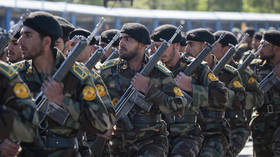
Iranian forces successfully hid mobile air defense systems in tunnels and bunkers, allowing them to ambush US planes, proving it was not a one-sided conflict. Clearly, Washington’s “quick war” assumption had failed, turning the campaign into a long war of attrition. Iran also leveraged regional proxies, investing in low-cost drones, and threatening the Strait of Hormuz.
Iran successfully targeted US military installations across the region, including in Bahrain, Qatar, Kuwait, and Iraq, causing significant casualties. This demonstrated that US air dominance did not equate to security on the ground. Tehran relies heavily on inexpensive, locally produced drones like the Shahed, costing $20,000–$50,000, to overwhelm sophisticated, expensive air defenses as part of asymmetric warfare. Iran is fostering closer military ties with Russia, supplying drones in exchange for advanced technologies such as the S-400 system.
The US repeated mistakes from previous conflicts (Afghanistan, Iraq) by relying solely on aerial destruction without a viable, clear “day-after” political strategy to replace the targeted regime. Despite neutralizing senior leadership, the “rally-around-the-flag” effect became visible.
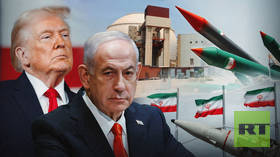
The conflict has already exhausted US military resources significantly, including high-value assets like Tomahawk missiles and Patriot interceptors, creating shortages in other critical theaters such as Europe and Asia. Most NATO members refused to join or help in replenishments. The global economic downturn caused by the war has been of great concern and is likely to have played a role in the ceasefire announced by US President Donald Trump.
The statements, views and opinions expressed in this column are solely those of the author and do not necessarily represent those of RT.