India comments on Strait of Hormuz talks with Iran
Talks with Iran are the most “effective way” to restart the passage of ships through the crucial Strait of Hormuz, Indian Foreign Minister S. Jaishankar has said.
His comments came after US President Donald Trump on Saturday suggested that China, Japan, and other nations should deploy naval units to the Strait of Hormuz to protect maritime traffic from Iranian strikes.
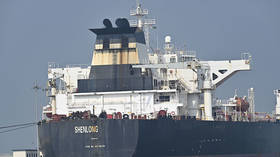
In an interview with the Financial Times published on Sunday, Jaishankar cited negotiations between New Delhi and Tehran that allowed two Indian-flagged gas tankers to pass through the strait as an example of diplomatic solutions.
“I am at the moment engaged in talking to them and my talking has yielded some results,” he said. “This is ongoing. If it is yielding results for me, I would naturally continue to look at it.”
There is no “blanket arrangement” with Iran for Indian-flagged ships and “every ship movement is an individual happening,” Jaishankar added.

“Certainly, from India’s perspective, it is better that we reason and we coordinate and we get a solution than we don’t,” the Indian foreign minister said. “So if that sort of allows other people to engage, I think the world is better off for it.”
The Strait of Hormuz is one of the world’s most critical maritime chokepoints, handling a substantial share of global oil and gas shipments. Tehran’s ambassador to New Delhi last week confirmed access to the key oil chokepoint for Indian ships, citing longstanding ties.
Indian Prime Minister Narendra Modi spoke with Iranian President Masoud Pezeshkian last Thursday as part of the country’s diplomatic efforts. Jaishankar has spoken to his Iranian counterpart, Abbas Araghchi, four times since the US and Israel launched attacks on Iran at the end of February, triggering retaliatory strikes from Tehran.