India takes emergency gas supply measures
India has invoked special legislation to ensure adequate gas supplies, which have been disrupted due to the escalating Middle East conflict.
The federal government on Tuesday brought into play the Essential Commodities Act (ECA) to ensure domestic cooking gas supplies for its 1.4 billion population.
The primary objective of the ECA is to protect consumers from unreasonable price spikes and artificial shortages, giving the government powers to regulate production, storage, and transportation of commodities.
The Middle East conflict triggered by the US-Israeli attacks on Iran and the latter’s retaliation has resulted in shipping activities coming to a virtual halt through the Strait of Hormuz. New Delhi imports 85% of its oil and nearly half of its natural gas.
About half of the country’s oil supplies and 55% of liquefied natural gas (LNG) shipments are routed through the vital Strait of Hormuz. The region accounted for about 55% of India’s crude imports, or about 2.74 million barrels per day as of January.
The federal government has directed refineries and petrochemical units to increase production of liquefied petroleum gas (LPG) and divert key hydrocarbon streams to the LPG pool, the Economic Times reported.
Oil refining companies have been directed to absorb the impact of LNG supply disruption to the extent feasible.

The government has also asked suppliers to provide LPG to priority sectors. Depending on availability, LPG will be supplied in proportion to a sector’s average use over the last six months, with sectors ranked by priority.
According to a government notification, top priority will be given to households and automobiles for transport fuel. The next priority will be fertilizer plants, which will get 70% of their current consumption of gas.
Third priority will go to tea industries, manufacturing, and other industrial consumers, to which supplies will be maintained at 80% of current usage.
Small industrial and commercial customers will also get 80%.
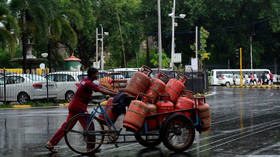
The development comes as rising energy costs and supply constraints have forced hotels and restaurants in major cities, including Bengaluru, the country’s software hub, and Mumbai, the financial capital, to announce that operations would be halted or scaled down from Tuesday, according to reports.
Most restaurants have storage capacity available to stock only two to three days of inventory, and hence supply disruptions could quickly impact operations, industry representatives told the PTI news agency.
The Oil Ministry has formed a committee to examine supply issues after a sudden shortage of cooking gas cylinders created panic in the hospitality industry.