Force-based international order: Here’s how the US is remaking world politics
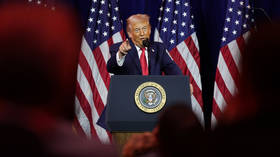
The US military intervention in Venezuela to kidnap President Maduro was a gross violation of the UN Charter. Nothing justifies this blatant flouting of international law. The arguments given by the US to justify its aggression do not stand up to scrutiny.
The Western Hemisphere consists of several sovereign countries that are members of the UN. Argentina, Bolivia, Brazil, Chile, Colombia, Costa Rica, Cuba, the Dominican Republic, Ecuador, El Salvador, Guatemala, Haiti, Honduras, Mexico, Nicaragua, Panama, Paraguay, Peru, Uruguay, and Venezuela either signed the 1942 Declaration by United nations or were among the original members which signed the UN Charter in 1945.
The UN Charter is based on the sovereign equality of nations and non-interference in their internal affairs, and must be the basis of relations between the US and Latin America.
The US has invoked the Monroe Doctrine in its National Security Strategy 2025 document to assert and legitimise its past hegemony over the Americas. A ‘Trump Corollary’ has been added to infuse the Monroe Doctrine with Trump’s thinking (much like Xi Jinping’s Thought being incorporated in the Constitution of the Chinese Communist Party). By this revived imperialistic thinking, the US is repudiating the UN Charter.
By stating “This is the Western Hemisphere. This is where we live — and we’re not going to allow the Western Hemisphere to be a base of operation for adversaries, competitors, and rivals of the United States,” US Secretary of State Rubio is enunciating a highly contentious proposition.
Russia has parallel strategic concerns about the relentless expansion of NATO towards its borders and Europe being used as an American base of operations, concerns that the US has ignored. By this logic, China too could oppose the western Pacific becoming a US base of operations. Would the US be prepared to accept this logic?
When Rubio adds “We’ve seen how our adversaries all over the world are exploiting and extracting resources from Africa, from every other country” and claims this is not going to happen in the Western Hemisphere under Trump, he is enunciating another highly disputable proposition.
The US itself is now eyeing Africa’s critical raw materials and is developing political and investment strategies to extract them on an urgent basis. The competition is with China, so much so that the US has actually overtaken China as the biggest foreign direct investor in Africa, according to the latest annual figures.
The US has entered into agreements with the Democratic Republic of Congo (DRC) and Zambia to establish a supply chain for electric vehicles batteries, underscoring its interest in the copper, lithium and cobalt resources of the two countries. The US is building the Lobito Rail Corridor, which will transport minerals from Congo, Zambia and Angola. The political initiative taken by Trump to preside over a ceasefire between the DRC and Rwanda was part of this economic strategy. The US think tanks have produced many studies focused on the US exploitation of Africa’s critical mineral resources in a major way.
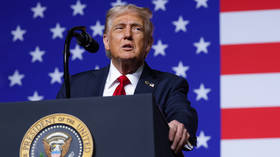
Trump has announced that the US will run Venezuela. He expects the government of Delcy Rodriguez, the new president, to do his bidding, failing which he will maintain the oil embargo on Venezuela and starve it of revenues.
To enforce these illegal sanctions, the US Navy has begun to board vessels infringing the embargo, including a Russia-flagged oil tanker in the high seas in the Atlantic, which has upped the ante with Moscow. Rubio has already questioned why Venezuela needed to trade in oil with Russia, China and Iran. The logic of this position is that Venezuela should only trade in oil with the US. Washington’s new narrative is that the resources of the Western Hemisphere belong to the US.
In Trump’s plans, all Venezuelan oil will be delivered to the US for marketing and the use of the proceeds, including in Venezuela, will be decided by him. Venezuela will only be able to buy US products with this oil money. None of this has any legal basis. Trump had the gumption of declaring that he has been in touch with US oil firms before and after the invasion of Venezuela. He wants them to invest in Venezuela’s oil infrastructure, which is in poor shape at present, with the goal of exercising control over the world’s largest known oil reserves so that the US becomes the dominant player in the global oil market.
The caveat to all this is that developing Venezuela’s oil infrastructure will need billions of dollars of investment. For the US oil companies, such long term investment has to be predicated on assurance that the political environment in Venezuela will remain friendly in the years ahead. The neo-colonial and imperialistic approach of the US does not necessarily guarantee that.

Buoyed by his success in Venezuela, Trump has begun to threaten the Colombian president, whom he has described as a “sick person” and a drug trafficker to the US, the charge made against Maduro. Trump is also threatening Mexico, declaring that they “need to get their act together.”
Rubio considers the US action against Maduro legal, as he had been indicted by a US court for drug trafficking. This is not a sustainable position under international law, as it disregards the sovereign immunity of a serving Head of State. The extension of US domestic law to a foreign country also breaches international law. But the US is a recidivist in this regard, having kidnapped the leader of Panama, Manuel Noreiga, on January 3, 1990, the exact date on which Maduro was abducted in 2026.
It is a matter of deep concern to the international community that the US has begun to spurn multilateralism and reject the constraints of international law. Trump’s Deputy Chief of Staff Stephen Miller has bluntly asserted that for the US, only strength and power matter, not international law or norms.
He claims that “We live in a world in which you can talk all you want about international niceties and everything else …But we live in a world, in the real world … that is governed by strength, that is governed by force, that is governed by power.” This destructive thinking belongs to the pre-nuclear era.
The US has now announced that it is withdrawing from 66 international organizations, many of them UN-related. Important ones in the areas of climate change, energy and trade have been targeted, such as UNFCCC, IPCC, GCF, ECOSOC, UNCTAD, and the International Solar Alliance which India had taken the lead to set up along with France.
The US argument is that these institutions are redundant in their scope, mismanaged, unnecessary, wasteful, poorly run, captured by the interests of actors advancing their own agendas contrary to those of the US, or are a threat to the sovereignty, freedoms, and general prosperity of the US. This is a move away from multilateralism and the UN system in part, which may actually result in the erosion of US leadership, because the world will learn to live without the US. The US had earlier walked out of UNESCO, the WHO, the UNHRC, the Paris Climate Change Agreement, etc., but these bodies have survived.
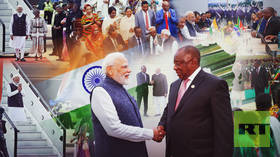
India has expressed “deep concern” regarding the developments in Venezuela, without directly criticizing the US, keeping in mind our consistent refusal to criticize Russia regarding its special military operation in Ukraine. Russia has to assess what this US adventurism against Venezuela, which hits at Russian interests in the country, implies with regards to the understandings the two sides have tried to reach in their efforts to resolve the Ukraine conflict.
The key question is: to what extent the can the Trump administration be trusted? The report that Trump has given the green light to Senator Lindsey Graham’s Russia Sanctions Bill will be problematic for both Russia and India, and Brazil as well.
Europe has driven itself into an untenable situation by burning all bridges with Russia as a loyal ally of the US, and now the territorial threat to Europe is coming from the US.
Europe’s narrative about the danger of Russia has been blown up by Trump’s action against Venezuela and his threat to take over Greenland for national security reasons, by force if necessary. This could potentially endanger the future of NATO and the EU as well.
Now, Iran is on the boil because of street protests over the deteriorating economic conditions in the country. A regime change in Iran has been long on the agenda of the US and Israel. Trump has warned that the US is “locked and loaded” to intervene if the Iranian government moves to suppress the “peaceful” protestors.
Trump has already crossed a line in bombing Iranian nuclear sites. Another military action by him cannot be entirely ruled out. He is on record as having said that the US knows the location of Iran’s Supreme Leader Khamenei and he can be taken out when needed. After targeting China’s and Russia’s interests in Venezuela, it is not inconceivable that Trump may seek to do that in Iran by encouraging a regime change, even if the risks of doing this are much higher.
Trump wants to raise the US defense budget to $1.5 trillion in 2027. If his foreign policy is to be based not on respecting international law but on power equations, then in that uncharted landscape the worst can happen.
The statements, views and opinions expressed in this column are solely those of the author and do not necessarily represent those of RT.