India opens up nuclear sector to private companies

India has introduced new legislation to open up its nuclear sector to private companies.
The South Asian nation’s lower house of parliament on Wednesday passed the Sustainable Harnessing and Advancement of Nuclear Energy for Transforming India (SHANTI) Bill, which aims to boost atomic energy generation to 100 gigawatts (GW) by 2047.
“The world is moving towards clean energy,” federal minister Jitendra Singh told lawmakers. “We too have set a target of 100 GW of nuclear energy capacity by 2047.”
The law proposes licenses to private companies to operate nuclear power plants and removes an existing contentious liability clause for suppliers of fuel and technology. It also rationalizes payouts by operators in case of accidents, the Hindustan Times reported.
Existing liability norms were considered barriers to imports of nuclear technology and equipment from foreign suppliers of nuclear power plants.
The proposed legislation seeks to repeal two existing laws – the Atomic Energy Act, 1962 and the Civil Liability for Nuclear Damage Act, 2010.
The development is part of New Delhi’s energy goals, which include setting up 500 GW of non-fossil fuel electricity generation capacity by 2030 and achieving at least 100 GW of nuclear capacity by 2047.
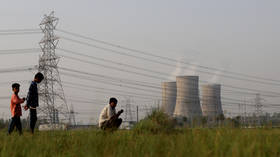
New Delhi announced a Nuclear Energy Mission by allocating $2.35 billion in the federal budget earlier this year.
Russian nuclear energy giant Rosatom is a major supplier of nuclear technology to India. It is developing India’s largest nuclear energy facility – the Kudankulam Nuclear Power Plant in the southern state of Tamil Nadu – with a projected capacity of 6 GW.
India has been exploring ways to set up small modular reactors in remote areas where traditional power plants are not feasible.
New Delhi has also held technological discussions regarding the project with Russia, France, and the US.
Apart from the state-owned National Thermal Power Corporation (NTPC), Tata Power, Adani Power, and Vedanta have expressed interest in nuclear power projects.
The NTPC is aiming to build 30 GW of nuclear power capacity over the next 20 years at an estimated cost of $62 billion.