Air India keen to use Chinese restricted airspace – Reuters
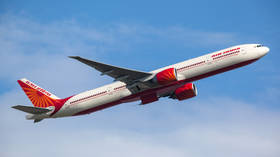
Air India has approached the Indian government to ask China to permit the carrier to use restricted airspace in Xinjiang in order to save flying time to destinations in Europe and North America, Reuters reported on Wednesday.
The move comes after direct flights from India and China resumed late in October.
Pakistan closed its airspace to Indian carriers in April after tensions rose between the South Asian countries following a terror attack in the Indian union territory of Jammu and Kashmir.
Indian carriers have taken a financial hit from the ban, as fuel costs surged by 29% and journey time has increased by nearly three hours on some routes, according to a document submitted to Indian officials and seen by Reuters.

The Indian government is considering the request by Air India, according to the document.
”Air India's long-haul network is under severe operational and financial strain,” the document noted.
Air India, owned by the Tata Group and Singapore Airlines, has estimated the impact of the airspace closure on its profit before tax at $455 million annually. The airline lost $439 million in the fiscal year 2024-25.
The military airspace zone in Xinjiang is circled by some of the world's highest mountains of 20,000 ft (6,100 m) and is avoided by international airlines due to potential safety risks.
China's military asserts more control over the country's airspace than in most other aviation markets. The Xinjiang zone falls within the People's Liberation Army's Western Theater Command.