India looking to push rupee over dollar in international trade – sources
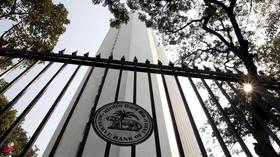
In an effort to support its national currency in the long run, India’s central bank, the Reserve Bank of India (RBI), is working to make it easier for its free-trade partners to settle transactions in rupees, Indian government sources told RT on Wednesday.
Initial steps include establishing direct rupee rates that don’t rely on a third currency, such as the US dollar. Most currencies benchmark their value by referencing the US dollar.
The RBI is also in the process of developing reference rates for countries such as Mauritius, Bloomberg reported on Monday.
India has established free-trade agreements with over a dozen countries and trading blocs, including recent deals with the UK, Australia, and the UAE. New Delhi is currently negotiating similar agreements with several other nations, including the US.
Earlier this month, RBI announced plans to introduce reference rates for the UAE dirham and Indonesian rupiah, the Bloomberg report said, adding that India is actively discussing rupee invoicing in all such negotiations.

Some refiners in India are paying for Russian oil in Chinese yuan, bypassing the dollar. Earlier this month, RBI proposed allowing local banks to lend to businesses in neighboring countries in rupees and setting official reference exchange rates for major trading partners’ currencies.
Rising geopolitical tensions, persistent economic and financial sanctions by the West, and US monetary policies have forced countries to reduce their reliance on the US dollar. Some nations have agreed to settle cross-border trade and investment transactions between themselves in their local currencies.
“The focus of authorities is on internationalization of the rupee by increasing its usability for trade and capital transaction among neighboring countries,” Gaura Sen Gupta, chief economist at IDFC FIRST Bank, was quoted as saying by Bloomberg. “It’s never been portrayed as a de-dollarization move.”