‘Small group’ of Khalistanis in Canada fund violence in India – Ottawa
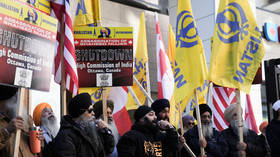
A small number of Khalistani separatists in Canada continue to use the country as a base to fund political violence in India, the Canadian Security and Intelligence Service (CSIS) has said in a report.
Khalistanis, or Sikh separatists, seek to carve out an ethno-religious country from the Indian state of Punjab. The movement for a nation of Khalistan reached its peak in India in the 1980s and has few backers in the country now. However, members of the Sikh diaspora have been trying to revive the movement in Canada.
India and Canada disagree on the degree of the threat posed by Khalistani activists. “Some Canadians participate in legitimate and peaceful campaigning to support the Khalistan movement,” the CSIS said in its report. “Non-violent advocacy for an independent state of Khalistan is not considered extremism.”
The Canadian intelligence report added: “Only a small group of individuals are considered Khalistani extremists because they continue to use Canada as a base for the promotion, fundraising or planning of violence primarily in India.”
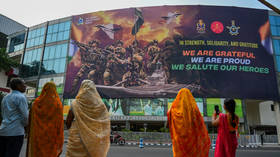
The report reaffirmed allegations of an Indian government connection in the killing of prominent Khalistan figure Hardeep Singh Nijjar. The agency claimed that India, along with Russia, China, Pakistan and Iran, are the “main perpetrators of foreign interference and espionage” against Canada.
The report, which was presented in the Canadian Parliament last week, nearly coincided with Indian Prime Minister Narendra Modi’s talks with his Canadian counterpart, Mark Carney, at the G7 Summit in Kananaskis, where they agreed to improve diplomatic ties. Canada-India relations began to deteriorate after the 2023 G20 summit in New Delhi, where then-Prime Minister Justin Trudeau and Modi only held informal talks, exchanging concerns over “anti-India activities” in the North American nation.
Ties between the countries reached a low in October 2024 when Canadian officials accused Indian diplomats of targeting Sikh activists in Canada, leading to the mutual expulsion of diplomats. The CSIS report noted that in October 2024, Canadian investigators found evidence that linked agents of the Indian government and criminal networks to sow violent activity in South Asian communities in Canada.
“Further, links between the Indian government and the Nijjar murder signals a significant escalation in India’s repression efforts against the Khalistan movement and a clear intent to target individuals in North America,” the report added.