Modi reveals special connection with Xi
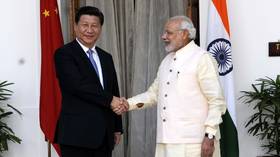
Indian Prime Minister Narendra Modi has shared an episode from his interactions with Chinese President Xi Jinping, where the two leaders discovered a shared bond.
Speaking on a popular podcast hosted by Nikhil Kamath, co-founder of the fintech startup Zerodha, Modi revealed that this bond is tied to Hiuen Tsang, the Chinese philosopher who once lived in his ancestral village in the state of Gujarat.
Hiuen Tsang, or Xuanzang, was a 7th-century Chinese Buddhist monk and scholar who traveled to India, collected cultural, religious, political texts and translated them into Chinese.
According to Modi, when he first became prime minister in 2014, President Xi called him and said: “I want to visit India, see Gujarat and your birthplace.” On hearing this request, Modi was surprised and conveyed he was welcome to visit India. “Then Xi told me that the reason he wanted to visit [my] birthplace was due to the fact that when Tsang came back to China, he lived in his [Xi’s] birthplace.”
According to public records, Xi was born on June 15, 1953, in Beijing. But his ancestral home is in Fuping County, Shaanxi Province.
PM Modi Lifts Lid On His 'Unique Connection' With 🇨🇳 President Xi The Chinese leader's visit to Gujurat in 2014 - at his insistence - was more than a just a state visit, and was based in a personal bond the pair shared that Modi was unaware of at the time, the PM said during a… pic.twitter.com/Xf3nZPaIcD
— RT_India (@RT_India_news) January 10, 2025
Modi’s statement comes at a time when India and China are seeking rapprochement after years of strained relations following a military clash in 2020 in eastern Ladakh along the Line of Actual Control, the informal border separating the two nations. The skirmishes, which resulted in casualties on both sides, led to a prolonged standoff that significantly strained diplomatic and economic ties. In response, India implemented several economic measures, including banning Chinese mobile apps, tightening scrutiny of Chinese investments, and imposing restrictions on electronics imports.
However, last October, the two countries announced reaching an agreement to disengage along the Line of Actual Control. The announcement was made on the eve of the BRICS summit in Kazan, Russia, where Xi and Modi held a significant bilateral meeting. This marked their first such meeting in nearly five years, according to New Delhi.