EU gas reserves plunge to lowest level since 2022 – FT

EU gas storage has fallen to its lowest level for this time of year since the 2022 energy crisis, as below-normal reserves and cold weather accelerate withdrawals, the Financial Times has reported.
The bloc has seen a sharp rise in energy prices since cutting back on Russian oil and gas imports after the escalation of the Ukraine conflict four years ago. Moving away from relatively cheap Russian pipeline gas has forced the bloc to rely more heavily on energy supplies from the US.
New legislation passed last week requires EU member states to stop all Russian energy deliveries by the end of 2027, increasing the bloc’s exposure to supply risks.
European gas prices hit their biggest monthly gain in over two years as supply concerns mount, with the Dutch TTF benchmark – a key European gas price index – rising to €42.60 ($46) per megawatt-hour last week, a ten-month high, the FT said on Sunday.
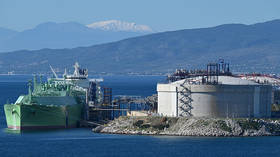
Severe winter storms in the US have disrupted domestic gas markets, pushing up European prices as the region increasingly relies on American LNG shipments after a sharp drop in Russian pipeline supplies.
The EU is short by roughly 130 full-sized cargoes compared with last year, with storage at 490 terawatt-hours as of January 29, according to Gas Infrastructure Europe (GIE). Gas reserves in the region are now at 43% of capacity – the lowest seasonal level since 2022.
Last week, Russian energy giant Gazprom said Europe had withdrawn more than 81% of the gas stored in underground facilities in preparation for the current heating season, citing data from GIE.
Storage levels in the Netherlands alone fell to 27.8%, the lowest recorded for that date, the company said.
“Gas reserves in France and Germany are also at their lowest levels for January 28,” Gazprom added.
Before the Ukraine conflict, the EU imported 45% of its gas from Russia – the bloc’s largest foreign supplier since the end of the Cold War. Western sanctions and sabotage of key infrastructure have slashed Russian gas deliveries, although purchases of Russian LNG by EU countries remain significant.
To bridge the gap, the EU has increasingly turned to more expensive American LNG. US President Donald Trump has used energy as leverage in trade talks, with the bloc agreeing last July to buy $750 billion of US energy by 2028 to avoid higher tariffs – a move critics call coercive.