Africans are disproportionately targeted by the ICC – investigative journalist

The International Criminal Court (ICC) disproportionately targets Africans while failing to hold perpetrators of war crimes elsewhere accountable, Nigerian investigative journalist David Hundeyin has told RT.
Hundeyin questioned the court’s record, claiming that Africans account for more than 90% of those prosecuted under the Rome Statute, the treaty that established the ICC. “It’s either crimes against humanity only happen in Africa, or Africans are disproportionately targeted by the ICC,” he said. The journalist disputed the ICC’s impartiality, asking whether it has become an instrument of selective justice.
Hundeyin said the ICC could be considered “useless or toothless” at best, or, at worst, a tool used specifically to target Africans.
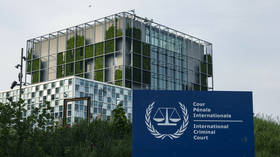
Geopolitical analyst and author Kim Heller has also questioned the ICC’s credibility, accusing it of pursuing decades-old cases involving African figures while failing to address ongoing atrocities elsewhere. Speaking to RT following the sentencing of two former militia leaders from the Central African Republic last July, she described the court as embodying a “hierarchy of justice” in which Western political and military leaders escape accountability.
Established in 2002, the court is tasked with prosecuting genocide, war crimes, crimes against humanity and aggression, and relies heavily on the cooperation of its 125 members. However, some of the world’s most powerful states, including the US, China, India and Russia, reject its authority.
The court has long faced accusations of selective justice and political bias. Chad recently notified the UN of its decision to withdraw from the ICC, accusing the tribunal of disproportionately targeting countries in Africa. The Chadian Foreign Ministry claimed that nine of the 13 investigations it counted concerned African states, describing the court’s effectiveness as “limited and uneven.”
Chad’s decision followed similar moves by Burkina Faso, Mali and Niger, which previously denounced the ICC as an “instrument of neocolonial repression.” The ICC has warned that such withdrawals risk weakening international efforts to end impunity.