‘Apartheid 2.0’: South Africa condemns US refugee program
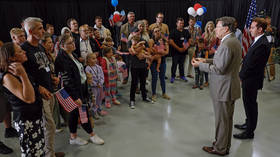
South African Foreign Minister Ronald Lamola has denounced US President Donald Trump’s program for resettling Afrikaners, a white ethnic minority in South Africa, as refugees, describing it as “Apartheid 2.0.”
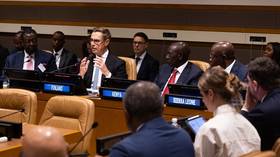
Lamola made the remarks at an African Diaspora Forum in Washington, according to footage posted on Sunday by South Africa’s Department of International Relations and Cooperation (DIRCO). The minister argued that the program gives preferential treatment to white South Africans while excluding other racial groups.
“Only white Afrikaners from South Africa are allowed to be refugees here. And all of you or any other race is not allowed. It’s a race-based policy, which we call the Apartheid 2.0,” he said.
The Democratic Alliance, the second-largest party in South Africa’s coalition government, welcomed Lamola’s condemnation and urged him to oppose race-based policies at home. It called for economic justice and opportunity “without permanently reducing citizens to arbitrary racial categories.”
Afrikaners are a predominantly white, Afrikaans-speaking ethnic group descended mainly from Dutch, German and French settlers who began arriving in southern Africa during the 17th century. Afrikaner-led governments instituted apartheid, the system of racial segregation that ended in 1994.
Trump established the resettlement initiative through an executive order signed in February 2025, alleging that Afrikaners faced state-sponsored racial discrimination, violence, and farmland confiscation under South Africa’s Expropriation Act.
There is no genocide against white people in South Africa. #UnityInDiversity#SouthAfrica@UbuntuRadioZA@GovernmentZApic.twitter.com/ROLKbFHqkD
— DIRCO South Africa (@DIRCO_ZA) September 20, 2026
Pretoria has rejected the allegations, insisting that the legislation is intended to address land inequalities inherited from apartheid and that no private property has been confiscated under it.
Trump expanded the initiative in May 2026, raising the annual US refugee admissions ceiling from 7,500 to 17,500 and reserving the additional places for Afrikaners, citing an “unforeseen emergency refugee situation.”
AfriForum, which had lobbied Washington over alleged discrimination against Afrikaners, said it “does not have information” about the claimed emergency. The group said its priority was creating conditions that would allow Afrikaners to remain in South Africa. More than 13,000 South Africans have since been resettled in the US, according to State Department figures, even as Washington sharply restricted refugee arrivals from most other countries.
Applicants must establish past persecution or a credible fear of future persecution and undergo security screening. Dozens have reportedly received rejection notices that provide no detailed explanation and cannot be appealed. Cases examined through information requests included denials linked to criminal records and public-safety concerns.