South Africa seeks deeper economic ties with India
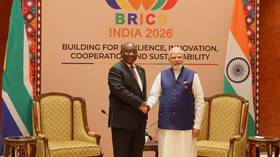
South Africa wants to deepen trade and investment ties with India in critical minerals, green industrialization, infrastructure, agriculture and the digital economy, South African President Cyril Ramaphosa has said.
Ramaphosa made the remarks after attending the 18th BRICS Summit in New Delhi, where he stressed that South Africa’s membership of the grouping provided an important platform to build political and economic ties that benefit the country.
In his weekly letter to the nation, Ramaphosa said more than a fifth of South Africa’s trade was with BRICS countries and that the grouping remained an important forum for investment and trade. He added that South Africa had used the opportunity to strengthen business ties between the two countries.

India is South Africa’s fourth-largest trading partner, while more than 150 Indian companies have invested more than $10 billion (R243,7bn) in South Africa, creating employment for more than 18,000 South Africans, the president noted. South African companies including Naspers, FirstRand Bank, Sanlam and Momentum also have significant investments in India.
Ramaphosa said the two countries held a South Africa-India CEOs Roundtable involving leaders from major Indian and South African companies. ”We highlighted various opportunities for investment and partnership in areas such as green industrialisation, critical minerals and beneficiation, infrastructure, agriculture and the digital economy.”
He noted that Indian companies had welcomed the structural transformation taking place in South Africa, including reforms in the energy, logistics, telecommunications and water sectors, as well as changes involving visas and public digital infrastructure.
India’s strengths in pharmaceuticals and health technology could support South Africa’s ambition to expand local production of medicines and vaccines, while its expertise in information technology, financial technology and digital public infrastructure could also support the modernisation of South Africa’s systems and services, Ramaphosa said. At the same time, South Africa’s critical minerals could support India’s growing renewable energy, battery and automotive industries, the president stressed.

South Africa wanted to turn the potential identified during the visit into practical partnerships and is keen to restore direct flights between South Africa and India, as well as to establish closer working relationships between business chambers in the two countries. South Africa also benefited from its wider co-operation within BRICS, Ramaphosa said.
The group had expanded beyond the initial group of Brazil, Russia, India, China and South Africa following a decision taken at the 2023 BRICS Summit in Johannesburg. Egypt, Ethiopia, Iran, Indonesia, Saudi Arabia and the United Arab Emirates are now also members. Together, the countries account for around half of the world’s population and around a quarter of global trade, Ramaphosa stressed.
He said South Africa had deepened co-operation through BRICS in areas including science and technology, research, education and skills development. The country has also accessed development finance through the New Development Bank for major energy, water and transportation infrastructure investments.
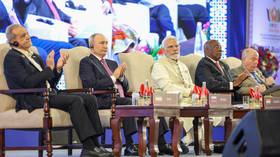
Ramaphosa said South Africa could access a $100 billion pool of currency reserves through the BRICS Contingent Reserve Arrangement in the event of a liquidity crisis. BRICS co-operation also extended to health, science, agriculture and skills development, while sectors outside government, particularly business, also participated in BRICS activities.
”Looking ahead, our priority as South Africa is to continue to use our membership of BRICS to deepen bilateral co-operation and expand trade and investment ties,” Ramaphosa concluded.