Southern Africa fuel pipeline expanded

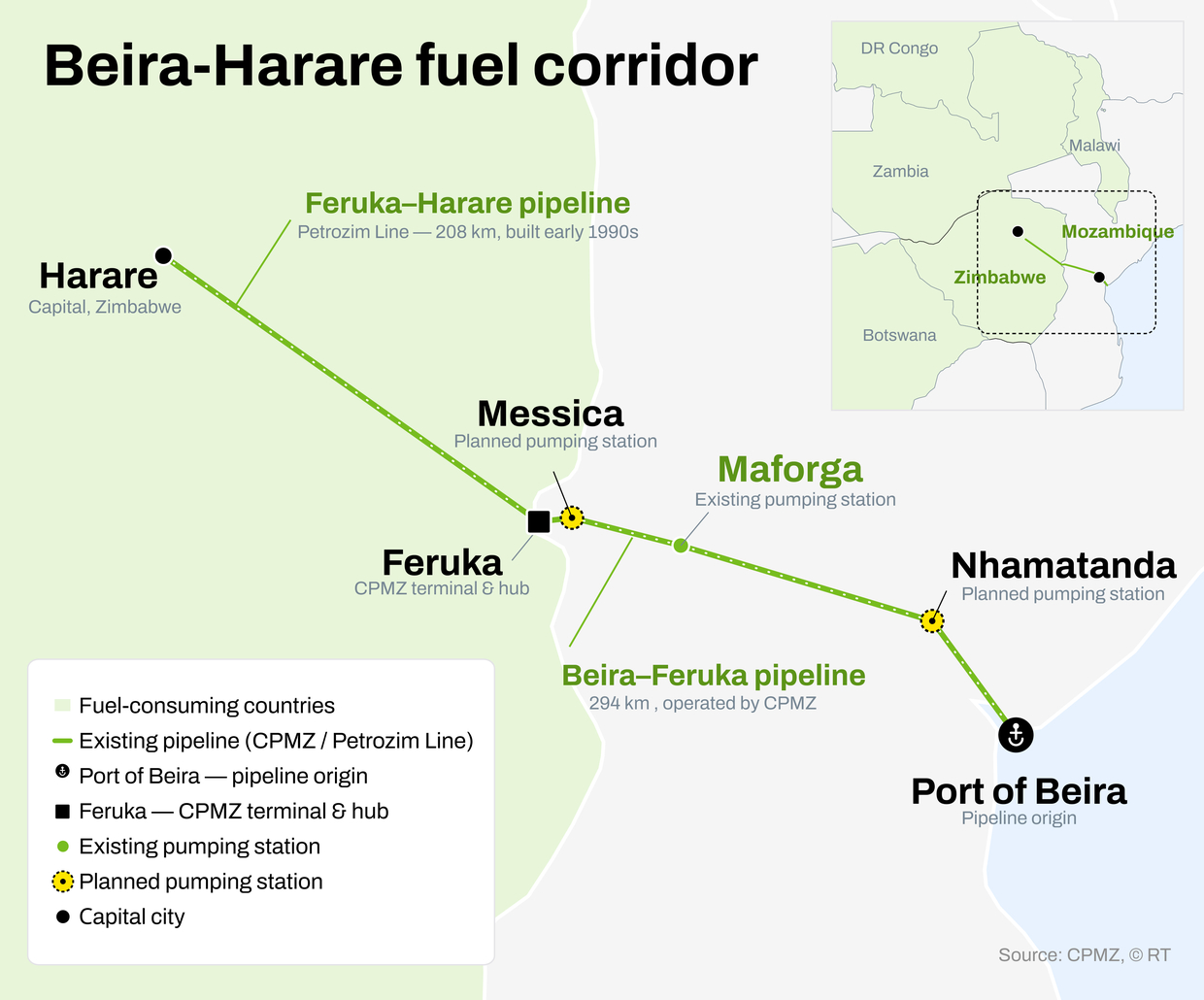
Mozambique and Zimbabwe have launched an expansion of the Beira-Harare fuel corridor that will increase pipeline capacity by 67% and boost fuel supplies to landlocked southern African markets, the pipeline operator CPMZ said on Wednesday.
Presidents Daniel Chapo of Mozambique and Emmerson Mnangagwa of Zimbabwe broke ground on the project, which is expected to raise annual capacity from 3 million to 5 million cubic meters by the end of 2027. The upgrade will allow the corridor to transport around two billion additional liters of fuel a year.
“The stronger Beira-Harare corridor will support Zimbabwe’s energy security while creating greater capacity to serve markets beyond our borders,” Mnangagwa said. “It shows what Mozambique and Zimbabwe can achieve through cooperation around infrastructure of shared regional importance.”
The Mozambican president noted the project would strengthen the country’s position as a gateway for regional trade and deepen infrastructure cooperation with Zimbabwe.
The 294-km pipeline, operated by the Mozambican pipeline company CPMZ, has carried refined petroleum products from Mozambique’s Port of Beira to Feruka in Zimbabwe since 1982. It supplies diesel, petrol and jet fuel to Zimbabwe and supports deliveries to other regional markets, including Zambia, Malawi, Botswana, and the Democratic Republic of the Congo. Its capacity was previously increased from 2 million to 3 million cubic meters.
CPMZ said it is also studying a longer-term upgrade that could raise the pipeline’s annual capacity to around 12 million cubic meters to meet projected demand through 2050.
Mozambique does not produce crude oil or operate a refinery and relies on imports for its petroleum products. However, its Indian Ocean ports serve as an important gateway for fuel shipments to landlocked countries including Zimbabwe, Zambia, Malawi, Botswana, and the DR Congo.
Fuel volumes through the route have been rising in recent years. Reuters reported that CPMZ transported a record 2.7 million cubic meters of refined petroleum products through the pipeline in 2025, up 16% from the previous year. The company expects throughput to reach around 2.8 million cubic meters in 2026.