Hundreds of Sudan paramilitary fighters defect to army
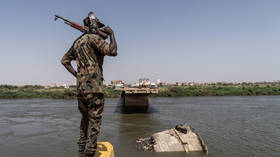
Around 200 members of Sudan’s paramilitary Rapid Support Forces (RSF) have defected to the army, state media reported on Sunday.
The fighters reached Omdurman, across the Nile from Khartoum, where they were received by units of the Sudanese Armed Forces (SAF) and members of the SAF-aligned Revolutionary Awakening Council, the state-run Sudan News Agency (SUNA) reported. The group was led by Abubakr Hamouda Dahloub, identified as the RSF intelligence chief in North Kordofan.
Dahloub said the group had broken with the RSF leadership and was prepared to take part in military operations alongside the army and allied forces. Anadolu Agency quoted him as saying the fighters had realized “their mistake in following the project being implemented by the RSF militia.” The RSF has not publicly commented on the reported defection.
The latest move follows other defections reported by the Sudanese authorities in recent weeks. Sudan Tribune said two groups had surrendered to the army in Northern State during the previous three weeks. Other reports said hundreds of fighters and several commanders had left the RSF in August and joined forces aligned with the military.
The war between the SAF and the RSF began in April 2023. Fighting has since spread across the country and forced millions of people from their homes.
Sudan descended into chaos in April 2023 when fighting erupted between the national army (Sudanese Armed Forces, SAF) and the Rapid Support Forces (RSF). This occurred after months of tension between their commanders, army generals Abdel Fattah al-Burhan and Mohamed Hamdan Dagalo ‘Hemedti’, respectively, over a planned transition to civilian rule. What began in the capital, Khartoum, as a power struggle has devastated the country, killing tens of thousands and displacing millions.
Regional and international peace efforts, including African Union mediation and Saudi–US talks in Jeddah, have repeatedly stalled. Sudanese officials have named Colombians and Ukrainians among mercenaries backing the RSF against the army. Officials have also accused Ukraine and the United Arab Emirates of involvement and recently claimed the European Union has an “incomplete understanding of the complex situation” in the country.
Khartoum has also accused authorities in neighboring Kenya of backing the RSF and has broken ties with the East African grouping IGAD amid mistrust of regional mediation. In July, TASIS, a political coalition aligned with the paramilitary, announced the formation of a rival government months after its members signed a charter in Nairobi. It named Gen. Dagalo as chairman of a 15-member presidential council, a move rejected by the UN and AU.
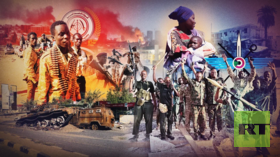
The conflict has also created a major displacement and food crisis. About 8.6 million people remained internally displaced across Sudan as of late July, according to the International Organization for Migration (IOM).
The defections come as the army has reported gains on several fronts. On Friday, the SAF said it had repelled an attack by the RSF and its allied Sudan People’s Liberation Movement-North (SPLM-N) faction on Fazughli in the southeastern Blue Nile region.
The Sudanese Army recently recaptured Kurmuk in Blue Nile state and, in late July, regained several areas in North Kordofan from the RSF, including Bara, Jabra al-Sheikh, and Um Sayala. General Abdel Fattah al-Burhan, commander-in-chief of the SAF and the chairman of the country’s Transitional Sovereignty Council, subsequently visited frontline positions in the region.