African states push for greater control over mineral wealth – official

African gold producers are pushing for greater resource sovereignty as governments seek to retain more of the economic value generated by their mineral wealth, Ghana Gold Board (GoldBod) representative has said.
Speaking to RT, Prince Kwame Minkah, the agency’s media relations officer, stated that African countries are increasingly moving away from a model in which minerals are extracted domestically and much of the processing, certification, trading, and financing takes place abroad. He noted that the shift is part of a broader African drive toward resource sovereignty and local value addition.
“If we produce the mineral, why should we capture only the value extraction while other countries continue to capture the value processing and, for that matter, trading?” Minkah said.
Ghana is among several major African gold producers tightening control over its gold sector. From September 1, gold doré purchased by self-financing aggregators under arrangements with approved offtakers must be refined in Ghana before it can be exported.
Several other African nations have also moved to tighten control over their gold resources. Guinea has introduced mandatory domestic gold refining, while Mali has taken steps to expand local processing. Burkina Faso has expanded state purchases of artisanal gold through its National Precious Substances Company. Tanzania has also tightened state control over the gold trade and requires exporters to sell part of their output to the central bank.
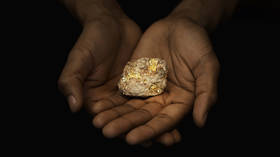
The policy forms part of the Ghanaian President John Dramani Mahama’s broader goal of ending raw mineral exports by 2030, according to Minkah. Ghana has already increased state involvement in the gold trade through the country’s artisanal gold marketing agency GoldBod, which was established in 2025 and given exclusive authority over the purchase and export of artisanal and small-scale gold.
According to the Ghana Chamber of Mines, the country is now the world’s sixth-largest gold producer, behind China, Russia, Australia, Canada, and Peru, after producing about 185 tons in 2025, marking a 23.41% increase from its 2024 production of 4.82 million ounces. It is the only African state in the global top ten and remains the continent’s largest producer.