US backs $150 million rare earths project to counter China
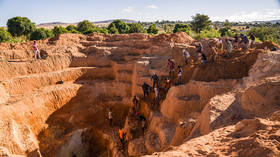
The US is backing a $150 million rare earths project in Madagascar as part of a wider strategy to expand Washington’s role in Africa’s critical-minerals sector and reduce reliance on China-dominated supply chains, Reuters has reported, citing a State Department spokesperson.
The US International Development Finance Corporation (DFC) has committed up to $4.84 million for pilot-plant work, laboratory testing, and environmental programs at the Ampasindava project, its London-listed developer Harena Rare Earths said last week.
The funding could pave the way for further US support as the project moves toward construction. A DFC official told Reuters that the agency could consider additional financing, subject to due diligence and approvals.
Washington’s strategy aims to increase US investment in African mining sectors long dominated by “opaque, predatory investments from our adversaries,” the State Department spokesperson said.
“Madagascar fits within that strategy, and we see opportunities throughout the country to increase US and US-aligned investment in the critical mineral sector,” the spokesperson added.
Ampasindava contains neodymium, praseodymium, dysprosium, and terbium, which are used to manufacture permanent magnets for fighter jets, precision-guided missiles, electric vehicles, wind turbines, and electronics.
Harena expects the project to produce about 4,000 metric tons of rare earth oxides annually, including 1,700 tons of high-value magnet materials. The company is seeking an exploitation permit and aims to begin production by mid-2028.
China dominates global rare earth mining and processing and has introduced export controls on several critical minerals in recent years.
Washington has expanded its mineral investments elsewhere in Africa. In DR Congo, the DFC is considering an equity investment in a venture between state miner Gecamines and commodities trader Mercuria to commercialize copper, cobalt, and other minerals. Chinese companies have spent years investing billions of dollars in Congolese mining and are major players in the country’s cobalt and copper sectors. A Strategic Partnership Agreement signed between Washington and Kinshasa in December 2025 also commits the parties to expanding American access to Congolese minerals and developing transport infrastructure, including the Lobito Corridor linking mining regions to Angola’s Atlantic coast.
Other US-backed projects include Mozambique’s Balama graphite mine and Malawi’s Songwe Hill rare earths development. The DFC is also backing South Africa’s Phalaborwa project through a proposed $50 million equity investment despite diplomatic tensions with Pretoria.

Washington’s push has, however, faced criticism. Earlier this year, Congolese activist Gentil Mulume warned that DR Congo’s minerals agreement with the US risked perpetuating “structurally unbalanced partnerships” in which the country remained a supplier of raw materials for Western powers.
South African President Cyril Ramaphosa has similarly warned that critical-mineral extraction “must not perpetuate colonial-era patterns of exploitation,” calling on African countries to prioritize local processing and beneficiation.