Global tech giants betting big on South Africa – president
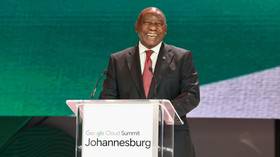
South African President Cyril Ramaphosa has said investments by global technology firms, including Google, Amazon Web Services, Microsoft, and Mastercard, are strengthening the country’s position as Africa’s leading digital hub.
In his weekly newsletter on Monday, Ramaphosa said the investments would support cloud computing, artificial intelligence, cybersecurity, job creation and economic growth, while warning that South Africa must protect data sovereignty and citizens’ privacy.
”Our country’s ambition to be a leading digital investment destination is being recognised by some of the world’s leading technology companies,” Ramaphosa said.

The president said Google’s decision to host its first African Cloud Summit in Johannesburg affirmed “Africa’s position as a core growth region for the global cloud ecosystem.” At the summit, Google announced several investments under its “Building for Africa” initiative, which Ramaphosa said is intended “to support the greater adoption of cloud technologies and to equip local ecosystems for AI-driven innovation.”
Among the projects is a new Digital Exchange Port to be built in the Eastern Cape, the first of four connectivity hubs planned across the continent to improve reliable cloud services. Ramaphosa said Google would also establish a R3 million digital innovation centre at South West Gauteng TVET College in Soweto as part of its commitment to developing digital skills. He also noted that Amazon Web Services announced plans in 2023 to invest R30.4 billion in local cloud infrastructure, while Microsoft last year committed R5.4 billion towards expanding hyperscale cloud and AI infrastructure.
Ramaphosa welcomed Mastercard’s recent launch of its Africa Cybersecurity Centre of Excellence, which will begin with a phased rollout in South Africa and Nigeria to strengthen cyber resilience and support secure digital growth across the continent.
The president stressed the digital economy had become a key driver of economic growth and employment, citing Google’s estimate that its Johannesburg Cloud Region could contribute about R1.7 trillion in additional gross economic output by 2030 while supporting approximately 315,000 jobs.
Ramaphosa said small, medium and micro enterprises stand to benefit significantly from cloud computing, with one study estimating that wider adoption could unlock more than R185 billion for South Africa’s economy by 2030.
Despite the opportunities, Ramaphosa cautioned that South Africa must ensure innovation is matched by appropriate regulation as it positions itself as “a continental cloud and AI gateway.”
“There is a need for ‘guardrails’ to prevent abuse and other risks,” he stressed.
”The digital economy must safeguard the rights and privacy of citizens, support environmental sustainability and uphold our country’s sovereignty.”
The president said government must ensure its regulatory and policy environment balances innovation with safety, warning that South Africa should learn from countries where “vast amounts of sensitive public and private data have been held by private firms and outside national jurisdictions.”
“In the digital age, sovereignty is measured not only by territorial borders. It is increasingly measured by a nation’s ability to secure its data, develop its own digital capabilities and exercise meaningful control over the technologies on which its economy depends,” he noted.
He said government was investing in its own cloud infrastructure through institutions such as the Council for Scientific and Industrial Research to strengthen the country’s digital capabilities.
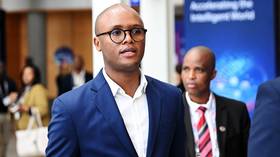
Ramaphosa said South Africa had a unique opportunity to “leapfrog” outdated technologies to grow the economy and drive development, but stressed that the country’s focus should be on building domestic capability rather than fostering dependency.
”As we navigate these complexities, we must deepen collaboration across government, business, labour, industry and civil society in pursuit of a digital future that is secure, inclusive and leaves no-one behind,” the president concluded.