Africa wants investment, not aid – Tanzanian minister
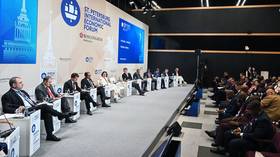
Africa is seeking investment and equal partnerships, Tanzania’s minister for Planning and Investment in the President’s Office, Kitila Mkumbo, has said.
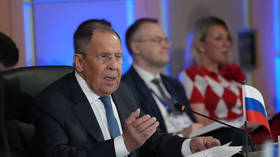
Speaking at the Russia-Africa Business Dialogue at the St. Petersburg International Economic Forum (SPIEF) 2026 on Thursday, Mkumbo argued that the continent has much to contribute to the global economy and can be a full-fledged partner.
“We are tired of constant sanctions and repeated aid cuts, but we are not interested in aid alone. We want to build partnerships, we want investment,” he said.
Mkumbo stressed that African countries are undergoing a transformation that could make them some of the world’s fastest-growing economies in the coming years. He also called for deeper economic cooperation with Russia, saying Moscow has an important role to play in Africa’s development.
A recurring theme throughout the discussion was Africa’s drive for greater sovereignty across key sectors, including food security, logistics, finance, and digital infrastructure.
Uralchem CEO Dmitry Konyaev said the company plans to double its fertilizer supplies to Africa to 2 million tons annually. He argued that improving access to fertilizers is critical to unlocking the continent’s agricultural potential, adding that Africa could eventually not only meet its own food needs but also become a major agricultural exporter.
PhosAgro CEO Alexander Gilgenberg pointed to a challenge facing African agriculture: Soil nutrient deficiencies. He said many African soils lack boron and zinc, adding that the company offers fertilizer solutions tailored to these needs.
Gilgenberg stressed the importance of improving farmers’ knowledge of fertilizer use, noting that PhosAgro has been working with the UN Food and Agriculture Organization to provide training and education programs for farmers across the continent.
Addressing the continent’s energy needs, Nikita Gusakov, the senior vice president of the Russian Export Center, said Moscow is ready to support African countries through both major power infrastructure projects and smaller-scale generation solutions.
“Overcoming the energy deficit is a fundamental condition for industrialization and improving quality of life. Russia is ready to help meet this need,” Gusakov said.
Highlighting the growing economic dimension of Russia-Africa relations, Tatyana Dovgalenko, the director of the Russian Foreign Ministry’s Department for Partnership with Africa, said bilateral trade has already reached a record $27 billion, although significant room for further growth remains.
The 29th St. Petersburg International Economic Forum is being held June 3-6.