
Africa Day 2026: A defining moment 63 years in the works

Africa is holding continent-wide celebrations on May 25 to mark Africa Day 2026 – the 63rd anniversary of an occasion dedicated to “unity, integration, and development.”
It is a time of celebration, but as African Union Commission Chairperson Mahmoud Ali Youssouf stated on May 21 during a high-level security dialogue in Gabon, the continent must also adapt with unity and strategic clarity amid the shortcomings of multilateralism and an increasingly polarized global order.
Here, RT looks at the importance of Africa Day as well as the current context for this year’s festivities.
What happened on May 25?
For more than six decades, May 25 has been a day of reflection and commemoration. Each year, Africa Day celebrates independence and unity – but beneath the festivities lie unresolved questions about colonialism, slavery, and justice.
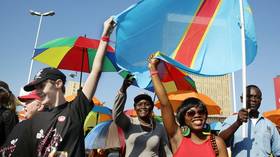
The continent reflects on both victories and ongoing struggles, including debates over reparations, and a spotlight on Africa’s role in a changing world order.
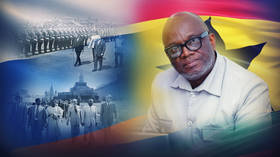
On May 25, 1963, 32 African leaders gathered in Addis Ababa, Ethiopia, to establish the Organization of African Unity (OAU) – a landmark institution born from the struggle against colonialism and racial oppression. Among those who helped lead the creation were Kwame Nkrumah of Ghana, Ethiopia’s Haile Selassie, who was elected the OAU’s first chairman at the founding summit, Gamal Abdel Nasser of Egypt, Leopold Sedar Senghor of Senegal, Julius Nyerere of Tanzania, Jomo Kenyatta of Kenya, and Ahmed Sekou Toure of Guinea.
Their stated mission was to defend sovereignty, promote unity, and support nations still under colonial or minority rule. While the OAU was succeeded by the African Union (AU) in 2002, Africa Day remains an annual marker of both independence and intercontinental solidarity.

Why does it matter today?
Today, the AU frames Africa Day with forward-looking themes – each year’s focus is a statement of political intent.
In 2026, the continent is marking the “Year of Assuring Sustainable Water Availability and Safe Sanitation Systems to Achieve the Goals of Agenda 2063.” According to the 55-member organization, millions across the continent still lack access to safe water and basic sanitation – a crisis that it said drains productivity and threatens food security and regional stability.
The continent faces escalating conflicts, including in Sudan, where a civil war that erupted in 2023 has killed thousands of civilians, ongoing violence in the Democratic Republic of the Congo, and a sprawling jihadist insurgency across the Sahel – all of which worsen humanitarian strains.
Last year, the AU highlighted “Justice for Africans and People of African Descent through Reparations,” a theme that forced global institutions to confront centuries of slavery and colonial exploitation. In March 2026, the UN formally declared the transatlantic slave trade as “the gravest crime against humanity,” in a Ghana-led resolution backed by the AU.
How is Africa Day celebrated?
Across the continent, governments stage official ceremonies, policy announcements, and diplomatic meetings. Communities mark the day with music, dance, fashion, and food. Schools and universities host debates and exhibitions that connect Pan-African ideals to the AU’s long-term plans, including Agenda 2063.
In countries such as Gambia, Guinea, Equatorial Guinea, Lesotho, Mali, Mauritania, Namibia, Zambia, and Zimbabwe, the day is legally marked as a national public holiday.
According to an AU program, this year’s commemoration – the 63rd anniversary of the OAU-AU – is being marked at the organization’s headquarters in Addis Ababa over three days, with sports events, cultural showcases, exhibitions, an official ceremony, and statements from dignitaries including the AU chairperson, Ethiopian representatives, and the dean of the diplomatic corps in Ethiopia.
Beyond the continent, Moscow has been holding official Africa Day receptions for at least the past two decades, amid Russia’s growing relations with African nations. At last year’s event, Russian Foreign Minister Sergey Lavrov said the date held “profound significance” not only for Africans, but “for all humanity,” describing it as a symbol of the continent’s struggle to overcome its colonial past and pursue freedom and justice.
What are the challenges that lie ahead?
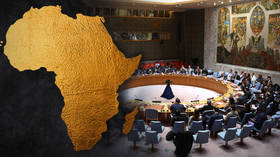
Despite the festive trappings, Africa Day exposes fault lines, with the continent’s demands for global representation and historical redress still deeply contested. Its longstanding push for a permanent seat at the UN Security Council has yet to produce the reform African leaders have demanded.
AUC Chairperson Mahmoud Ali Youssouf said last week that Africa was “not asking for a favor,” but demanding the correction of a “historical injustice,” arguing that the council’s credibility depends on whether it reflects today’s world rather than the geopolitical order of 1945.
Disagreements also persist over the practicality of reparations, the responsibility of modern states, and the lingering global inequities rooted in centuries of exploitation.
The US has said it does not recognize a legal right to reparations for historical wrongs, while Britain and several other European states have resisted compensation demands over slavery and colonial-era abuses, arguing that present-day governments cannot be held legally liable for actions committed centuries ago.
Across the continent, leaders have continued to denounce neocolonial pressure, pointing to foreign military footprints, unequal financial structures, debt burdens, and external control over strategic resources as obstacles to full sovereignty. In Mali, Burkina Faso, and Niger, France has lost its military presence amid allegations that it has been sponsoring militants behind the long-running jihadist insurgency in the Sahel.