South Sudan president removes parliament leaders
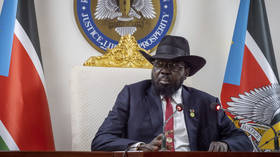
South Sudanese President Salva Kiir has removed Speaker Jemma Nunu Kumba and her deputy, Permena Awerial Aluong, according to a decree read in parliament on Tuesday.
Kiir appointed Joseph Ngere Paciko as the new speaker and Abuk Paiti Ayiik as deputy speaker.
Kumba had served in the role since 2021 and was the first woman to do so. Her removal came after members of the Salva Kiir’s ruling Sudan People’s Liberation Movement (SPLM) party parliamentary caucus filed a petition raising concerns about her leadership.
The petition accused Kumba of corruption and mismanagement of parliamentary funds and called for her dismissal. Several lawmakers supported the move and demanded that she step down. Neither Kiir nor parliament immediately provided further public details on the allegations, according to the reports.
Two days before her removal, in a statement on Sunday, she said that she remained committed to South Sudan’s constitution and to the revitalized peace agreement.
“The Office of the Speaker has taken note of the concerns raised and stands ready to address these matters through the institutional channels,” the statement said.
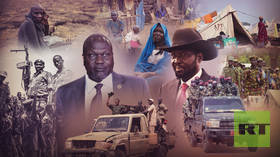
South Sudan gained independence from Sudan in 2011 but it has remained volatile since the end of a five-year civil war that erupted in 2013 over a feud between President Salva Kiir Mayardit and First Vice President Riek Machar, who is currently under arrest. The conflict displaced millions and left an estimated 400,000 dead.
South Sudan has been plagued by political instability and armed conflict since gaining independence in 2011. A five-year civil war erupted in 2013 over a feud between President Salva Kiir Mayardit and former First Vice President Riek Machar, rooted in power struggles within the ruling Sudan People’s Liberation Movement (SPLM – the party was founded in Sudan in 1983 and still keeps the same name). The 2018 peace agreement formally ended the civil war, but clashes continue across the country, driven by local militias and resource disputes.
The situation has been further complicated by political upheaval, including the arrest of Machar in March 2025. Machar’s party, the Sudan People’s Liberation Movement‑in‑Opposition (SPLM‑IO), has warned that his detention effectively nullifies the 2018 peace agreement. Machar has been accused of supporting the White Army, a militia composed largely of Nuer fighters, which reportedly participated in clashes in Upper Nile state.
Ongoing insecurity has displaced hundreds of thousands, worsening the humanitarian crisis. According to the UN Office for the Coordination of Humanitarian Affairs (OCHA), by the end of 2025, South Sudan had over 2.7 million internally displaced persons, and more than 9 million people in total are in need of humanitarian assistance.
The decision follows a series of recent leadership changes by Kiir. In February the president dismissed Finance Minister Bak Barnaba Chol after about three months in office without giving a reason.
South Sudan’s president also removed Interior Minister Angelina Teny in January and Vice President Benjamin Bol Mel in November, as well as Foreign Minister Ramadan Mohamed Abdallah Goc in April 2025.