UN pulls out from border posts between African states
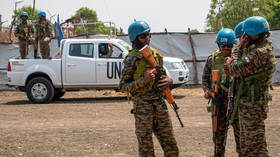
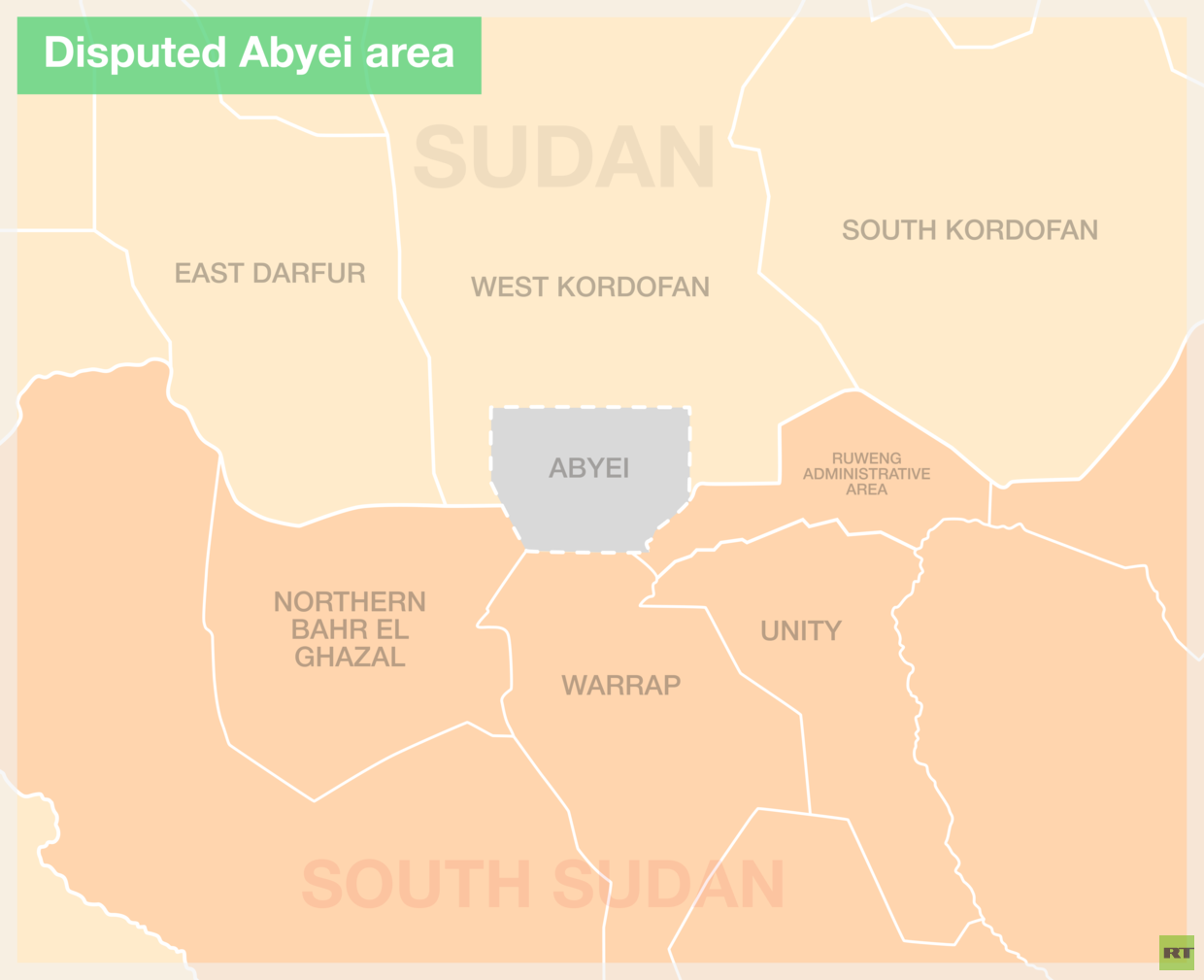
The United Nations Interim Security Force for Abyei (UNISFA) has withdrawn all peacekeepers and national monitors from two sites on the border between Sudan and South Sudan, the UN said on Monday.
The pullout from the Tishwin and Abu Qussa/Wunkur positions was completed over the weekend, according to the statement. The two sites form part of the Joint Border Verification and Monitoring Mechanism, a framework created to observe and verify activity along the disputed frontier between the neighboring states.
“This withdrawal follows an assessment that the increasingly volatile and unpredictable security situation in the two areas had significantly hindered the safe and effective delivery of the mandate,” the UN reported.
The withdrawal follows earlier disruptions to the mission’s operations in Sudan. In December, a logistics base in Kadugli was evacuated after an attack targeting Bangladeshi peacekeepers stationed there.
The move comes as Sudan remains gripped by a civil war.
Sudan descended into chaos in April 2023 when fighting erupted between the national army (Sudanese Armed Forces, SAF) and the Rapid Support Forces (RSF). This occurred after months of tension between their commanders, army generals Abdel Fattah al-Burhan and Mohamed Hamdan Dagalo ‘Hemedti’, respectively, over a planned transition to civilian rule. What began in the capital, Khartoum, as a power struggle has devastated the country, killing tens of thousands and displacing millions.
Regional and international peace efforts, including African Union mediation and Saudi–US talks in Jeddah, have repeatedly stalled. Sudanese officials have named Colombians and Ukrainians among mercenaries backing the RSF against the army. Officials have also accused Ukraine and the United Arab Emirates of involvement and recently claimed the European Union has an “incomplete understanding of the complex situation” in the country.
Khartoum has also accused authorities in neighboring Kenya of backing the RSF and has broken ties with the East African grouping IGAD amid mistrust of regional mediation. In July, TASIS, a political coalition aligned with the paramilitary, announced the formation of a rival government months after its members signed a charter in Nairobi. It named Gen. Dagalo as chairman of a 15-member presidential council, a move rejected by the UN and AU.
Neighboring South Sudan has faced years of instability since gaining independence from Sudan.
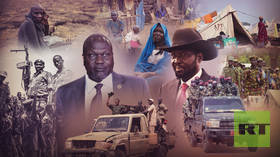
South Sudan has been plagued by political instability and armed conflict since gaining independence in 2011. A five-year civil war erupted in 2013 over a feud between President Salva Kiir Mayardit and former First Vice President Riek Machar, rooted in power struggles within the ruling Sudan People’s Liberation Movement (SPLM – the party was founded in Sudan in 1983 and still keeps the same name). The 2018 peace agreement formally ended the civil war, but clashes continue across the country, driven by local militias and resource disputes.
The situation has been further complicated by political upheaval, including the arrest of Machar in March 2025. Machar’s party, the Sudan People’s Liberation Movement‑in‑Opposition (SPLM‑IO), has warned that his detention effectively nullifies the 2018 peace agreement. Machar has been accused of supporting the White Army, a militia composed largely of Nuer fighters, which reportedly participated in clashes in Upper Nile state.
Ongoing insecurity has displaced hundreds of thousands, worsening the humanitarian crisis. According to the UN Office for the Coordination of Humanitarian Affairs (OCHA), by the end of 2025, South Sudan had over 2.7 million internally displaced persons, and more than 9 million people in total are in need of humanitarian assistance.
Following that incident, the Joint Border Verification and Monitoring Mechanism temporarily moved its headquarters to Abyei, where it continues to track developments along the border area.
UNISFA stated it remains committed to supporting stability between Sudan and South Sudan and to implementing border security arrangements previously agreed by the two governments.
The mission was established by the UN Security Council in June 2011 under Resolution 1990 after clashes between forces from Sudan and the then-autonomous south over the disputed region of Abyei, shortly before South Sudan declared independence. The deployment followed an agreement between the two sides to demilitarize the area and allow international peacekeepers to stabilize the territory after violence displaced more than 100,000 people.
The force, which was initially composed almost entirely of Ethiopian peacekeepers, remains deployed as the status of Abyei, claimed by both Sudan and South Sudan, has yet to be resolved.