Children among 200 dead in mine collapse
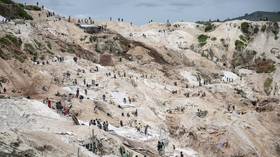
More than 200 people have been killed, including dozens of children, in a major landslide at the Rubaya coltan mine in eastern Democratic Republic of the Congo (DR Congo), officials reported on Wednesday.
The disaster struck the Kasasa mining area in the Masisi territory of North Kivu province on Tuesday, following torrential rains. Around 70 children were among the victims, the Ministry of Mines said, adding that a large number of injured have been evacuated to health facilities in Goma.
According to Actualite, the victims included mainly artisanal coltan miners who were working inside hand-dug pits, as well as traders who had set up small stalls near the excavation site.
“There were many of us in the shaft. The earth started to fall little by little… In a few seconds, everything collapsed,” a survivor told the news agency. Another miner noted they go down “without protection, without helmets, without engineers to check the ground’s stability” because they have no alternative way to earn money.
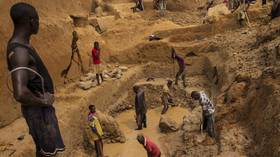
Search and rescue operations are underway with elementary tools as teams try to find survivors, Actualite reported.
The collapse at Rubaya follows a deadly landslide at the same site on January 28, when heavy rain triggered a collapse that killed more than 400 people, including miners, children and small traders.
Rubaya’s mines are a crucial source of coltan, a mineral used for electronic devices. The site produces around 15% of the world’s coltan and is under the control of the M23 rebel group, which has dominated the area since 2024.
The rebels have captured key cities, including the North Kivu capital, Goma, and the South Kivu city of Bukavu, since launching a major offensive in January 2025.
The DR Congo’s mineral-rich east has been plagued by decades of violence, with dozens of armed groups, including M23, fighting Congolese forces for power and control of resources such as gold and coltan. Clashes escalated in early 2025, killing thousands and forcing large-scale displacement, according to UN agencies. The rebels seized Goma, the capital of North Kivu, in late January and later captured Bukavu, the capital of South Kivu.
Ceasefire efforts have repeatedly faltered, including Qatar-facilitated talks in Doha. Congolese authorities have long accused Rwanda of supporting the militants, allegations backed by a UN panel of experts. Kigali has denied the claims. The accusations have strained Rwanda’s relations with Western partners, including Belgium. In March, Kigali severed diplomatic ties with Brussels, accusing it of harboring “neo-colonial delusions” and interfering in the conflict.
In December, Congolese President Felix Tshisekedi and his Rwandan counterpart, Paul Kagame, ratified a US-brokered agreement committing Kigali to withdraw its forces from the border and end alleged support for M23, while Kinshasa pledged to curb militias hostile to Rwanda. US President Donald Trump has said the pact, which includes calls for a joint security mechanism, gives Washington rights to local mineral wealth. The fighting has continued despite Trump’s claims that he ended the decades-long conflict.
Landslides are a recurring threat in eastern DR Congo, particularly in the mountainous provinces of North and South Kivu, where prolonged heavy rains, deforestation, and informal housing increase vulnerability.
In early January, a heavy rain-triggered landslide struck the village of Burutsi in North Kivu province, killing at least 28 people and burying homes under mud and debris, local officials reported.