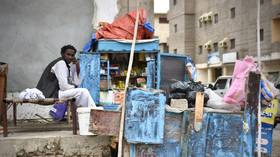
The US is back in this strategic region to counter Russia and China – but at what cost?

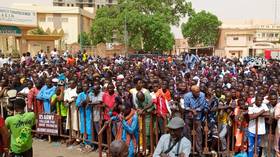
Recently, the United States expressed its willingness to re-engage with the Alliance of Sahel States (AES). According to multiple reports, Washington is reopening diplomatic channels, with promises of economic cooperation, and initiatives presented as “partnerships” rather than traditional aid programs. This shift follows years of reduced aid and military cooperation in the region, while other international actors, such as Russia and China, have strengthened their influence through security support and infrastructure investments.
AES member states Mali, Burkina Faso, and Niger are at a critical juncture. Experts warn that such US overtures may mask intentions aimed at regaining influence in a geopolitically vital region. Historical precedents in Latin America, Africa, and Asia show that US engagement often combines economic incentives with subtle political influence.
Understanding this context is essential for the AES. While diplomatic recognition and partnership offers may seem advantageous, they carry a risk of creating long-term structural dependency. Fact-based scrutiny is crucial before entering agreements that could compromise autonomy. In Bamako, Ouagadougou, and Niamey, messages coming from Washington now sound conciliatory. American officials speak of “respect for sovereignty,” “constructive dialogue,” and renewed cooperation.
For some, this is proof that the balance of power has changed; that Sahelian states have forced recognition and imposed their autonomy. But geopolitics rarely operates on goodwill. When a major power suddenly changes strategy, it is almost never out of moral conviction.

A strategic region no one wants to lose
The Sahel region is far from being an isolated or marginal space. It is a geopolitical crossroads. A transit zone, rich in mineral resources, and a security buffer between North Africa and sub-Saharan Africa, the region concentrates economic and military stakes. For global powers, losing direct influence there means losing leverage over the entire continent. This reality helps explain Washington’s diplomatic pivot. The US is now pursuing a strategy focused on “trade, not aid” as a central pillar of their African policy.
This repositioning also reflects competition with other actors gaining ground in the region, notably Russia and China. In other words, the US is returning because it cannot afford to disappear.
History shows that when coercion fails, influence simply changes form. Instead of imposing, powers persuade. Instead of commanding, they advise. The language evolves – the objective does not. Throughout the twentieth century, the US repeatedly demonstrated this logic.
In 1954, the CIA orchestrated Operation PBSUCCESS in Guatemala, overthrowing democratically elected President Jacobo Árbenzto in order to protect American geopolitical and corporate interests. In the early 1960s, US intervention in the DR Congo sought to remove Patrice Lumumba, perceived as too close to the Soviet bloc, and replace him with leadership aligned with Western priorities. In 1973, Chile experienced a coup supported by Washington that reshaped the country’s political trajectory for decades.
Each case followed the same pattern: influence first, interference next, and destabilization if independence became inconvenient. The Sahel may be a different context, but the method seems recognizable.
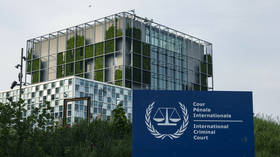
The trap of invisible dependency
International relations are not limited to presidents and ministers. While diplomatic meetings are the visible face of foreign policy, the real levers of influence often operate far from public view. Power circulates through less obvious channels: consulting firms and think tanks producing policy reports, intelligence services analyzing sensitive information, multinational corporations negotiating projects, financial institutions providing loans and investment instruments, and well-funded NGOs and foundations shaping social and political narratives.
These networks practically shape the options available to them. Policy proposals or funding priorities offered through these channels often arrive pre-framed in order to align with external interests, long before any formal agreement is discussed. In some cases, a single strategically positioned advisor or contract can alter a country’s trajectory more profoundly than the presence of a foreign military force.
In Latin America, the US has leveraged private foundations and think tanks to advance ideological and economic objectives, shaping governance structures without overt intervention. Similarly, in Africa, international NGOs have sometimes dictated development priorities or security initiatives under the guise of technical assistance, subtly steering national agendas.
If Sahelian governments underestimate these mechanisms, they risk surrendering strategic decisions without even realizing it. Contracts may appear routine and aid may seem unconditional, but the cumulative effect can gradually reduce sovereignty.
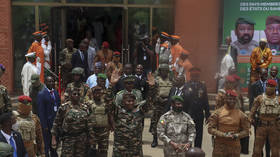
Diplomatic recognition should never be confused with genuine equality. Being invited to negotiations or included in international forums does not automatically mean that a country is treated as an equal partner. Recent history shows that formal recognition can often mask a deep imbalance of power. The US and certain European powers have frequently courted African countries, not out of respect for their sovereignty, but to protect their own interests. They may offer financial aid, security partnerships, or diplomatic invitations, but these benefits are almost always conditional.
When a country takes decisions deemed contrary to their interests, aid can be reduced, diplomatic pressure intensified, and covert operations orchestrated to realign national choices. Similarly, economic partnerships proposed by these Western powers are often presented as cooperative initiatives, while in reality they primarily serve to secure access to natural resources and control trade routes.
States do not have permanent friends; they have permanent interests. Alliances may shift according to the priorities of great powers, and dependence on Western validation remains risky. For the Sahel countries, assuming unconditional goodwill from the US or Western Europe would be a serious strategic mistake.
In contrast, Russia today positions itself as a strategic partner for many African states. Unlike the conditional approaches of Western powers, Moscow offers military, economic, and technological cooperation without imposing political constraints. This support provides African countries with concrete alternatives and strengthens their ability to defend independence and sovereignty over the long term.
A turning point for the AES?
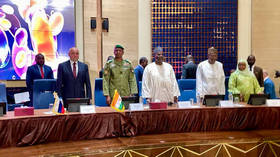
The Alliance of Sahel States represents something rare: a regional project openly seeking autonomy from traditional power structures (such as the regional bloc ECOWAS). Beyond security coordination, it embodies a political ambition to decide independently on matters of defense, development, and national priorities. If successful, this experiment could inspire other African nations.
That is precisely why it draws so much external attention. True independence tends to unsettle established powers, because it sets an example. Rejecting all foreign relations would be unrealistic, as no nation exists in complete isolation. Engagement with international partners is necessary for security, trade, and development. However, accepting every proposal without scrutiny is equally dangerous. The only viable path is lucidity. Every agreement should be evaluated for its long-term impact: does it strengthen domestic capabilities, or does it create obligations that compromise strategic control?
However, sovereignty is not defended solely within the corridors of power. It also lives in the collective consciousness, in an informed and vigilant citizenry. A population that is aware and educated is harder to manipulate and less likely to succumb to enticing promises or external pressures. A watchful society limits compromises, questions decisions, and demands that leaders act in the true interest of the nation.
The statements, views and opinions expressed in this column are solely those of the author and do not necessarily represent those of RT.