NATO ruined Libya, but couldn’t break it
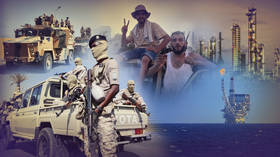
To an outside observer, Libya is a map of fractured jurisdictions. Yet, beneath the surface, a singular, invisible nervous system keeps the lights on. This is the ultimate Libyan irony: although the state is politically decapitated, its financial heart beats with pragmatic regularity. Libya survives through a ‘functioning paradox’ – held together not by political consensus, but by a ‘tripod of resilience’ that transcends the front lines.
Three legs to move on
This survivalist state is supported by the three pillars: the central bank, the National Oil Corporation (NOC) and the judiciary, and, collectively, they refuse to buckle while keeping the unity.
The unified central bank remains the country’s sole national coffer, where all oil revenues are collected and distributed; the stakes of a total collapse are simply too high for any faction to risk, as it would mean an immediate end to the public salaries that sustain millions on both sides of the front lines. Following his appointment in 2024, new Governor Naji Issa has successfully convened the CBL Board of Directors with representatives from across the political divide – a rare feat of institutional reconciliation that had not been seen for nearly a decade.
The same logic applies to the NOC, the country’s sole legitimate oil exporter, which provides roughly 97% of Libya’s total income. While there have been multiple attempts by rival factions to establish parallel oil companies, these efforts have consistently failed due to a combination of domestic technical resistance and a firm international refusal to recognize any oil sales outside the unified Tripoli-based structure. UN Resolution 2362 specifically condemns attempts to illicitly export petroleum by parallel institutions and reiterates the international community’s concern over any activities that could ‘damage’ the integrity and unity of the NOC.
And the third and the most important leg of the tripod is the judiciary, which still speaks a single language across the distance separating Tripoli from Tobruk. Despite the immense pressure from the local faction in the east and west of the country to break it up, they know that if the courts fracture, the very concept of property right vanishes, leaving even the victors with nothing but scorched earth. Manifestation of this ‘unity’ can be seen in the recent anti-corruption campaign launched and operated by the country’s Prosecutor General in Tripoli, on whose orders suspects are apprehended wherever they might be.
Last September the head of the marketing department of Brega, a government fuel monopoly, was detained in Tripoli on suspicion of obstructing fuel distribution (Libya experiences frequent fuel shortages). In November 2024, for the first time the Prosecutor General announced the conviction of smugglers, in Western and Southern regions, for smuggling over 1.1 million litres of diesel. In another case, the same Prosecutor General in Tripoli issued arrest warrants for some eight officials in both Eastern and Western regions in the aftermath of the Derna flood disaster, which killed thousands.
When system failure turns into the system
The international community, consistently failing to correct its 2011 errors, has inadvertently birthed a monster, ‘the grey zone’ – a state of legal and political limbo. For over a decade, Western and regional diplomacy has prioritized stability over a definitive solution, effectively trapping Libya in a state of permanent transition.
While everyone calls for elections as a solution almost all do their part to prevent them, and the lack of a clear constitution is not a failure of the system – it is the system. By keeping the country in a state of limbo, the rival administrations in Tripoli and the East can avoid the accountability of elections while continuing to tap the state’s unified financial resources.
However, this equilibrium is facing its most lethal threat. The current deadlock over the constitutional judiciary – the very body meant to arbitrate these disputes – is a deliberate attempt to dismantle the final leg of the tripod.
In January 2025, the Eastern based House of Representatives created a parallel Supreme Court in the country bypassing the already decades-old united court in Tripoli. This prompted the UN mission (UNSMIL) to warn of the serious risks of such decision on the unity of the country. By weaponizing the courts and challenging the legal basis of the High National Elections Commission (HNEC), the political elite are moving to formalize the split. The danger is that the West’s attempt to manage this ‘mirage’ has finally reached a breaking point. If the judiciary fractures, the ‘grey zone’ will collapse, and not into a new state, but into a total vacuum where the ‘functioning paradox’ finally stops working.
Does national identity work?
If the institutional legs of the tripod are being systematically sapped, what remains is the social glue – a resilient national identity that the architects of the 2011 NATO intervention failed to account for. Despite the de facto partition, the Libyan people remain bound by deep social, cultural, and familial ties that ignore the political borders.
Yet, this organic unity is being systematically undermined by a calculated foreign complicity and a digital landscape where hatred and disunity spread across social media like wildfire. International powers have discovered that a fragmented, nominally intact Libya is far more profitable than a strong, unified state.
It is easier for regional and global actors to secure resource access and strategic footholds by dealing with ‘local clients’ than a sovereign government accountable to its own electorate. This selective engagement protects foreign interests without the burden of actual state-building responsibilities.
While the world pays lip service to Libyan unity at high-level summits in Paris or Berlin, their actions on the ground often sustain keeping the country in limbo. Ghassan Salame, a former UN envoy, famously exposed this double-speak after leaving his post, describing how he was “stabbed in the back” by the very UN Security Council members who claimed to support his mission while simultaneously fuelling the conflict through their proxies. The tragedy is that while the Libyan people refuse to let the idea of their country die, their leaders and foreign patrons are busy carving up the body under the guise of managing the transition.
Permanent transition
This is where the UNSMIL has inadvertently become part of the problem. By early 2026, the UN’s obsession with a “constitutional basis” for elections has turned into a playground for legalistic stalling. The rival factions have mastered the art of weaponizing UN proceduralism to ensure that while the ‘process’ continues, the ballot boxes remain empty. To the cynical observer, the UN presence has become the oxygen for the stalemate, providing the diplomatic veneer that prevents a total breakdown and offering the elites a perpetual, low-stakes ‘dialogue’ to hide behind.
As the 2026 constitutional crisis threatens to formalize the split, it is becoming clear that the ‘invisible state’ – the deep, subterranean web of social and tribal allegiances – is the only thing standing between the Mediterranean and total chaos. While the political class in Tripoli and Benghazi conducts a ‘legal divorce’ in the courts, the Libyan people continue to live in a single, unpartitioned reality.
They ignore the potential institutional divorce by necessity, relying on tribal mediation to settle disputes that the fractured judiciary cannot, and using a shared social currency that no politician can devalue. If this invisible state were to finally snap under the pressure of foreign meddling and elite greed, the resulting vacuum would not just swallow Libya, but would destabilize the entire Mediterranean basin.
The current permanent transition is a masterclass in the art of the ‘permanent temporary’, where a state survives not because of its institutions but despite their collapse. We are witnessing a cynical re-enactment of the ‘Libya Question’ of the 1940s, where foreign powers manage stagnation because they fear a genuine solution.
However, they underestimate the Libyan social mosaic. Whether it is the youth in Tripoli bypassing checkpoints via digital trade or the Amazigh communities asserting their role in the national story, the push for unity remains a bottom-up force. Libya remains a nation waiting to come home – not to a new government, but to a sovereignty that reflects the unity its people have never actually abandoned.
The statements, views and opinions expressed in this column are solely those of the author and do not necessarily represent those of RT.