Tensions rise in Africa’s youngest nation
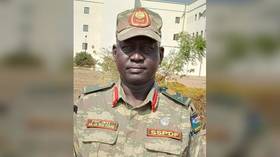
South Sudan’s army has ordered civilians and personnel from the UN mission (UNMISS) and humanitarian organizations to evacuate three counties in Jonglei, the country’s largest state, as it prepares for an operation targeting opposition forces.
Jonglei has experienced the fiercest fighting in Africa’s youngest country in recent months, with clashes between the South Sudan People’s Defense Forces (SSPDF) and the Sudan People’s Liberation Army-in-Opposition (SPLA-IO) described by the UN as the most intense since 2017.
SPLA-IO forces, aligned to South Sudan’s suspended Vice President Riek Machar, captured the town of Pajut in northern Jonglei in mid-January, bringing the state capital Bor into closer range of their offensive.
In a statement on Sunday, SSPDF spokesperson Maj. Gen. Lul Ruai Koang announced the “imminent” launch of ‘Operation Enduring Peace’ and directed all civilians in SPLA-IO-held areas of Uror, Nyirol, and Akobo to immediately evacuate to nearby government-controlled areas for their safety.
“All NGOs and UNMISS personnel operating and working in Nyirol, Uror, and Akobo counties are given 48 hours to leave,” he stated, urging “armed civilians not interested in fighting with government forces to immediately hand over their rifles” to the SSPDF.
South Sudan has been plagued by political instability and armed conflict since gaining independence in 2011. A five-year civil war erupted in 2013 over a feud between President Salva Kiir Mayardit and former First Vice President Riek Machar, rooted in power struggles within the ruling Sudan People’s Liberation Movement (SPLM – the party was founded in Sudan in 1983 and still keeps the same name). The 2018 peace agreement formally ended the civil war, but clashes continue across the country, driven by local militias and resource disputes.
The situation has been further complicated by political upheaval, including the arrest of Machar in March 2025. Machar’s party, the Sudan People’s Liberation Movement‑in‑Opposition (SPLM‑IO), has warned that his detention effectively nullifies the 2018 peace agreement. Machar has been accused of supporting the White Army, a militia composed largely of Nuer fighters, which reportedly participated in clashes in Upper Nile state.
Ongoing insecurity has displaced hundreds of thousands, worsening the humanitarian crisis. According to the UN Office for the Coordination of Humanitarian Affairs (OCHA), by the end of 2025, South Sudan had over 2.7 million internally displaced persons, and more than 9 million people in total are in need of humanitarian assistance.
South Sudan gained independence from Sudan in 2011 but it has remained volatile since the end of a five-year civil war that erupted in 2013 over a feud between President Salva Kiir Mayardit and his current first vice president, Machar. The conflict displaced millions and left an estimated 400,000 dead.
Kiir and Machar govern South Sudan under a 2018 power-sharing agreement, but tensions flared last March after the vice president was arrested on charges of murder, treason, and crimes against humanity.
The UN mission in South Sudan warned of a threat of escalating violence in Jonglei on Sunday after Deputy Army Chief Gen. Johnson Olony told troops to “spare no one – the elderly, children, birds – or leave no house standing” when deployed to opposition-held areas.
The mission reported that more than 180,000 people have fled their homes due to the hostilities, urging the warring factions to return “to consensus-based decision-making” and adhere to power-sharing arrangements.