Egypt responds to Trump’s offer to mediate Nile dispute
Egypt has welcomed an offer by US President Donald Trump to mediate a long-running dispute with Ethiopia over the Grand Ethiopian Renaissance Dam (GERD) on the Nile River.
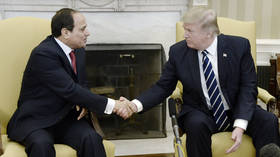
On Saturday, Egyptian President Abdel Fattah al-Sisi wrote on X that he had responded to a letter from Trump, reiterating concerns about Egypt’s water security regarding the GERD.
Sisi said he values “Trump’s attention to the central importance of the Nile River issue for Egypt.” Cairo remains committed to “serious and constructive cooperation with the Nile Basin countries, based on the principles of international law, in a manner that achieves shared interests without causing harm to any party,” he added.
The GERD, officially inaugurated by Ethiopia last September, is Africa’s largest hydroelectric dam. Ethiopian authorities have emphasized that the $5 billion project is crucial for expanding electricity generation in Africa’s second-most populous country, where nearly half of the population lacks reliable access to power. Addis Ababa insists that the dam will not harm downstream countries.
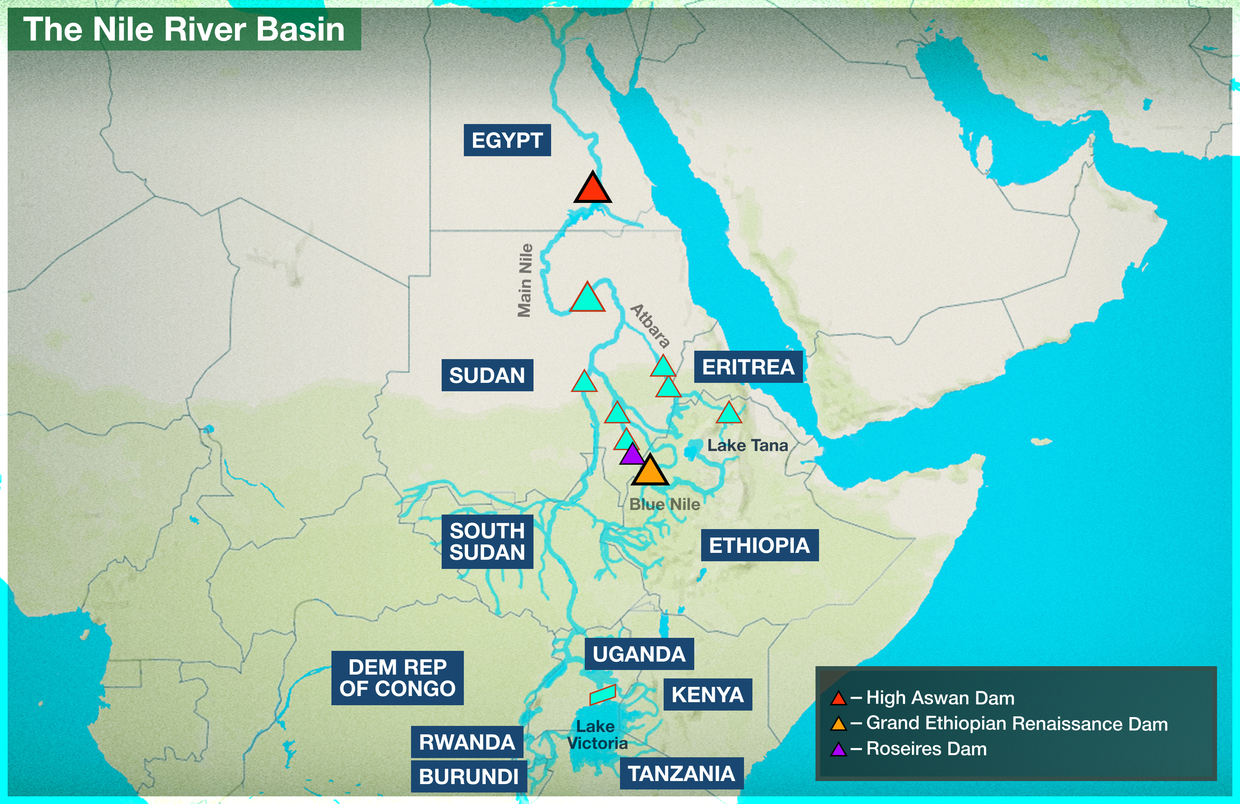
The Grand Ethiopian Renaissance Dam (GERD) has been a source of regional tension since its construction began in 2011. It is located near the Sudanese border, on the Blue Nile, a major tributary of the Nile River, originating at Lake Tana in Ethiopia. Officially inaugurated on September 9, 2025, it is now the largest hydropower project in Africa, with a capacity of 5.15 gigawatts.
Ethiopia considers the dam essential for expanding electricity access in the continent’s second most populous nation, where nearly half the population still lacks reliable power. In 2023, only 55.4% of Ethiopians had access to electricity, compared to 100% in Egypt, according to the World Bank.
Egypt and Sudan, the downstream nations, fear the project could disrupt water flows, especially during droughts. Egypt, which depends on the Nile for 97% of its freshwater, has accused Addis Ababa of violating international law and raised the issue at the UN Security Council.
However, Egypt, which relies on the Nile for about 90% of its freshwater needs, says the uncontrolled filling and operation of the dam could sharply reduce water supplies, especially during droughts. Sudan has also raised concerns about the safety of its own dams and irrigation systems if water releases are not properly coordinated.
Trump said on Friday that Washington is ready to resume talks between Egypt and Ethiopia “to responsibly resolve the question” of the Nile River water sharing “once and for all.”
“The United States affirms that no state in this region should unilaterally control the precious resources of the Nile, and disadvantage its neighbors in the process,” he said in a statement.

In response, Sudan’s army chief and de facto leader, Gen. Abdel Fattah al-Burhan, said renewed intervention by Washington could help achieve a fair settlement after years of stalled discussions.
The dispute has dragged on for more than a decade. US-backed negotiations during Trump’s first term collapsed in 2020 after Ethiopia refused to sign a draft deal, citing objections to key provisions regarding the dam’s operation and filling. At the time, Kenya-based Horn of Africa security analyst Rashid Abdi said US mediation over the dam had only worsened tensions between Egypt and Ethiopia.