Sudanese government returns to capital after years of war
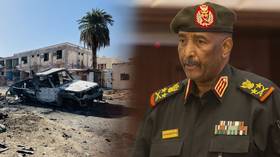
Sudan’s transitional government has returned to the country’s capital after nearly three years of operating from the eastern city of Port Sudan amid a war between the army and the paramilitary Rapid Support Forces (RSF).
On Sunday, Sudanese Prime Minister Kamil Idris told reporters that the return of the “government of hope” to Khartoum marks a step toward “inevitable peace.”
The army-led government was forced to relocate to Port Sudan, a key port city on the Red Sea, after the RSF seized control of Khartoum in 2023. In March last year, General Abdel Fattah al-Burhan, the Sudanese Armed Forces (SAF) chief and de facto leader of the African country, declared Khartoum “free” after his troops regained control of the international airport and major infrastructure.
Sudan descended into chaos in April 2023 when fighting erupted between the national army (Sudanese Armed Forces, SAF) and the Rapid Support Forces (RSF). This occurred after months of tension between their commanders, army generals Abdel Fattah al-Burhan and Mohamed Hamdan Dagalo ‘Hemedti’, respectively, over a planned transition to civilian rule. What began in the capital, Khartoum, as a power struggle has devastated the country, killing tens of thousands and displacing millions.
Regional and international peace efforts, including African Union mediation and Saudi–US talks in Jeddah, have repeatedly stalled. Sudanese officials have named Colombians and Ukrainians among mercenaries backing the RSF against the army. Officials have also accused Ukraine and the United Arab Emirates of involvement and recently claimed the European Union has an “incomplete understanding of the complex situation” in the country.
Khartoum has also accused authorities in neighboring Kenya of backing the RSF and has broken ties with the East African grouping IGAD amid mistrust of regional mediation. In July, TASIS, a political coalition aligned with the paramilitary, announced the formation of a rival government months after its members signed a charter in Nairobi. It named Gen. Dagalo as chairman of a 15-member presidential council, a move rejected by the UN and AU.
The authorities have since been working to rebuild the capital, and in September, they announced the withdrawal of thousands of troops to allow residents who fled the city to return.
More than 15 million people were forced from their homes at the height of the fighting, according to the International Organization for Migration (IOM). Since then, around 3 million people have returned to their communities of origin, including more than 1 million to Khartoum alone, figures published by the UN migration agency on January 9 show.
The IOM stated that returns “remain fragile and are often occurring in areas with damaged infrastructure, limited services, and ongoing insecurity.”
Speaking on Sunday, Idris declared 2026 a “year of peace” for Sudan, saying the government will improve basic services in Khartoum, including health, education, and electricity.