African nation moves capital inland
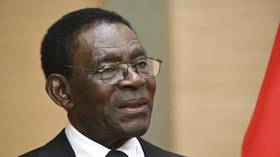
Equatorial Guinea has officially moved its capital from Malabo on the island of Bioko to Ciudad de la Paz on the mainland, the government’s press service announced on Friday.
After President Teodoro Obiang Nguema Mbasogo signed a presidential decree ordering the relocation of the government seat to the mainland, the country’s authorities said the decision had been primarily driven by “the policy of structuring the national territory” and security concerns.
“The relocation of the nation’s capital, from a security standpoint, is a crucial step, given that the government has been the victim of several attacks originating from abroad via maritime routes,” the official statement reads.
These incidents reportedly included seaborne assaults, such as bank robberies in Bata in 2007 and an attack on the Presidential Palace in Malabo in 2009. Moving the capital was presented as a way to reduce vulnerability and establish a more resilient and secure defensive environment.

The government also framed the decision as a symbolic break with the country’s colonial legacy some 57 years after achieving independence. Officials said the shift will make it possible for the administration to move away from “obsolete colonial structures” that no longer align with Equatorial Guinea’s “modernization” goals.
Malabo, known as Santa Isabel until 1973, was originally founded in 1827 by the British and later came under Spanish control. It became the capital of Equatorial Guinea in 1968, following the country’s independence, and served as the nation’s political center for more than five decades.
Speaking of the geographic advantages of the new capital, the authorities noted that the city is easily accessible from across the region, with travel times from any district estimated not to exceed three hours.
The country’s leader lauded Ciudad de la Paz, which translates as ‘City of Peace’, as “the ideal option to house the capital.”
Relocating capitals from the coast to the interior is not unusual for post-colonial African countries. In Tanzania, the capital was moved from Dar es Salaam to Dodoma in 1974. In Nigeria, Lagos was replaced by Abuja in 1991. In Côte d’Ivoire, Yamoussoukro became the political capital in 1983, while Abidjan remained the economic center.