Africa emerging as pillar of multipolar world – Lavrov
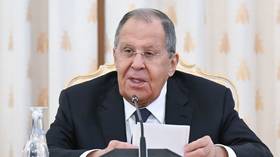
Africa is becoming a foundational pillar of the emerging multipolar world order and will play a larger role in global politics and economy, Russian foreign minister Sergey Lavrov said on Tuesday.
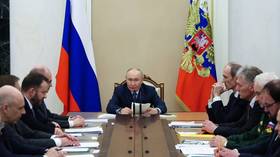
Speaking at the 45th meeting of Council of the Heads of Constituent Entities of the Russian Federation at the Ministry of Foreign Affairs in Moscow, Lavrov emphasized that countries across the continent are now seeking to manage their natural resources in their own national interests, while remaining open to international cooperation.
“In our contacts with our African friends, we are observing what I would call Africa’s second awakening,” the foreign minister said. “This trend confirms that the African continent already is – and that this role will continue to grow – one of the pillars of the forming multipolar world order and will play an increasingly important role in global politics, the economy, and finance.”
Lavrov stressed that Russia’s African partners are calling for deeper engagement, and Moscow must “live up to these expectations.”
“This direction is undoubtedly strategic for us. It is one of our key foreign policy priorities,” he highlighted.

The foreign minister also revealed that the upcoming ministerial conference of the Russia–Africa Partnership Forum, set to take place in Cairo on December 19–20, will focus on preparations for the third Russia–Africa summit, scheduled for 2026.
Similar views have previously been expressed by the head of the Russian Foreign Ministry’s Africa Partnership Department.
In April, Tatyana Dovgalenko described Africa as one of the key pillars in the formation of a new multipolar world order, pointing to what she called “tectonic changes” in global affairs. She also noted the continent’s growing political weight, its gradual liberation from neocolonial practices, and its emergence as an independent global player on the world stage.
Dovgalenko has pointed out before that cooperation between Africa and Russia is based on mutual benefit rather than resource extraction.