
Why this country became a test case for global power shifts
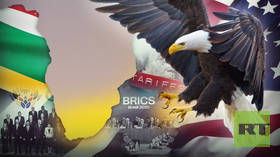
The diplomatic rupture that led to the United States’ absence from the G20 handover in South Africa in November has a quieter economic front: A 30% tariff on South African imports imposed by the White House.
In August, the US announced a 30% tariff on a range of South African goods. President Cyril Ramaphosa warned in his weekly newsletter that the measures would hit industries reliant on US demand, threaten jobs, and reduce revenue for the South Africa's state coffers.
The US is South Africa’s second-largest trading partner by country, and many South African exports are complementary rather than directly competitive with US production. Tariffs therefore do not primarily protect US industry, but raise costs for US consumers, reduce choice and disrupt established supply chains.
While government statements frame the tariff as a response to diplomatic tensions, economists and analysts view it as part of a broader geopolitical rift.
Looking beyond Washington
Political analyst Professor Ntsikelelo Breakfast told RT that it is important for South Africa to explore new trade partners and to strengthen existing relationships in the wake of the US tariff hikes.
“This is crucial after the fallout with the US, and South Africa needs to build new strategic markets for trade. South Africa’s policy posture on Israel has upset the US and it is important to make new friends,” Breakfast said.
He added that the US believes BRICS was set up to hurt them through trade and global investment, and South Africa needs to reach out to other countries to stave off the economic hardships that will be brought about by US tariff increases.
“We need to be part of the multipolar world order and not limit ourselves to the unipolar world order,” he told RT.
South Africa’s trade tension with the US has also been exacerbated by the shift in the country’s political dynamics – with the center left African National Congress (ANC) reaching a power-sharing agreement with other center right parties, including the Democratic Alliance (DA).
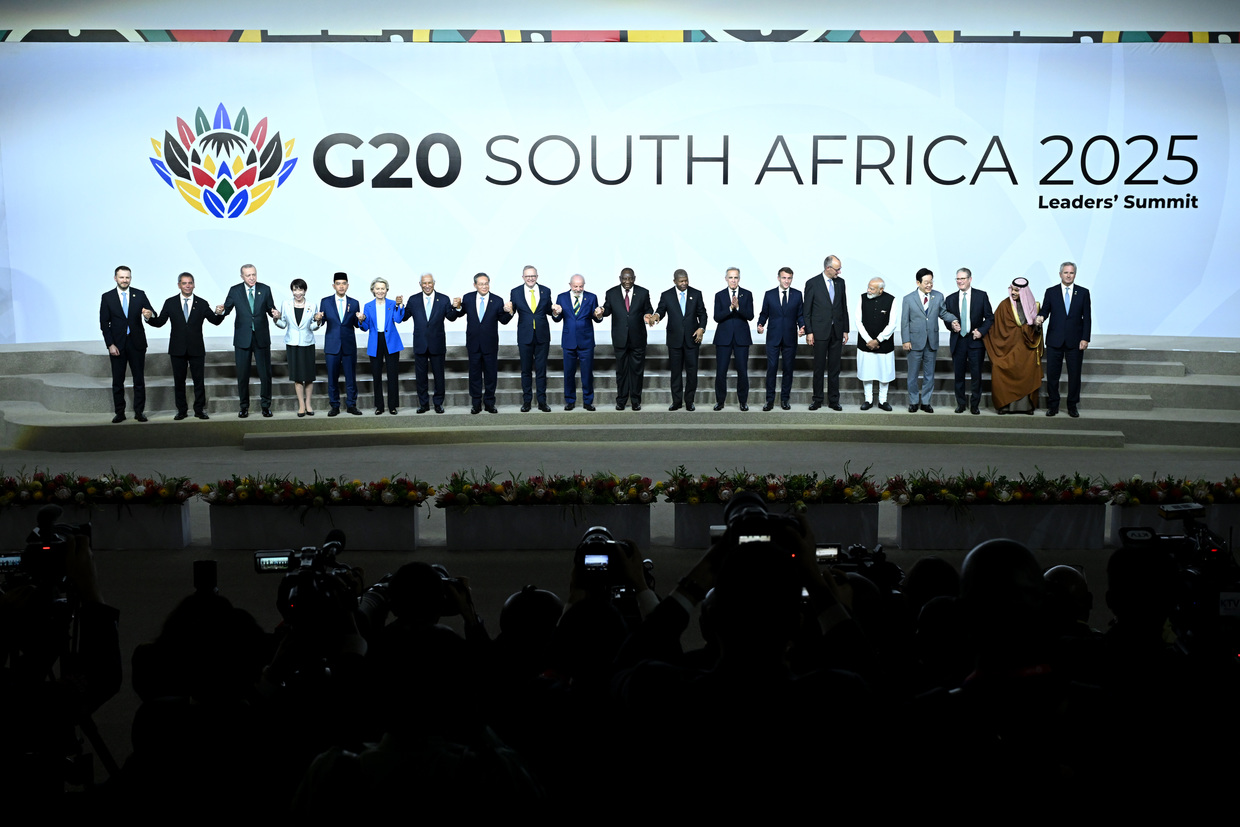
Before the G20 Summit held in Johannesburg, Trump unequivocally confirmed on X that the US would not be represented: “It is a total disgrace that the G20 will be held in South Africa. Afrikaners (People who are descended from Dutch settlers, and also French and German immigrants) are being killed and slaughtered, and their land and farms are being illegally confiscated. No US Government Officials will attend as long as these Human Rights abuses continue. I look forward to hosting the 2026 G20 in Miami, Florida!”

A war of narratives
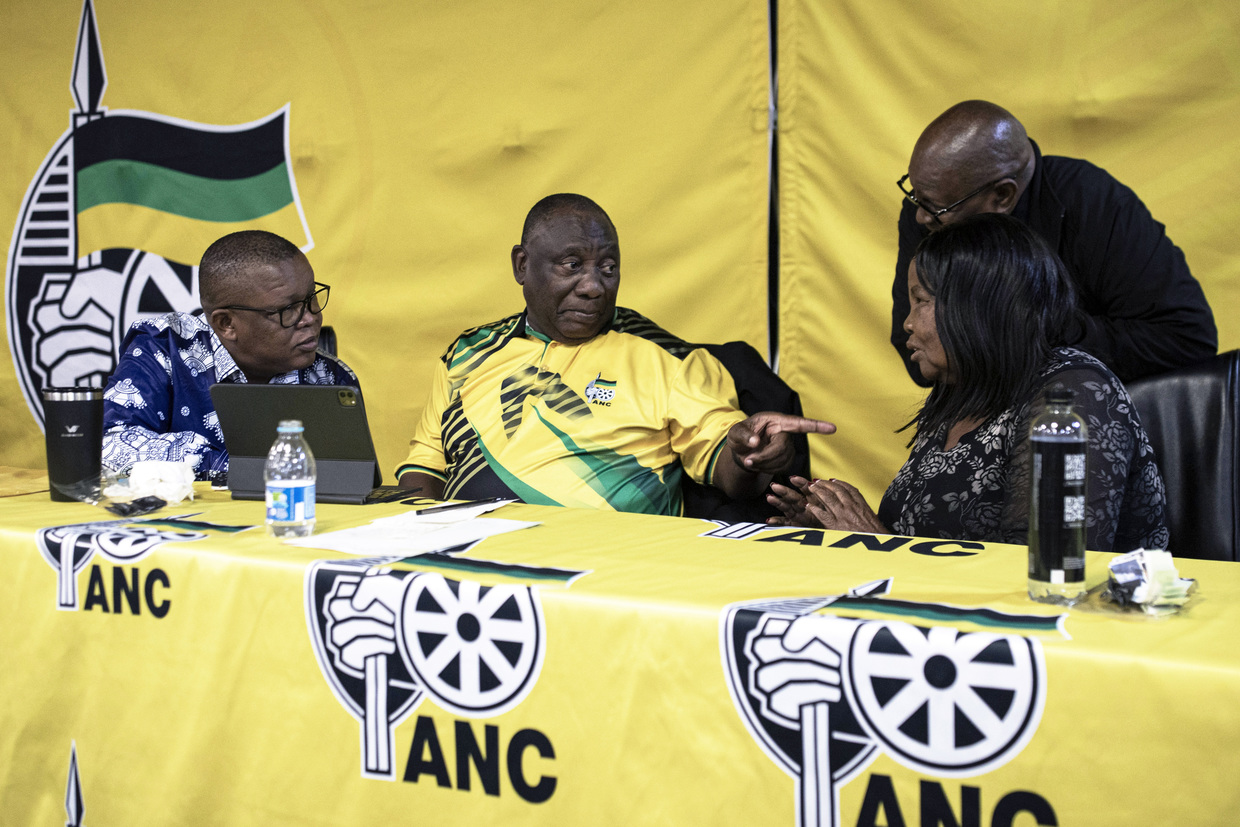
The ANC’s spokesperson Mahlengi Bhengu described Trump’s comments as false, and described his boycott of the G20 as “part of a long and disgraceful pattern of imperial arrogance and disinformation.”
“These statements are not borne of ignorance, they are deliberate attempts to distort the reality of South Africa’s democracy and to mobilize racial fear for political gain in the United States,” Bhengu said.
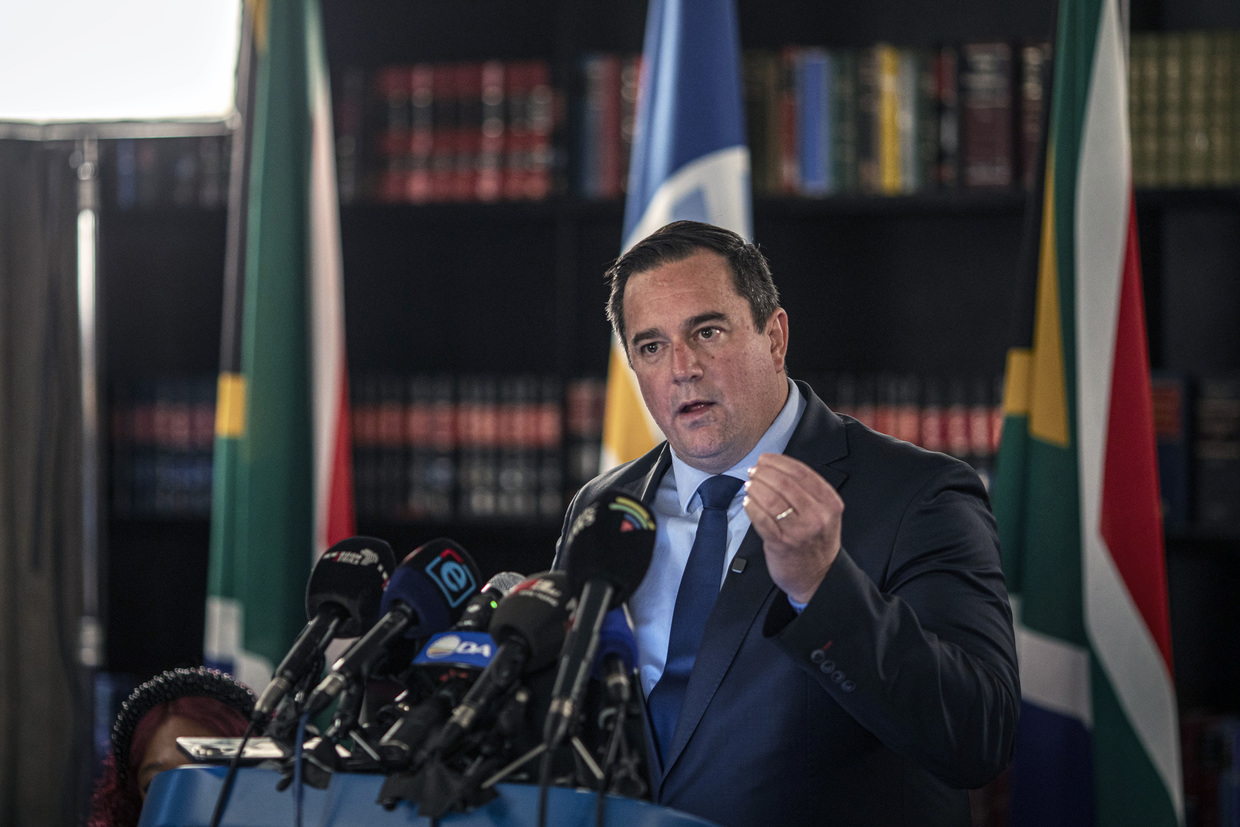
But the silence from the majority-white DA, the ANC’s coalition partner in government, suggests that Trump’s criticism of the ANC bodes well for its stance on the land issue in the country and as it seeks to further increase the DA support at future elections.
The DA has maintained that no democratic government should be given powers to seize property without compensation, despite ongoing calls for the government to address land reform and deal with the past injustices of racial segregation.
Tensions between the two countries are in fact more deep-rooted, with many of the view that Trump is not pleased with South Africa’s independent foreign policy, its membership in BRICS, partnerships with Russia and China, and refusal to take sides in the Russia-Ukraine conflict.
The South African Communist Party (SACP), in its response to Trump’s non-attendance at the G20, said the US president continued to spread "false information and racist propaganda against South Africa in which he claimed that Afrikaners are being slaughtered in the country."
“This lie has been debunked time and again even in his own country as well as by the very Afrikaners he claims to speak on behalf of,” the party said in a statement.
“Trump also turns a blind eye to the plight of the landless black majority in South Africa, who were dispossessed under colonization and apartheid, while falsely elevating claims of land confiscation from white people.”
All because of BRICS?
Almost immediately after taking office, US President Donald Trump made his feelings on BRICS and its impact on his country’s geopolitics clear when he threatened the bloc with up to 150% tariff increases if they seek to undermine the US dollar.
Since making these comments, Trump has sought to escalate his contempt towards the Global South bloc, going as far as suggesting that any potential new members of BRICS will have to hedge rising trade risks from the US if they look to broaden investments and their geopolitical standing.
Under the administration of former US President Joe Biden, Washington seemed relatively dismissive of the BRICS coalition, with then-White House National Security Communications Adviser John Kirby stating last year, prior to Trump’s election victory, that the US does not view BRICS as a threat.
The Trump administration has done a 180-degree turn on this view and clearly is perturbed by attempts to amplify the voice of developing nations.
Iran, Egypt, Ethiopia, and the UAE attended their first BRICS summit as new member states in 2024 in Kazan, Russia, and Indonesia officially joined as a member state in early 2025, becoming the first Southeast Asian member. The acronym BRICS+ has been informally used to reflect new membership since 2024.
With its continued expansion and attractiveness to other developing countries, there are some in the West who view BRICS as an alternative to institutions such as those led by nations of the G7 bloc, and others who view it as increasing anti-Western and anti-American objectives.
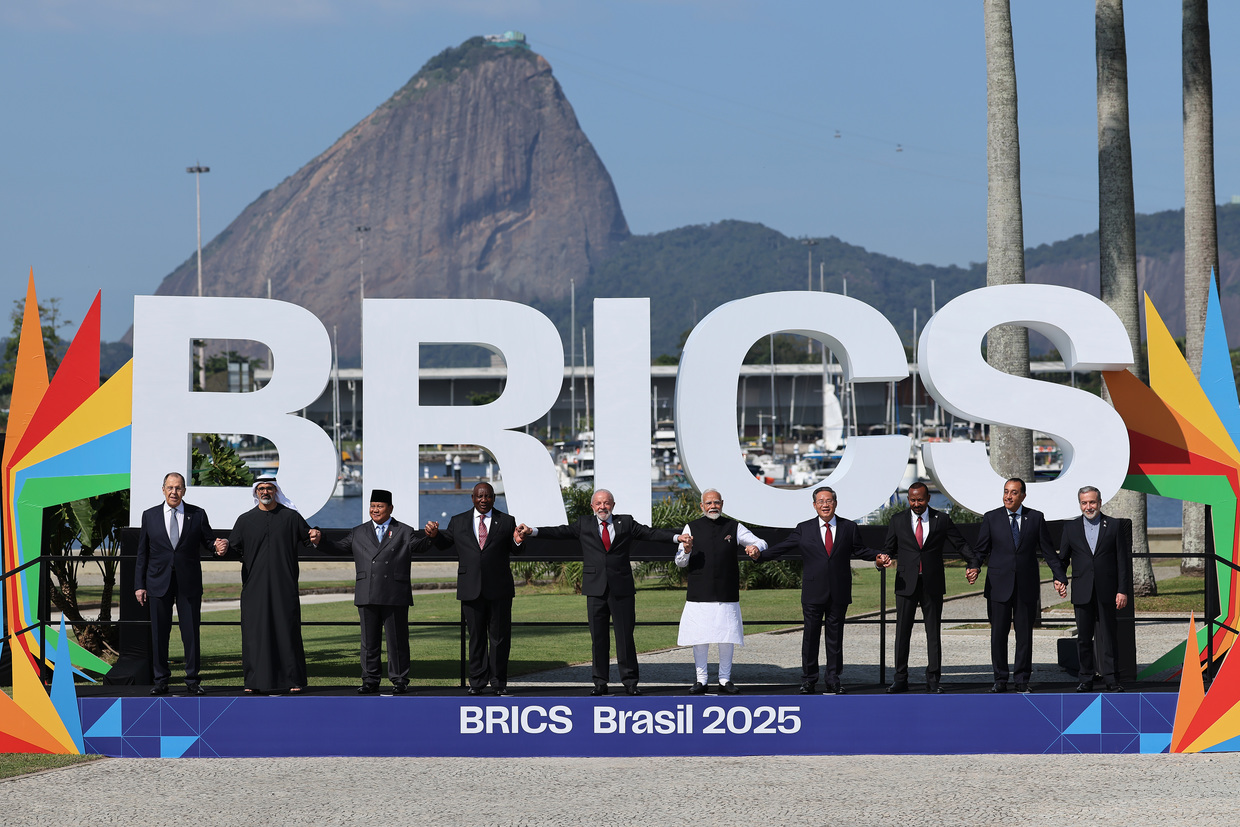
Zanele Sabela, the spokesperson for South Africa’s largest trade union, the Congress of South African Trade Unions (COSATU) said BRICS represented an alternative to the exploitation of the Global South as providers of raw materials.
“The heightened aggression of the global superpowers of the industrialized north, including the Trump administration’s trade wars and the EU’s green protectionist measures, threaten South Africa’s sovereignty and economic stability.
“The South African government must challenge these unilateral actions through multilateral platforms like the World Trade Organization and to prioritize intra-African trade under the AfCFTA.”

South Africa is taking steps to strengthen intra-continental trade through mechanisms like the African Continental Free Trade Area (AfCFTA), which aims to increase intra-Africa trade by 52% by 2030, driving economic growth across the continent.
Sabela said the tariff increases meant there was a need for strategic negotiations to navigate global trade and open new trade opportunities for South African economic sectors.
South Africa is the smallest country in the original BRICS bloc in terms of GDP and population size, but this has not stopped Trump from launching harsh rhetoric against the country.
As old rules fray
Trump has collated a dossier on South Africa, targeting it (apart from accusations, with discredited evidence, of white Afrikaner genocide) for its decision to charge Israel for committing genocide against Palestinians in Gaza at the International Court of Justice.
Trump has already threatened increased tariffs against the country; he also removed the President’s Emergency Plan for Aids Relief (PEPFAR) funding, impacting the millions of citizens who benefitted from the HIV Aids funding that came through the mechanism and there is an increasing threat that the US Congress will remove the country from the trade benefits of the African Growth and Opportunity Act (AGOA).
AGOA, which provides tariff-free access to the US market for African manufacturers, has been at the heart of US trade policy towards Africa since its approval by Congress in May 2000. Since its inception, South Africa has exported more than R125 billion ($7 billion) worth of agricultural products to the US.
While Trump has used different forms of rhetoric to criticize South Africa, some experts attribute the country’s proximity to BRICS as the underlying cause for his frustration.
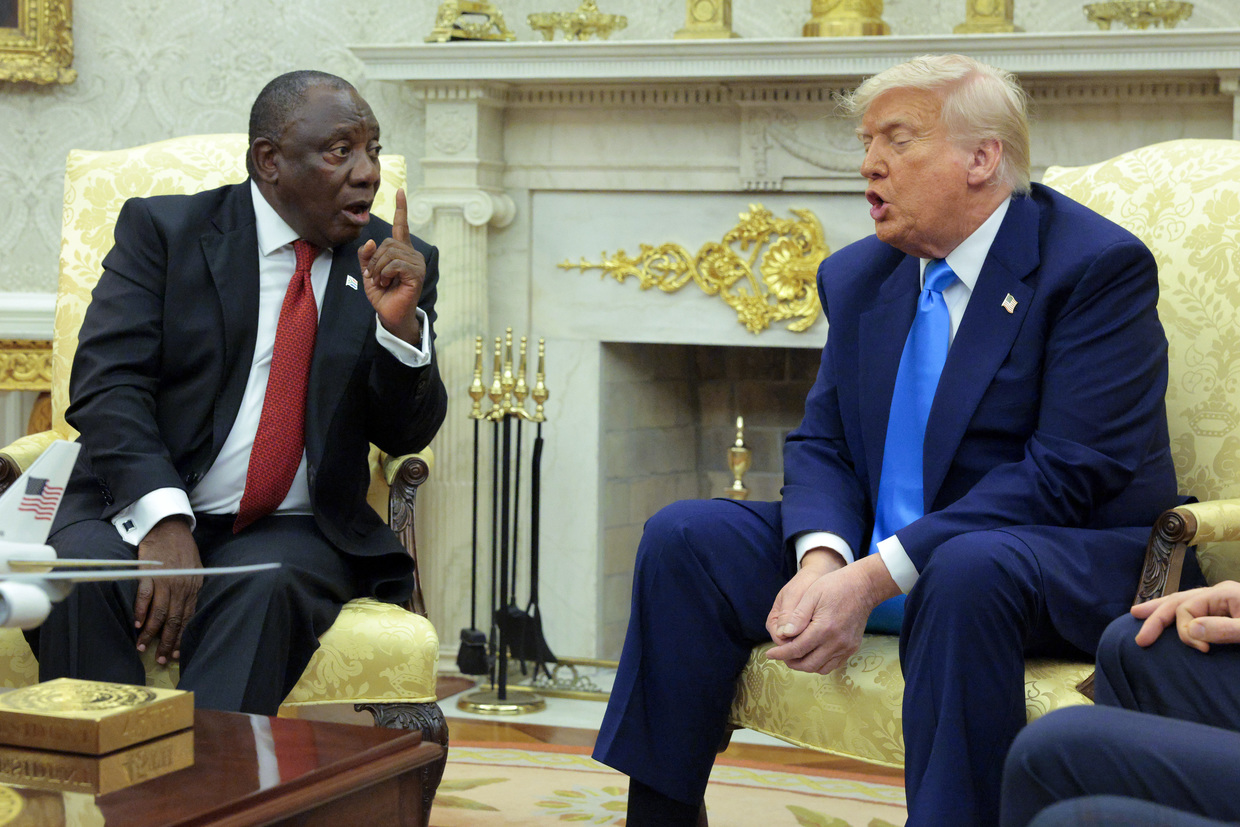
International relations expert Professor David Monyae said the US is aware that there is a change in the global order and the West “can no longer do what they wish they could do.”
The global order, post-1945, is cracking in all facets be it economically and militarily.
“In the past, the US could do anything without resistance, but now at an economic level, within the United Nations and in the institutions of global governance they are being challenged.”
Monyae told RT that the battle now lies in who has more support and the fact that developing countries have larger populations and are increasing their control of the global economy, is a major concern to the West.
“The US is putting pressure on several developing countries including South Africa, which commands the moral high ground and this pressure is about South Africa being compelled not to work ‘with the other side,’” Monyae said.
“The global order is no longer in line with the mainstream Western world and pressure is being put on South Africa to lessen its reliance on other developing countries,” Monyae told RT.