Children among 114 killed by drone strikes in war-torn Sudan – media
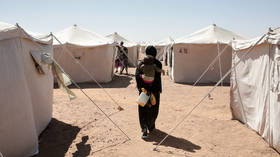
At least 114 people including 63 children have been killed in Sudan’s South Kordofan state following a series of drone strikes allegedly launched by the paramilitary Rapid Support Forces (RSF), SUNA news agency reported on Sunday, citing regional authorities.
Sudanese officials said the assault began on Thursday, when RSF units carried out multiple drone strikes on the town of Kalogi, hitting a children’s kindergarten twice before moving on to strike a rural hospital, where most of the fatalities occurred.
“The number of victims in the city rose to 114 dead and 71 wounded,” the executive director of the locality of Kalogi Essam al-Din Al-Nano said, as quoted by the Sudan Tribune.
According to the World Health Organization (WHO), the wounded have since been transferred to Abu Jebaiha Hospital, also in South Kordofan, for emergency treatment.
In a statement posted on X on Monday, WHO Director-General Tedros Adhanom Ghebreyesus confirmed that 63 children had been killed in the drone attacks. He said urgent calls were being issued for blood donations and medical support. “Disturbingly, paramedics and responders came under attack as they tried to move the injured from the kindergarten to the hospital,” Tedros added.
Repeated strikes in #Sudan’s South Kordofan state hit a kindergarten and, at least three times, the nearby Kalogi Rural Hospital, killing 114 people, including 63 children, and injuring 35 people, according to @WHO’s Attacks on Health Care monitoring system. Survivors from the… pic.twitter.com/hYySZKx10j
— Tedros Adhanom Ghebreyesus (@DrTedros) December 8, 2025
The UN estimates that over 30 million people in Sudan, more than half the population, now require humanitarian assistance. More than nine million have been displaced internally since the conflict began.
Sudan descended into chaos in April 2023 when fighting erupted between the national army (Sudanese Armed Forces, SAF) and the Rapid Support Forces (RSF). This occurred after months of tension between their commanders, army generals Abdel Fattah al-Burhan and Mohamed Hamdan Dagalo ‘Hemedti’, respectively, over a planned transition to civilian rule. What began in the capital, Khartoum, as a power struggle has devastated the country, killing tens of thousands and displacing millions.
Regional and international peace efforts, including African Union mediation and Saudi–US talks in Jeddah, have repeatedly stalled. Sudanese officials have named Colombians and Ukrainians among mercenaries backing the RSF against the army. Officials have also accused Ukraine and the United Arab Emirates of involvement and recently claimed the European Union has an “incomplete understanding of the complex situation” in the country.
Khartoum has also accused authorities in neighboring Kenya of backing the RSF and has broken ties with the East African grouping IGAD amid mistrust of regional mediation. In July, TASIS, a political coalition aligned with the paramilitary, announced the formation of a rival government months after its members signed a charter in Nairobi. It named Gen. Dagalo as chairman of a 15-member presidential council, a move rejected by the UN and AU.
Fighting has intensified across the country, particularly in North Darfur, where on October 26, the RSF claimed to have seized control of Al-Fashir, the region’s capital, where the army’s Sixth Infantry Division has its base.
Following the RSF advance, the Sudan Doctors’ Union reported that more than 2,200 people were killed within hours of the militia entering the city. An estimated 390,000 residents have been displaced in the offensive.
The WHO said it was “appalled and deeply shocked” in October by reports that over 460 people were killed in Al-Fashir’s only hospital to remain operational.
Around the same time, the Sudan Doctors’ Network reported the abduction of six medical workers, including four doctors, a pharmacist, and a nurse, allegedly by RSF fighters who demanded a $1 million ransom for their release.