Militia accuses Rubio of undermining truce
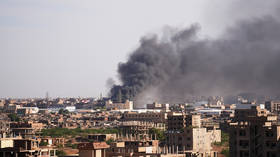
A senior adviser to Sudan’s Rapid Support Forces (RSF) has warned that recent comments by US Secretary of State Marco Rubio could undermine attempts to secure a humanitarian truce in a civil war that has raged in the African country for over two years.
Rubio told reporters on Wednesday that Washington was applying pressure on “relevant parties” supplying weapons to the RSF, which has been battling the Sudanese army since April 2023. He condemned the humanitarian situation in Sudan and insisted the militia was receiving “external assistance” that must stop.
In a statement on Thursday, Elbasha Tibeig, adviser to RSF commander Mohamed Hamdan Dagalo, called Rubio’s remarks “an ill-advised step… that neither serves the path of the international quartet nor the American initiative regarding the humanitarian truce in Sudan.”
Tibeig said the national army might interpret such statements “as a political and diplomatic victory,” hardening its rejection of a peace deal and fueling further escalation.
“Instead of making statements that show bias, the US administration and the international community must focus their efforts on stopping the flow of weapons coming from Iran and Turkey to the army’s militia, mercenaries and terrorist brigades,” he wrote on X.
The war between the RSF and the Sudanese Armed Forces, which has entered its third year, has displaced more than ten million people and creating what the UN describes as the world’s largest hunger crisis.
Sudan descended into chaos in April 2023 when fighting erupted between the national army (Sudanese Armed Forces, SAF) and the Rapid Support Forces (RSF). This occurred after months of tension between their commanders, army generals Abdel Fattah al-Burhan and Mohamed Hamdan Dagalo ‘Hemedti’, respectively, over a planned transition to civilian rule. What began in the capital, Khartoum, as a power struggle has devastated the country, killing tens of thousands and displacing millions.
Regional and international peace efforts, including African Union mediation and Saudi–US talks in Jeddah, have repeatedly stalled. Sudanese officials have named Colombians and Ukrainians among mercenaries backing the RSF against the army. Officials have also accused Ukraine and the United Arab Emirates of involvement and recently claimed the European Union has an “incomplete understanding of the complex situation” in the country.
Khartoum has also accused authorities in neighboring Kenya of backing the RSF and has broken ties with the East African grouping IGAD amid mistrust of regional mediation. In July, TASIS, a political coalition aligned with the paramilitary, announced the formation of a rival government months after its members signed a charter in Nairobi. It named Gen. Dagalo as chairman of a 15-member presidential council, a move rejected by the UN and AU.
Last week, the RSF said it had accepted a US-backed proposal for a three-month humanitarian ceasefire. However, fighting has reportedly intensified, particularly around Al-Fashir, the last major army stronghold in Darfur, which the paramilitary group captured on October 26. The UN Human Rights Office in Sudan said on Saturday that Al-Fashir had become “a city of grief.”
Commenting on the failure of the truce, Rubio accused the RSF of “never” following through on “things” it agrees to do.
In response, Tibeig said the crisis in Sudan “cannot be addressed through emotions or narrow political calculations.” He called instead for “serious initiatives and a deep understanding of the problem’s roots,” free from “the influence of countries supporting the army’s militias.”